BASF: A Global Leader in Chemical Innovation and Industry
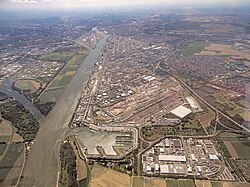
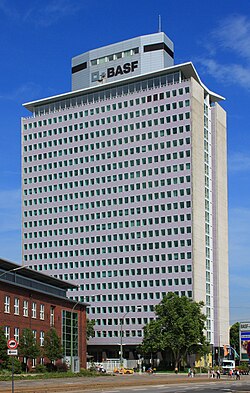
BASF, originally founded as Badische Anilin- & Soda-Fabrik, stands as one of the world's most influential chemical companies. Headquartered in Ludwigshafen, Germany, the company has evolved from a 19th-century dye manufacturer into a global powerhouse spanning chemicals, plastics, performance products, and agricultural solutions. With a legacy defined by scientific breakthroughs and industrial scale, BASF continues to shape the modern material world.
The company operates as a public entity traded on the Frankfurt, London, and Zurich stock exchanges, and it remains a key component of the Euro Stoxx 50 index. Its operational philosophy often centers on the Verbund concept—an integrated production system where the waste or by-products of one plant serve as the raw materials for another, maximizing efficiency and reducing environmental impact.
Key Facts
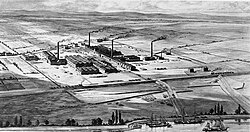
- Founded: April 6, 1865, in Mannheim, Germany, by Friedrich Engelhorn.
- Headquarters: Ludwigshafen, Germany.
- 2023 Revenue: €68.9 billion.
- Workforce: 111,991 employees (as of end 2023).
- Core Industry: Chemicals and Agricultural Solutions.
- Major Innovation: Commercialization of the Haber process for ammonia synthesis.
Historical Evolution
The Era of Synthetic Dyes and Early Growth
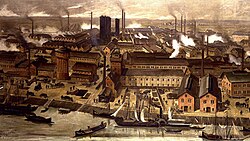
In its early years, BASF focused heavily on the synthesis of dyes. By 1869, the company was pioneering aniline dyes, later securing patents for eosin and methylene blue. A significant milestone occurred in 1897 when the company successfully brought synthetic indigo dye to the market. By 1901, dyestuffs accounted for approximately 80% of the company's total production.
Scientific Breakthroughs: The Haber Process
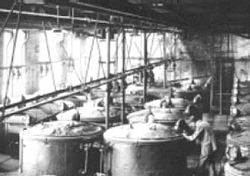
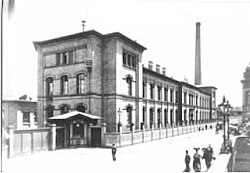
Between 1908 and 1912, BASF developed the Haber process, a revolutionary method for synthesizing ammonia from nitrogen. This breakthrough allowed for the mass production of nitrogen-based fertilizers, fundamentally changing global agriculture. In 1913, BASF opened a dedicated production plant in Oppau to bring these fertilizers to market.
War, Crisis, and Refounding
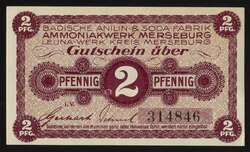
The company's history is marked by the turbulence of the 20th century. During World War I, BASF operated a site in Leuna to produce explosives. The company later became part of IG Farben before being refounded as BASF in 1952. This era of rebirth coincided with the German "economic miracle," leading to the development of synthetics like nylon and the invention of Styropor (expanded polystyrene) in 1951.
Global Expansion and Modern Strategy
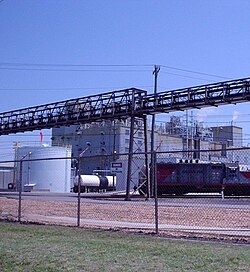
Starting in the 1960s, BASF aggressively expanded its international footprint, establishing plants across Europe, the Americas, and Asia. In 1965, the company shifted its strategy toward higher-value products, including pharmaceuticals, pesticides, and specialized coatings. This included the acquisition of the coatings company Herbol in 1968.
In the 21st century, BASF has continued to consolidate its market position through strategic acquisitions, such as Cognis in 2010 and the purchase of seed and herbicide businesses from Bayer in 2017 for €5.9 billion. The company is currently investing US$10 billion in a massive Verbund site in Zhanjiang, China, which is expected to be completed by 2030 and will become one of its largest sites globally.
Financial Performance and Corporate Data
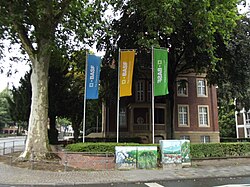
BASF's financial trajectory reflects the volatility of the global chemical market. While the company saw peak revenues exceeding €87 billion in 2022, it has faced fluctuations in net income due to economic shifts and industrial costs.
| Year | Revenue (€ bn) | Net Income (€ bn) | Total Assets (€ bn) | Employees |
|---|---|---|---|---|
| 2019 | 59.316 | 8.421 | 86.950 | 117,628 |
| 2021 | 78.598 | 5.523 | 87.383 | 111,047 |
| 2022 | 87.327 | -0.627 | 84.472 | 111,481 |
| 2023 | 68.902 | 0.225 | 77.395 | 111,991 |
Environmental and Legal Challenges
As a massive industrial operator, BASF has faced scrutiny regarding its environmental footprint. A 2022 report by the Political Economy Research Institute (PERI) ranked BASF as the second-largest air polluter and 14th-largest water polluter in 2020, based on U.S. EPA data. Additionally, the company has been involved in significant legal disputes, including a lawsuit regarding the herbicide Dicamba, which resulted in punitive damages awarded to a Missouri grower.
Frequently Asked Questions
What is the Haber process and why is it important?
The Haber process is a method used to synthesize ammonia from nitrogen and hydrogen. It is critical because ammonia is the primary source of nitrogen for industrial fertilizers, which significantly increased global food production capabilities.
Where is BASF headquartered?
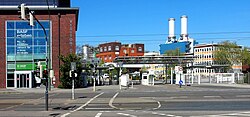
BASF is headquartered in Ludwigshafen, Germany, where it operates one of its largest and most integrated production sites.
What is a "Verbund" site?
A Verbund site is an integrated production system where plants are linked so that the by-products of one process are used as raw materials for another, increasing resource efficiency and reducing waste.
What was the Oppau explosion?
The Oppau explosion occurred on September 21, 1921, at a BASF plant. It killed 565 people and remains the largest industrial accident in German history.
What are some of BASF's major product lines?
BASF produces a wide array of products, including chemicals, plastics, performance products, functional solutions, and agricultural products such as seeds and herbicides.