Barnum's American Museum: A Legacy of Oddities and Entertainment
For 25 years, Barnum's American Museum served as a global crossroads of curiosity, housing a vast collection of items gathered from across the world. More than just a repository of artifacts, the museum became a cultural phenomenon, blending education with spectacle to attract a diverse audience of the 19th century.
Key Facts
- Global Collection: Items were curated over a period of 25 years.
- Famous Figures: Featured General Tom Thumb, Chang and Eng, and Anna Swan.
- The Lecture Room: A high-end venue for family-friendly entertainment and morality plays.
- Educational Scope: Included natural history, taxidermy, and an aquarium.
- Controversial Legacy: Pioneered the organized display of human oddities for mass entertainment.
The Spectacle of Human Oddities
The museum gained immense fame through its display of people with unique physical characteristics. Among the most celebrated was General Tom Thumb, a 35-inch tall dwarf whose success reached the highest levels of society; he was seen twice by Queen Victoria and received personal congratulations from Abraham Lincoln on his wedding day.
Other notable attractions included the Fiji Mermaid and Josephine Boisdechene, who possessed a two-inch beard by the age of eight. The museum also featured William Henry Johnson (known as Zip the Pinhead), one of the longest-running attractions, as well as giants like Anna Swan and Routh Goshen, the "Arabian Giant." Additionally, the conjoined twins Chang and Eng were frequent draws, though they were known for being argumentative with both each other and Barnum.
The Lecture Room: Family-Friendly Theater
Central to the museum's success was the "Lecture Room," an elegant theater described by the 1853 Gleason's Pictorial Drawing-Room Companion as one of the most refined halls of its kind. Barnum carefully curated this space to be "judiciously purged of every semblance of immorality," making it a safe environment for men, women, and children to intermingle.
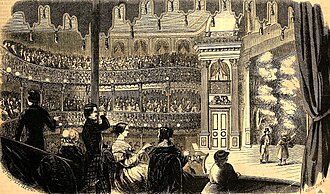
By labeling the space a "lecture hall" rather than a theater, Barnum attracted patrons who would otherwise avoid theatrical performances. This venue hosted a variety of entertainment, ranging from Shakespearean dramas to morality plays—performances designed to teach a moral lesson. Plays such as "Joseph and his Brethren," "Moses," and "The Drunkard" were particularly popular among women, as they addressed the rampant issue of alcoholism among working-class men.
Education and the Cost of Entertainment
The five-story facility aimed to provide significant educational value. Visitors could explore natural history through taxidermy, menageries, and an aquarium, or study history via wax figures, paintings, and memorabilia. However, the museum also established a darker trend: it was the first to organize the display of human oddities as a formal "freak show," beginning the modern practice of exploiting the human body for mass entertainment.
The museum's animal exhibits were equally contradictory. While exotic creatures were a highlight for visitors, the animals were often neglected. For example, beluga whales were kept in a cramped 576-square-foot basement tank; when these animals died, Barnum simply procured new specimens to replace them.
| Category | Notable Examples | Purpose/Nature |
|---|---|---|
| Human Oddities | General Tom Thumb, Chang and Eng, Anna Swan | Mass entertainment and spectacle |
| Performances | "The Drunkard," Shakespearean dramas | Moral instruction and family entertainment |
| Natural History | Beluga whales, taxidermy, aquarium | Educational display of exotic nature |
| Historical | Wax figures, memorabilia, paintings | Educational and cultural record |
Barnum's wit extended even to the museum's logistics. When he noticed visitors lingering too long at exhibits, he posted signs directing them to the "Egress." Unfamiliar with the term for "exit," many visitors followed the signs expecting another fascinating exhibit, only to find themselves outside the building.
Frequently Asked Questions
Who was General Tom Thumb?
General Tom Thumb was a 35-inch tall dwarf and one of the museum's most famous attractions, who performed for Queen Victoria and was congratulated by Abraham Lincoln.
What was the purpose of the Lecture Room?
The Lecture Room served as a family-friendly theater that offered a variety of entertainment, including Shakespearean plays and morality dramas, in an environment free from perceived indecencies.
What were morality plays?
Morality plays were theatrical performances intended to teach ethical lessons. At the museum, plays like "The Drunkard" were used to warn against the dangers of alcoholism.
How were the animals treated at the museum?
The animals were often poorly treated or neglected. For instance, beluga whales were kept in a small 576-square-foot tank and were replaced as soon as they died.
What does "Egress" mean in the context of the museum?
"Egress" is another word for exit. Barnum used the term on signs to trick lingering visitors into leaving the building by making them think they were heading toward a new exhibit.