Minstrel Shows: The History and Impact of Blackface Theater
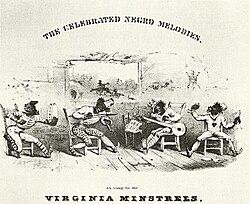
The minstrel show, or minstrelsy, stands as the first uniquely American form of theater. Emerging in the early 19th century, these performances were characterized by white actors wearing blackface—dark makeup used to create a caricature of African American features. While presented as entertainment, these shows were designed to reinforce harmful racial stereotypes, portraying Black people as dimwitted, lazy, and buffoonish to justify the belief that they were not civilized enough for equal treatment.
Despite its racist foundations, minstrelsy was the epicenter of the American music industry during its peak in the 1830s and 1840s. It translated high-art forms like opera into popular entertainment for the general public and shaped how white Americans perceived Black culture for several decades.
Key Facts
- Origin: Developed in the Northeastern United States in the early 1830s.
- Purpose: Used racial caricatures to confirm white supremacist perceptions of African Americans.
- Peak Popularity: Became the national art form by 1848.
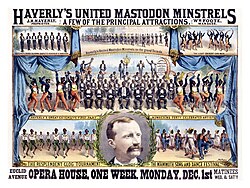
- Black Minstrelsy: Post-Civil War, African American performers formed their own troupes to find economic opportunity.
- Decline: Faded by the early 20th century due to rising costs and the rise of motion pictures.
The Evolution of Minstrelsy

Early Development
While white actors had used dark makeup as far back as 1604 for roles like Othello, the specific format of the minstrel show evolved later. By the late 18th century, blackface characters appeared as comic relief "servants." Eventually, the "Sambo" character replaced other popular archetypes like the frontiersman.
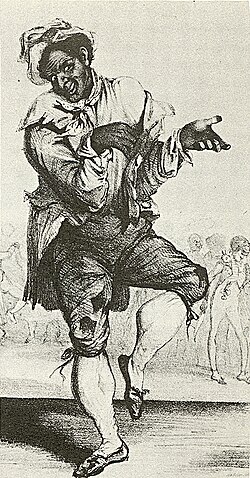
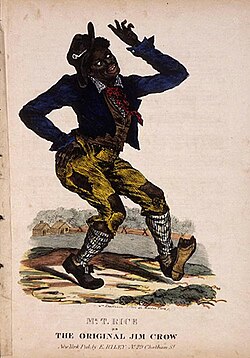
In the 1820s, performers referred to themselves as Ethiopian delineators, typically performing solo or in small groups. The genre reached a new level of prominence in the early 1830s through Thomas Dartmouth Rice and his famous "Jump Jim Crow" song-and-dance routine.
The Height of the Era
By the 1840s, minstrelsy had evolved from brief comic interludes into full-length productions. The Virginia Minstrels helped standardize the art form, making it a dominant force in American popular culture. The humor often focused on the comical failure of Black characters attempting to integrate into citizenship.
Black Minstrelsy and Subversion
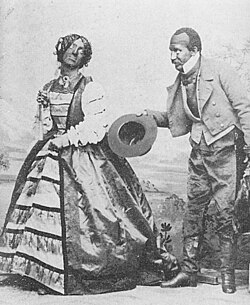
Following the Civil War, African American performers established their own companies, such as the Georgia Minstrels in the 1860s. While these troupes often adopted the blackface makeup and formats established by white performers to secure work, they frequently injected authenticity and subtle subversion into their acts.
Black troupes differed from white ones by incorporating religious themes and jubilee singing. They also introduced a military high-stepping brass band burlesque at the end of the first act, a practice popularized by Callender's Minstrels around 1875. Some performances used the stage to poke fun at white society or describe heaven as a place where Black people were finally free from being bought and sold.
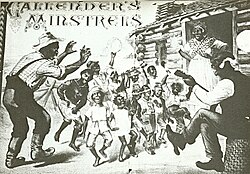
![Advertisement in The Negro Star for a "real" minstrel show with Black performers[71]](/images/b9/e8/b9e8c90c2f9d7dd8ba9c2ee44d2a32e70e9a7b3c0ac4e70b72638e8711b69ce9.jpg)
The Decline of the Minstrel Show
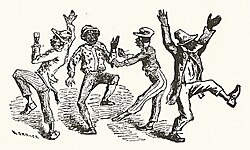
By the 1890s, the popularity of minstrelsy began to wane. The rise of vaudeville and motion pictures provided cheaper and more modern alternatives for audiences. Additionally, the financial burden of touring became unsustainable; leading company salaries rose from $400 a week in the 1860s to $2,500 a week by 1912.
While professional troupes vanished, amateur blackface shows persisted in rural areas and parts of northern New York into the 1960s. One of the last institutional remnants, the Kake Walk at the University of Vermont, was banned in 1969.
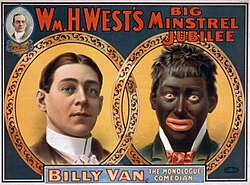
Stereotypes and Character Types
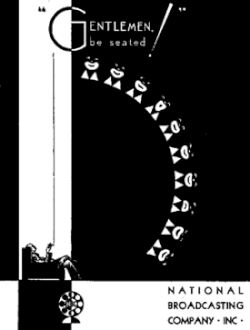
Minstrelsy relied on a rigid set of archetypes to evoke laughter from white audiences. The most prominent was the Jim Crow character, an archetypal slave created by Rice.
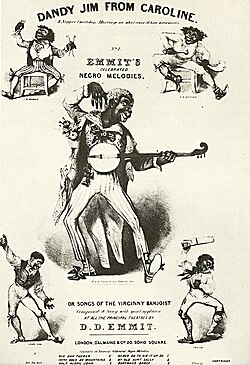
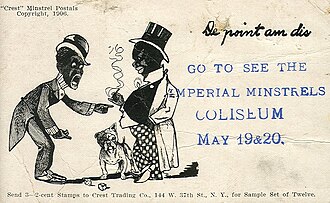
Other characters included the "dandy," who attempted to dress and act with high-society sophistication but failed comically. The shows also featured non-Black stereotypes: Irish characters were often portrayed as hotheaded drunkards, while German characters were depicted as sensible but humorous due to their accents and size.
Summary of Minstrelsy Characteristics
| Feature | White Minstrelsy | Black Minstrelsy |
|---|---|---|
| Primary Goal | Reinforce racial stereotypes | Economic opportunity / Subversion |
| Key Themes | Plantation life, failure of citizenship | Jubilee singing, religious themes |
| Performance Style | Caricature and burlesque | Authentic music, brass band burlesques |
| View of Masters | Often nostalgic reunions | Rarely featured reunions with masters |
Frequently Asked Questions
What was the purpose of blackface in minstrel shows?
Blackface was used by white actors to portray exaggerated and harmful racial stereotypes of African Americans. The goal was to depict Black people as inferior, lazy, or buffoonish to justify systemic racism and social inequality.
Who was Jump Jim Crow?
Jump Jim Crow was a successful song-and-dance character created by Thomas Dartmouth Rice in the early 1830s. The character became so popular that he was compared to Queen Victoria in terms of global recognition at the time.
Did African Americans perform in minstrel shows?
Yes. After the Civil War, Black performers formed their own troupes. While they often used the established blackface format to gain employment, they frequently used the platform to introduce authentic music and subtly critique white society.
Why did minstrel shows eventually disappear?
The decline was primarily driven by economic factors and new technology. Rising salary costs for performers made troupes unprofitable, and the emergence of motion pictures and vaudeville offered more competitive and appealing entertainment.
Were other ethnic groups stereotyped in these shows?
Yes. Minstrelsy included caricatures of immigrants. Irish performers were often depicted as odious drunkards, while Germans were portrayed as hearty, sensible people with thick accents.