Barnacles: The Fascinating Biology of Sessile Crustaceans
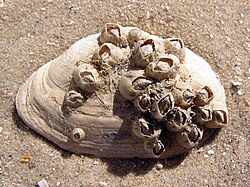
Often mistaken for simple mollusks or shells, barnacles are actually highly specialized crustaceans. Belonging to the subclass Cirripedia, these creatures have evolved a unique lifestyle: they spend their adult lives permanently attached to hard surfaces, ranging from rocky shores and ship hulls to the skin of whales. With approximately 2,115 known species, barnacles represent a diverse group of animals that have mastered the art of survival in some of the ocean's most turbulent environments.
From their complex larval journeys to their unusual reproductive strategies, barnacles offer a glimpse into the incredible adaptability of marine life. Their study has not only contributed to our understanding of ocean ecology but also played a pivotal role in the development of evolutionary science.
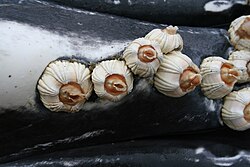
Key Facts
- Classification: They are crustaceans in the subclass Cirripedia.
- Habitat: While found up to 600 meters deep, 75% live shallower than 100 meters.
- Feeding: They are filter feeders that use specialized appendages called cirri.
- Diversity: There are roughly 2,115 species across three infraclasses.
- Fossil Record: The oldest definitive fossil, Praelepas, dates back 320–330 million years.
Anatomy and Life Cycle
The life of a barnacle is a journey of dramatic transformation. They begin as free-swimming larvae before transitioning into a sessile (fixed in one place) adult form.
Larval Stages
- Nauplius Larva: The first stage of development, where the larva swims and feeds in the open water.
- Cypris Larva: The second stage, specialized for finding a permanent home. The cypris larva explores surfaces to find a suitable location to attach for the remainder of its life.
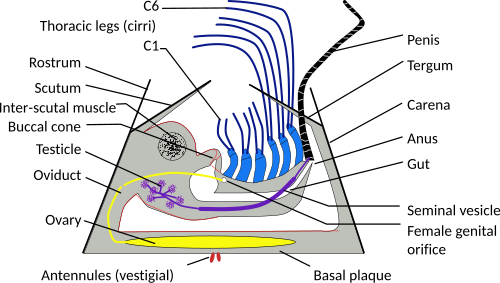
Adult Morphology
Once attached, the barnacle secretes a powerful cement to bond itself to the substrate. Depending on the species, they may be sessile (forming a hard calcareous shell) or pedunculate (possessing a fleshy stalk, such as goose barnacles). To feed, they extend their cirri—slender, jointed legs—to sweep the water for plankton and organic particles.
Reproduction and Ecology
Because adult barnacles cannot move to find mates, they have evolved some of the most unusual reproductive methods in the animal kingdom.
Sexual Reproduction
Many barnacles are hermaphrodites. To ensure fertilization, some species engage in pseudocopulation, utilizing an exceptionally long penis to reach and transfer sperm to a neighboring individual.
![Pseudocopulation:[25] the acorn barnacle uses its long penis to reach across to transfer sperm to another individual nearby.[26]](/images/7c/df/7cdfa76ce4b318b8b41f299b441e3a452d2d3ae25ffe63c4ff679e47ec728a0f.webp)
Environmental Distribution
Barnacles are most prominent in the intertidal zone—the area between high and low tide. Within this zone, species are often found in tightly constrained vertical bands. This precise zoning is driven by competition for space and the ability to withstand exposure to air during low tide.
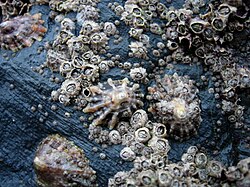
Parasitism and Competition
While most barnacles are filter feeders, some have evolved into parasites. The Rhizocephala infraclass consists of highly specialized parasites that can take over the bodies of other crustaceans, such as crabs, to redirect nutrients for their own growth.
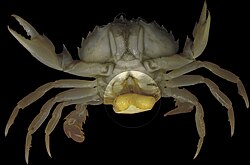
The Darwin Connection and Taxonomy
Barnacles hold a special place in the history of science. In 1846, Charles Darwin began an intensive study of Cirripedia. At the suggestion of Joseph Dalton Hooker, Darwin spent years meticulously analyzing barnacles to understand a single group thoroughly before generalizing his theory of evolution by natural selection.
Darwin's work resulted in a series of monographs published in 1851 and 1854. Despite the scientific success, the grueling nature of the work led Darwin to famously remark, "I hate a barnacle as no man ever did before." Today, his contributions remain foundational to the taxonomy of the Thoracica infraclass.
Human Interaction and Applications
Barnacles have a complex relationship with humans, ranging from economic nuisances to culinary delicacies.
- Biofouling: The accumulation of barnacles on boat propellers and hulls increases drag and fuel consumption, leading to the development of anti-fouling coatings.
- Gastronomy: In certain regions, such as Spain, goose barnacles are considered a high-value seafood delicacy.
- Technology: Scientists are studying the chemical composition of barnacle cement to create high-strength underwater adhesives for medical and industrial use.
| Infraclass | Primary Characteristic | Example/Note |
|---|---|---|
| Thoracica | Includes sessile and stalked forms | Studied extensively by Darwin |
| Rhizocephala | Highly specialized parasites | Sacculina carcini (crab parasite) |
| Acrothoracica | Diverse, often smaller forms | Includes various specialized taxa |
Frequently Asked Questions
Are barnacles shells or animals?
Barnacles are animals. Specifically, they are crustaceans related to crabs and shrimp that secrete a hard calcium carbonate shell for protection.
How do barnacles attach to surfaces?
They use a specialized cypris larva to find a location and then secrete a fast-curing, incredibly strong protein-based cement that bonds them permanently to the surface.
What do barnacles eat?
They are filter feeders. They extend their cirri (modified legs) into the water column to capture plankton and other microscopic organic matter.
Why are they found in specific zones on a beach?
Their distribution is determined by a balance of competition for space and their physiological tolerance for drying out (desiccation) during low tide.
Can barnacles be harmful?
While not harmful to humans directly, they cause biofouling on ships, which can damage equipment and reduce fuel efficiency.