Barcelona: A Comprehensive Journey Through the Catalan Capital
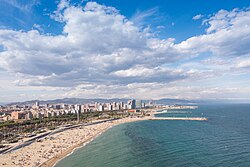
Barcelona, known as the Ciutat Comtal (City of Counts) and the Cap i Casal de Catalunya (Head and Hearth of Catalonia), is a vibrant metropolis where ancient history meets avant-garde design. As the second-largest city in Spain, it serves as a global hub for culture, commerce, and tourism, blending its Mediterranean identity with a fierce sense of Catalan pride.
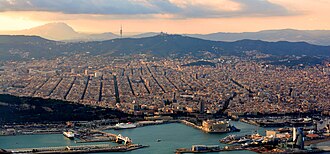
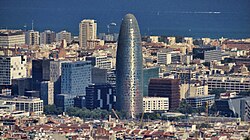
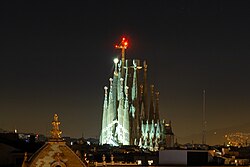
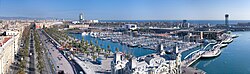
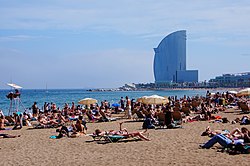
From the narrow alleys of the Gothic Quarter to the wide, geometric grids of the Eixample, Barcelona offers a unique urban experience. Its skyline is a dialogue between the historic and the futuristic, anchored by the towering spires of the Sagrada Família and the sleek lines of the Torre Glòries.
Key Facts
- Population: Approximately 1,686,208 (City) and 5,474,482 (Metro area) as of 2024.
- Official Languages: Catalan and Spanish.
- Geography: Located on the Mediterranean coast, ranging from sea level to 512 meters at Tibidabo.
- Economy: A major economic engine with a metro GDP of €173.722 billion (2021).
- Administration: Divided into 10 distinct administrative districts.
A Timeline of Transformation
Ancient and Medieval Roots
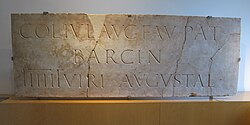
The city's origins trace back to the legendary founding and the Punic era, eventually becoming the Roman colony of Barcino. Evidence of this era remains in the city's archaeological layers, including marble plaques and remnants of Roman infrastructure.
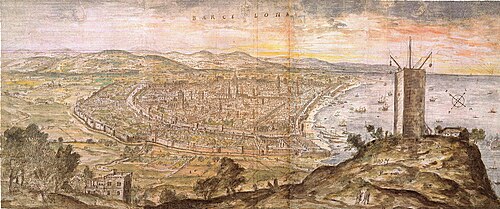
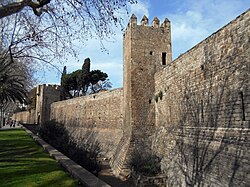
During the medieval period, Barcelona grew into a powerful maritime center. The city was protected by formidable walls, sections of which still stand today, testifying to its strategic importance under the Spanish monarchy.
Modernization and Conflict
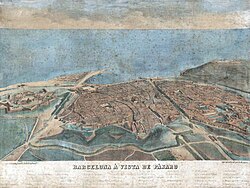
The 19th century brought drastic changes, most notably the Cerdà Plan of 1857, which expanded the city beyond its medieval walls and created the iconic grid pattern of the Eixample district.
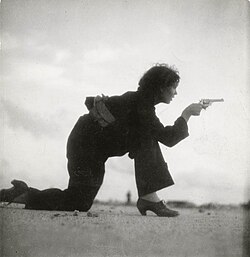
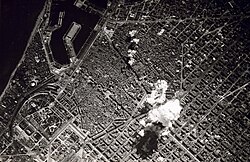
The 20th century was marked by turbulence, including the Spanish Civil War and the subsequent Franco period. The city suffered significant aerial bombings in 1938, leaving scars that would eventually be healed by a period of rapid reconstruction and cultural rebirth.
Geography and Climate
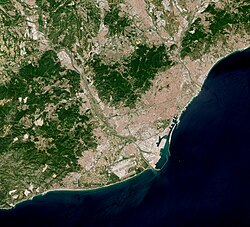
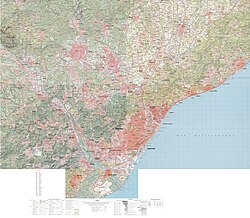
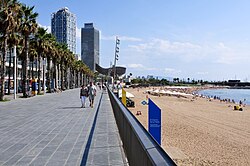
Barcelona is situated in the Barcelonès comarca, nestled between the Mediterranean Sea and the Serra de Collserola mountains. This positioning creates a temperate Mediterranean climate characterized by mild winters and warm, humid summers.
| Metric | Winter (Jan) | Spring (Apr) | Summer (Jul) | Autumn (Oct) |
|---|---|---|---|---|
| Mean Max Temp (°C) | 14.0 - 14.5 | 17.7 - 18.5 | 27.0 - 28.3 | 21.9 - 22.3 |
| Mean Min Temp (°C) | 5.5 - 8.1 | 10.4 - 12.4 | 20.8 - 22.4 | 14.3 - 16.2 |
| Avg Precipitation (mm) | 33.1 - 41.3 | 46.5 - 47.3 | 25.2 - 27.3 | 75.2 - 82.1 |
Demographics and Society

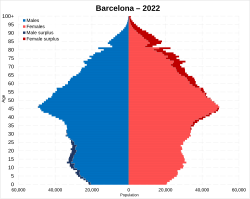
Barcelona is a melting pot of nationalities. While the local population is predominantly Catalan and Spanish, the city hosts significant immigrant communities from Italy, Colombia, Pakistan, China, and Peru. This diversity is reflected in the city's culinary scene and cultural festivals, such as the main festivity, La Mercè.
Urban Structure and Governance
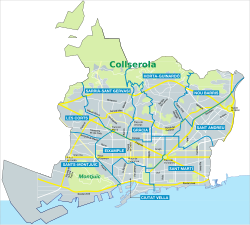
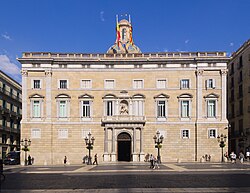
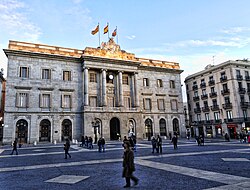
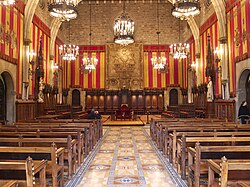
The city is governed by the Ajuntament (City Council), currently led by Mayor Jaume Collboni. Administratively, the city is split into 10 districts, including the historic Ciutat Vella, the modernist Eixample, and the innovative Sant Martí.
Education and Innovation
Barcelona is a center for academic excellence, home to the University of Barcelona and Pompeu Fabra University. The 22@Barcelona district represents the city's push toward a knowledge-based economy, integrating technology and innovation into the urban fabric.
Culture, Arts, and Landmarks
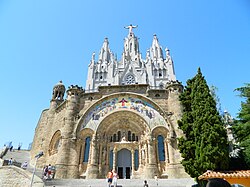
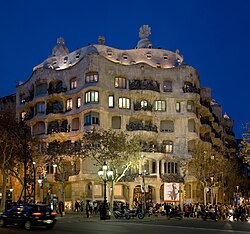
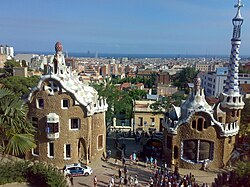
The city's architectural heritage is world-renowned, dominated by the works of Antoni Gaudí. The Sagrada Família, Casa Milà, and Park Güell are masterpieces of Modernisme (Catalan Modernism), a style that emphasizes organic forms and intricate detail.
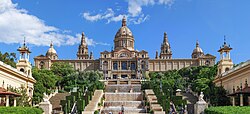
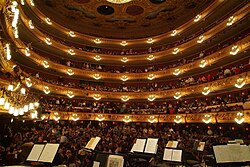
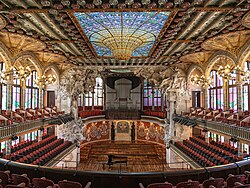
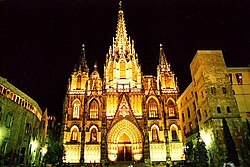
Beyond Gaudí, the city boasts the Gothic Cathedral of the Holy Cross and St. Eulalia, the Palau de la Música Catalana, and the National Museum of Art of Catalonia, which is famous for its Romanesque paintings.
Sports and Leisure
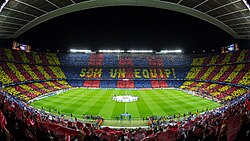
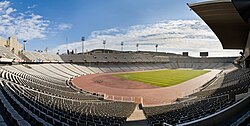
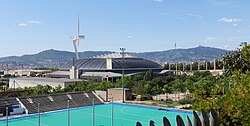
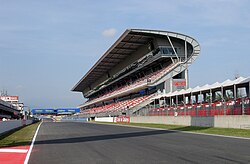
Barcelona is a global sports capital. It hosted the 1992 Summer Olympics, utilizing the Estadi Olímpic de Montjuïc and Palau Sant Jordi. It is also home to the Camp Nou, the largest stadium in Europe, and the Circuit de Catalunya for Formula 1 and MotoGP.
Infrastructure and Transport
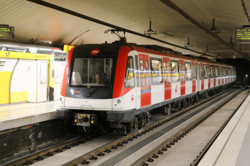
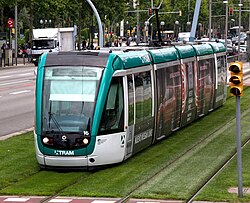
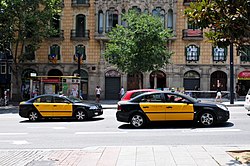
The city is highly connected via a sophisticated transport network. The Barcelona Metro and regional rail systems provide efficient transit, complemented by a modern tram system and a fleet of iconic black-and-yellow taxis.
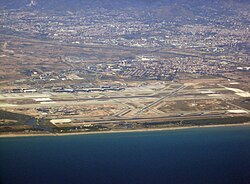
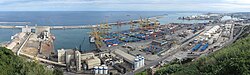
For international travel, the Barcelona–El Prat Airport and the Port of Barcelona serve as primary gateways, with the latter being one of the most important cruise and cargo ports in the Mediterranean.
Frequently Asked Questions
What are the official languages of Barcelona?
The official languages are Catalan and Spanish, both of which are used in government, education, and daily life.
What is the Cerdà Plan?
The Cerdà Plan was an urban planning project from 1857 that expanded Barcelona beyond its medieval walls, creating the characteristic grid layout of the Eixample district.
Which is the largest stadium in Europe located in Barcelona?
The Camp Nou is the largest stadium in Europe and serves as the home ground for FC Barcelona.
What is the significance of the 22@Barcelona district?
The 22@Barcelona district is a business and innovation hub designed to transform the city's industrial areas into a center for technology, research, and creative industries.
When is the city's main festivity held?
The city's main festivity is La Mercè, held in honor of the city's patron saint, Eulalia of Barcelona.