Balance of Power Theory in International Relations
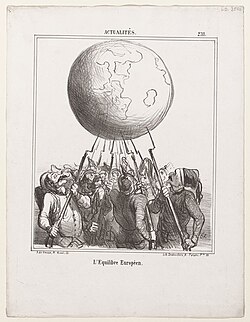
The balance of power is a foundational theory in international relations suggesting that national security is best achieved when military capabilities are distributed such that no single state is strong enough to dominate all others. According to this realist perspective, when one state gains disproportionate power, it is likely to exploit its weaker neighbors. This dynamic naturally drives those threatened states to form defensive coalitions to restore equilibrium.
Proponents of this theory argue that a balanced system is inherently more stable than one dominated by a single hegemon, as the cost of aggression becomes too high when rival coalitions possess comparable strength.
Key Facts
- Core Objective: To prevent any single state from achieving hegemony (total dominance) over others.
- Primary Strategies: States typically respond to threats by either balancing (forming alliances against the threat) or bandwagoning (aligning with the threat).
- System Polarity: In bipolar systems (two dominant powers), states generally have no choice but to confront the opposing power directly.
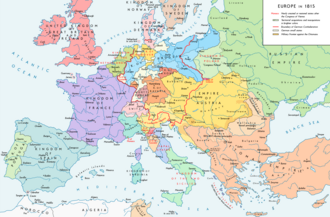
- Historical Application: The principle guided European diplomacy from the Peace of Westphalia (1648) through the Congress of Vienna (1814) and up to World War I.
- Modern Shift: Post-1945 European integration is viewed by some as a deliberate rejection of the balance-of-power model to avoid catastrophic hegemonic wars.
Strategic Responses to Power Shifts
When the distribution of power shifts, states employ various tactical maneuvers to ensure their survival. These behaviors are central to the debate between different schools of realism.
Balancing vs. Bandwagoning
Balancing occurs when a state allies with others to counteract a rising threat. In contrast, bandwagoning happens when a state decides that aligning with the threatening power is the safest way to avoid conflict or gain favor.
Advanced Alliance Tactics
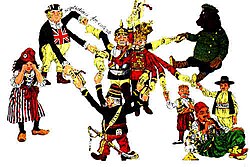
- Chain-ganging: A situation where states are so tightly linked by alliances that they are dragged into wars by their partners, regardless of their own national interests.
- Buck passing: The attempt to shift the responsibility of confronting a rising threat onto another state.
Historical Evolution of the Principle
The balance of power was once considered an axiom of political science. It was championed by figures such as Fénelon, Frederick the Great, and Friedrich von Gentz. Historically, it served as the justification for coalitions against dominant figures like Louis XIV and Napoleon.
Great Britain, in particular, utilized this principle for centuries to ensure that no single land power could dominate continental Europe, thereby protecting British naval supremacy.
The American Influence
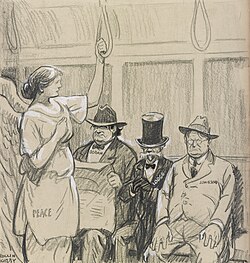
The role of the United States has evolved from a tool used to "redress the balance" of Europe in 1826 to becoming the balance of power itself. By the mid-20th century, observers noted that the U.S. possessed a preponderance of power—a state where one power is so dominant that balancing becomes nearly impossible or unnecessary.
Theoretical Perspectives and Critiques
While realists emphasize the structural necessity of balancing, other schools of thought offer different interpretations:
- Defensive Realism: Suggests that states seek a balance of power to maintain the status quo and ensure survival.
- Offensive Realism: Argues that states should seek to maximize their power to achieve hegemony, as this is the only way to guarantee absolute security.
- Constructivism: Challenges the core realist assumptions, arguing that state behavior is shaped by social constructs and identities rather than just material power.
| Strategy | Action | Primary Goal |
|---|---|---|
| Balancing | Allies with others against a threat | Restore equilibrium |
| Bandwagoning | Allies with the threatening power | Avoid attack/gain advantage |
| Buck Passing | Avoids direct confrontation | Force others to bear the cost |
| Chain-ganging | Follows ally into conflict | Maintain alliance integrity |
Frequently Asked Questions
What is the difference between balancing and bandwagoning?
Balancing is the act of opposing a rising power by forming a coalition to neutralize the threat. Bandwagoning is the opposite: joining the rising power to share in its spoils or avoid being targeted.
How does polarity affect state behavior?
Polarity refers to the number of great powers in the system. In a bipolar system (two powers), states are typically forced into a direct confrontation or a rigid alliance. In multipolar systems, states have more flexibility to use tactics like buck passing.
Why did Europe move away from the balance of power after 1945?
Many leaders, including Joschka Fischer, argue that the balance-of-power system led to centuries of precarious peace and culminated in the two World Wars. European integration was designed to replace this competition with cooperation.
What is the "preponderance of power"?
Preponderance of power occurs when one state is so overwhelmingly strong that it can maintain order and security on its own, effectively ending the need for other states to balance against it.