Awajún People: Guardians of the Peruvian Amazon-Andes Divide
The Awajún (also known as the Aguaruna) are a resilient indigenous people inhabiting the rugged transition zone between the Andes mountains and the Amazon rainforest in northern Peru. Known for their fierce independence and deep ecological knowledge, the Awajún have maintained a distinct cultural identity despite centuries of external pressure from colonial empires and modern industrial interests.
Primarily settled along the Marañón River and its key tributaries—including the Santiago, Nieva, Cenepa, Numpatakay, and Chiriaco—the Awajún hold titled community lands across the regions of Amazonas, Cajamarca, Loreto, and San Martín. Their population is estimated at approximately 70,468 inhabitants.
Key Facts
- Location: Northern Peru, specifically the Marañón River basin and the Amazon-Andes divide.
- Language: Aguaruna (Awajún).
- Population: Approximately 70,468.
- Traditional Economy: Hunting, gathering, and subsistence agriculture.
- Key Organizations: Consejo Aguaruna y Huambisa (CAH) and OCCAAM.
- Historical Legacy: Successfully resisted incorporation by both the Inca and Spanish empires.
History and Origins
The exact origins of the Awajún remain a subject of anthropological debate. Some theories suggest they descended from the Andes centuries ago, while others propose they migrated from Central America via the coast or river systems. There are even suggestions of cultural influence from Melanesian immigrants.
Historically, the Awajún were renowned as brave and skilled warriors. Their physical stature—characterized by greater average height and strength compared to other rainforest inhabitants—and the challenging terrain of their homeland helped them evade conquest. They remained largely isolated from Peruvian national society until the late 1950s, having successfully repelled attempts by the Inca emperors Huayna Capac and Tupac Inca Yupanqui, as well as Spanish conquistadors and missionaries.
Customs and Social Structure
Traditionally, Awajún families lived in dispersed neighborhoods based on kinship. While they practiced both monogamy and polygamy, their settlement patterns have shifted toward clustered hamlets due to the introduction of roads, health posts, and bilingual schools.
Nucleated towns, known as yáakat, typically lack formal streets or squares. Instead, traditional houses are often arranged linearly along riverbanks. A cornerstone of their social fabric is ipáamamu, a traditional institution of mutual aid. This collective effort is most visible during the construction of homes for young couples or the clearing of agricultural fields.
Hunting, Gathering, and Agriculture
The Awajún maintain a sophisticated understanding of rainforest flora and fauna, making them a primary focus for ethnobotanists (scientists who study the relationship between people and plants). Their diet and economy rely on a diverse range of resources:
- Hunting: Major prey includes the sajino, Brazilian tapir (sachavaca), ocelot, and jaguar (otorongo). They use pellet shotguns today, though the traditional blowpipe remains in use.
- Gathering: They collect wild palm fruits, honey, edible worms (suris), and various medicinal plants and resins.
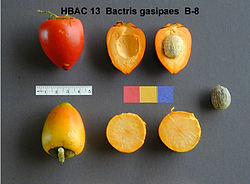
- Agriculture: Using tools like the wái (a sharpened pijuayo palm stick), axes, and machetes, they cultivate staples such as yuca and peanuts.
Arts and Crafts
Labor is traditionally divided by gender. Men specialize in ropemaking, basketry, canoe construction, and weaving textiles. They are also known for creating intricate feather headdresses and cotton ribbons adorned with human hair. Women focus on ceramics and the creation of jewelry using seeds, beads, and insect wings.
Spirituality and Belief Systems
The traditional Awajún worldview is animistic, featuring a pantheon of spirits including Zeus (the Sun), Núgkui (Mother Earth), and Tsúgki (water spirits). A central figure is Bikut, the father shaman, associated with hallucinogenic plants.
Historically, young men used ayahuasca to seek visions of dead warriors. Those who overcame their fear were believed to acquire ajútap, a spirit power that granted invulnerability in battle. In the distant past, the practice of creating tsantsa (shrunken heads) was also observed. In recent decades, many Awajún have converted to Christianity following contact with Evangelical missionaries.
Modern Challenges and Biopiracy
The late 20th century brought significant tension due to the construction of the transandean oil pipeline and the arrival of colonists. In response, the Awajún formed political organizations like the Organización Central de Comunidades Aguarunas del Alto Marañon (OCCAAM) in 1975 and the Consejo Aguaruna y Huambisa (CAH) in 1977.
The CAH became a powerful advocate for indigenous rights, helping found the Coordinating Body of Indigenous Organizations of the Amazon Basin (COICA). This political mobilization became critical during a high-profile biopiracy dispute in the 1990s. The Awajún clashed with Washington University and G.D. Searle & Company (Monsanto) over the unauthorized collection of medicinal plant knowledge.
This conflict led to a legal milestone: the creation of a "know-how license" intended to give the Awajún control over their traditional knowledge. However, critics and community members noted that the arrangement provided little actual financial benefit to the indigenous people themselves.
| Category | Details |
|---|---|
| Primary Regions | Amazonas, Cajamarca, Loreto, San Martín (Peru) |
| Key Rivers | Marañón, Santiago, Nieva, Cenepa, Numpatakay, Chiriaco |
| Traditional Tools | Wái (pijuayo stick), blowpipe, pellet shotgun |
| Social Concept | Ipáamamu (mutual aid) |
| Political Entities | CAH, OCCAAM, CONAP |
Frequently Asked Questions
What is the difference between Aguaruna and Awajún?
Awajún is the endonym, meaning it is the name the people use for themselves in their own language, while Aguaruna is the name commonly used by outsiders.
What is ipáamamu?
Ipáamamu is a traditional Awajún institution of mutual aid where community members help one another with labor-intensive tasks, such as building houses for young couples or clearing fields for planting.
How did the Awajún resist colonization?
Due to their reputation as fierce warriors and the difficult, dense terrain of the Amazon-Andes divide, they successfully resisted incorporation into the Inca and Spanish empires for centuries.
What was the biopiracy controversy involving the Awajún?
The controversy involved researchers from Washington University and the pharmaceutical company Monsanto, who were accused of collecting traditional medicinal plant knowledge from the Awajún without a fair benefit-sharing agreement.
What are the primary economic activities of the Awajún today?
While they still rely on hunting and subsistence farming, many communities have transitioned to capitalist activities, cultivating coffee, cocoa, rice, and bananas for sale in local and coastal markets.