Exploring the Australian National Botanic Gardens
Located on the slopes of Black Mountain in Acton, Canberra, the Australian National Botanic Gardens (ANBG) serves as a premier destination for plant lovers and scientific researchers alike. As the largest living collection of native Australian flora, the gardens are dedicated to a vital mission: to study and promote the diverse plant life found across the Australian continent.
Whether you are walking through a lush rainforest gully or exploring the unique textures of a rock garden, the ANBG offers a profound connection to the natural heritage of Australia. This heritage-listed site is not just a place of beauty, but a critical center for conservation and botanical research.
Key Facts
- Location: Acton, Canberra, Australian Capital Territory.
- Total Area: 90 hectares (220 acres), with approximately 40 hectares currently developed.
- Collection Size: Over 5,500 cultivated species.
- Mission: To study and promote Australia's flora.
- Heritage Status: Listed on the Commonwealth Heritage List since 2004.
- Scientific Importance: Home to the Australian National Herbarium, the third largest collection of dried plant specimens in Australia.
A Rich History of Growth
The vision for a national botanical garden began in the 1930s. Following recommendations from the Australian Capital Territory Advisory Council in 1933 and the framework provided by the Dickson Report in 1935, a site was designated on Black Mountain.
The gardens' journey officially began in September 1949, when Prime Minister Ben Chifley and Sir Edward Salisbury, the director of Kew Gardens, performed the ceremonial planting of the first trees. The site continued to evolve over the following decades, eventually leading to its official opening by Prime Minister John Gorton in October 1970. Designed by Lindsay Pryor, the Superintendent of Parks and Gardens in the ACT, the gardens have grown from a fledgling collection into a world-class botanical institution.
In 2020, the gardens celebrated their 50th anniversary with the addition of a new Banksia garden. This specialized area showcases a wide selection of the more than 170 Banksia species that inhabit the coasts and hinterlands of mainland Australia and Tasmania.
Diverse Botanical Collections
The ANBG is organized into thematic sections, allowing visitors to experience plants through their taxonomy (the science of naming and classifying organisms) or through ecological groupings that mimic their natural habitats.
Ecological and Thematic Displays
Visitors can traverse a network of paths to discover various specialized environments, including:
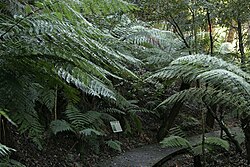
- Rainforest Gully: A reconstructed environment featuring plants from the rainforests of Eastern Australia. The gully is arranged by geography, with Tasmanian species at the lower end, followed by Victorian, New South Wales, and Queensland species as you move up.
- Rock Garden: A display of plants adapted to diverse habitats ranging from arid deserts to alpine regions.
- Sydney Region Flora: Showcasing the unique plants endemic to the sandstone formations of the Sydney basin.
- Mallee Plants: Featuring mallees—multi-stemmed eucalypts—along with their associated shrubs and grasses.
- The Eucalypt Lawn: A significant collection containing approximately one-fifth of all Australian eucalypt species.
- Specialized Families: Dedicated displays of Proteaceae (such as Banksias, waratahs, and grevilleas) and Myrtaceae (such as Callistemon, Leptospermum, and Melaleuca).
- Wattles: A collection representing the genus Acacia.
Scientific Research and Conservation
Beyond its role as a public garden, the ANBG is a vital hub for scientific advancement. It functions as an education center for students ranging from primary to tertiary levels, providing training in horticulture and taxonomy.
The gardens play a crucial role in conservation biology by cultivating rare and endangered plant species. By maintaining these living collections, the gardens help preserve the genotypes (the genetic makeup) of threatened plants, providing a safeguard against extinction in the wild.
The Australian National Herbarium
The site houses the Australian National Herbarium, which holds the third largest collection of pressed, dried plant specimens in the country. Operated jointly with the Commonwealth Scientific and Industrial Research Organisation (CSIRO) as part of the Centre for Plant Biodiversity Research, the herbarium is a cornerstone of Australian botanical science. While the herbarium itself is not open to the public, it contributes to the Australasian Virtual Herbarium (AVH), an online database containing six million specimen records.
The gardens also manage significant digital resources, such as "What's Its Name" (WIN), which provides access to the Australian Plant Name Index (APNI). This index lists every scientific name ever used for Australian plants, making it an invaluable tool for researchers.
Summary of the Australian National Botanic Gardens
| Feature | Details |
|---|---|
| Established | September 1949 |
| Location | Acton, Canberra, ACT |
| Total Land Area | 90 hectares |
| Primary Function | Study, promote, and conserve Australian flora |
| Key Facilities | Australian National Herbarium, Library, Research Centre |
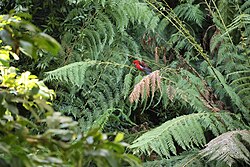
| Wildlife | Over 100 native and exotic bird species recorded |
Frequently Asked Questions
What is the main purpose of the Australian National Botanic Gardens?
The primary mission of the ANBG is to study and promote Australia's native flora. It achieves this through scientific research, the cultivation of rare and endangered species, and public education.
Is the Australian National Herbarium open to the public?
No, the Australian National Herbarium is a research facility and is not open to the general public. However, the gardens' library is available to students and the public by appointment.
What kind of plants can I see at the gardens?
You can see more than 5,500 species of native Australian plants, including eucalypts, wattles, banksias, and various rainforest and desert species organized by their natural habitats.
How does the garden help protect endangered plants?
The gardens maintain living collections of rare and endangered species. This allows scientists to protect their genetic material through cultivation, ensuring these plants are preserved even if they face threats in the wild.
Can I see birds at the Botanic Gardens?
Yes, due to the mature vegetation and the variety of habitats provided, over 100 native and exotic bird species have been recorded within the gardens.