Exploring the Flora of Australia: A Comprehensive Botanical Record
Australia is home to a vast and diverse array of plant life, ranging from towering eucalyptus forests to delicate mosses. To document this incredible biodiversity, the Flora of Australia series was established. This monumental scientific undertaking provides a detailed description of the vascular plants, bryophytes (non-vascular plants like mosses), and lichens found throughout Australia and its external territories.
The Scope of the Series
Orchestrated by Alison McCusker, the Flora of Australia is a massive 59-volume project. Published by the Australian Biological Resources Study (ABRS), the series aims to provide a definitive taxonomic record. Taxononmy is the scientific system used to name, define, and classify groups of biological organisms.
The scale of this project is immense. The ABRS estimates that once the series is fully complete, it will have described over 20,000 different plant species. To maintain scientific consistency, the series utilizes the Cronquist system of taxonomy to classify the plants described within its pages.
Evolution from Print to Digital
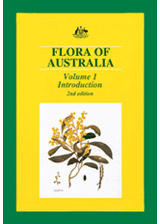
The series has undergone significant changes in how information is delivered to scientists and the public. The first volume, which serves as an introduction, was originally published in 1981. A second, extended edition of this introductory volume was later released in 1999.
While the printed volumes were once the primary way to access this data, the landscape of botanical research has shifted. In 2017, the ABRS launched an online Flora of Australia. As part of this transition to digital resources, no further printed volumes will be published.
Key Facts
- Total Volumes: 59 volumes planned for the series.
- Species Count: Estimated to describe over 20,000 plant species.
- Taxonomy System: Uses the Cronquist system.
- Key Figures: Orchestrated by Alison McCusker.
- Publisher: Australian Biological Resources Study (ABRS).
- Digital Transition: An online version was launched in 2017; no more print volumes will be released.
Related Botanical Publications
The ABRS has expanded its scientific reach beyond general flora. To provide a more holistic view of Australian biology, they have also published specialized series, including:
- Fungi of Australia
- Algae of Australia
- Flora of Australia Supplementary Series
Historical Botanical Censuses
The Flora of Australia is part of a long tradition of botanical recording in the region. Before this modern series, various scientists conducted censuses (comprehensive surveys) of Australian plant life. These historical works laid the groundwork for our current understanding of the continent's vegetation.
| Year(s) | Author | Title |
|---|---|---|
| 1793–95 | J. E. Smith | A Specimen of the Botany of New Holland |
| 1804–05 | J. E. Smith | Exotic Botany |
| 1804–07 | J. J. H. de Labillardière | Novae Hollandiae Plant. Spec |
| 1810 | R. Brown | Prodromus Florae Novae Hollandiae et Insulae Van Diemen |
| 1814 | R. Brown | Botanical Appendix to Flinders' Voyage |
| 1849 | R. Brown | Botanical Appendix to C. Sturt, Narrative of an Expedition into Central Australia |
| 1856 | J. D. Hooker | Introductory Essay, Flora Tasmaniae |
| 1863–78 | G. Bentham | Flora Australiensis |
| 1882 | F. Mueller | Systematic Census of Australian Plants |
| 1889 | F. Mueller | Second Systematic Census |
| 1990 | R. J. Hnatiuk | Census of Australian Vascular Plants |
Frequently Asked Questions
What types of plants does the Flora of Australia cover?
The series describes vascular plants, bryophytes (such as mosses), and lichens found in Australia and its external territories.
How many species are expected to be documented?
The Australian Biological Resources Study estimates that the completed series will describe more than 20,000 plant species.
Is the Flora of Australia still being published in print?
No. While the series began with printed volumes, no more printed volumes will be published following the launch of the online Flora of Australia in 2017.
What taxonomic system is used in the series?
The series utilizes the Cronquist system of taxonomy to classify the plants.
Who is responsible for publishing this series?
The series is published by the Australian Biological Resources Study (ABRS).