AT&T History: From the Bell System to a Global Telecom Giant
The story of AT&T is essentially the story of modern telecommunications. From its origins as a protector of Alexander Graham Bell's patents to its evolution into a diversified media and technology conglomerate, the company has shaped how the world communicates for nearly 140 years. Its journey is marked by periods of absolute monopoly, groundbreaking scientific research, and dramatic corporate restructuring.
Origins and the Rise of the Bell System
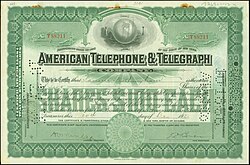
The foundation of AT&T began with the Bell Patent Association in 1874, created to safeguard the patent rights of Alexander Graham Bell. This entity evolved into the Bell Telephone Company in 1875. By 1880, management sought to create a commercially viable nationwide long-distance network, leading to the formal incorporation of the American Telephone and Telegraph Company (AT&T) on March 3, 1885.
Throughout the late 19th century, AT&T expanded its reach from New York City to Chicago and beyond. In 1899, the assets of American Bell were transferred to AT&T to bypass restrictive Massachusetts corporate laws that limited capitalization. This move established AT&T as the parent company of both American Bell and the broader Bell System.

Early Expansion and Monopoly
The early 20th century saw AT&T solidify its dominance. The 1913 Kingsbury Commitment allowed the company to legally maintain its growing monopoly over telecommunications. A pivotal moment occurred in 1915 with the development of the first transcontinental phone call, which paved the way for a truly nationwide network.
Innovation in Radio and Research
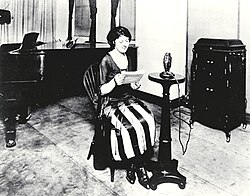
AT&T did not limit itself to wired telephony. In 1920, the company secured exclusive rights for "Public Service Telephony" through agreements with the Radio Corporation of America (RCA). While early radio links—such as the one between Avalon Island and the mainland—were eventually replaced by cables due to privacy concerns, the company continued to experiment with broadcasting.
In 1926, AT&T reorganized its radio activities into the Broadcasting Company of America (BCA), centered around the WEAF station in New York City. This subsidiary managed a network of 17 stations, extending as far west as Kansas City, Missouri.
To sustain this pace of innovation, Bell Laboratories was formed in 1925. Bell Labs became the engine for research and development, driving the technological advancements that would define the industry for decades.
Undersea Communications and Global Infrastructure
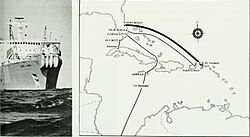
AT&T played a critical role in establishing the physical infrastructure of global communication. Starting with commercial cable laying in 1955, the company deployed massive undersea networks. This included the 1955 installation of TAT-1, the first trans-Atlantic telephone cable, which provided 48 telephone circuits between North America and Europe.
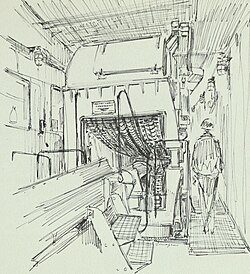
The company utilized a specialized fleet of ships, such as the CS Long Lines, to deploy coaxial and later fiber-optic cables. By 1975, the TAT-6 cable increased capacity to 4,000 channels. AT&T's undersea operations were supported by Western Electric, which manufactured the necessary equipment, and Bell Labs, which provided the technical specifications.
The Great Break-up: United States v. AT&T
The company's dominance eventually drew the attention of the U.S. Department of Justice. In 1974, the government sued AT&T for violating antitrust laws, alleging that the company used monopoly profits from Western Electric to subsidize its network.
A 1982 settlement led to the historic divestiture of the Bell System on January 1, 1984. AT&T was split into seven Regional Bell Operating Companies (RBOCs), colloquially known as the "Baby Bells":
- Ameritech (later part of AT&T Inc.)
- Bell Atlantic (became Verizon)
- BellSouth (merged with AT&T Inc.)
- NYNEX (acquired by Bell Atlantic/Verizon)
- Pacific Telesis (later part of AT&T Inc.)
- Southwestern Bell (became SBC, which later acquired AT&T Corp.)
- US West (acquired by Qwest, then Lumen Technologies)

Modern Era: Acquisitions and Rebranding
The corporate landscape shifted again in 2005 when SBC Communications, one of the original Baby Bells, acquired AT&T Corp. for $16 billion. In a strategic branding move, SBC adopted the more globally recognized AT&T name and ticker symbol ("T").

The 21st century saw AT&T venture into entertainment and broadband. The company acquired DirecTV in 2015 and Time Warner in 2018 (renaming it WarnerMedia). However, these ventures were eventually reversed; WarnerMedia was spun off in 2022 to merge with Discovery, Inc., and AT&T sold its majority stake in DirecTV to TPG Capital in 2025.
Corporate Architecture and Headquarters
AT&T's physical presence reflected its corporate stature. After moving from Boston to New York City, the company occupied 195 Broadway, a Greek-styled structure designed by William Welles Bosworth. In 1984, the company opened the iconic Postmodern building at 550 Madison Avenue, designed by Philip Johnson.

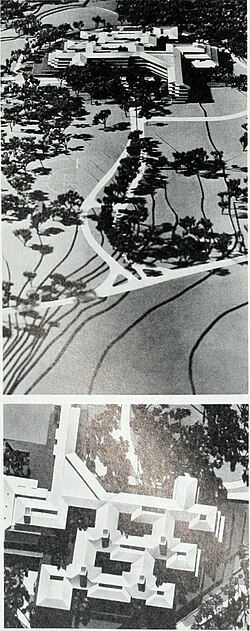
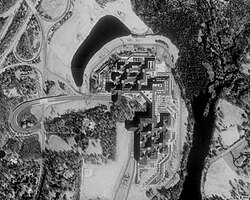
In 1975, AT&T opened a luxurious "Pagoda" style campus in Basking Ridge, New Jersey. This 130-acre complex featured an underground parking garage for 3,900 vehicles and a private helipad. It served as the corporate headquarters starting in 1992 before being sold to Pharmacia Corporation in 2002 and later acquired by Verizon.

Key Facts
- Founded: 1885 as a long-distance subsidiary of the Bell Telephone Company.
- Major Innovation: Established the first transcontinental phone call in 1915.
- Research Arm: Bell Laboratories was created in 1925 to lead R&D.
- Divestiture: Split into seven "Baby Bells" in 1984 following a DOJ antitrust suit.
- SBC Merger: SBC Communications acquired AT&T Corp. in 2005 and adopted the AT&T brand.
- Infrastructure: Deployed the first trans-Atlantic cable (TAT-1) in 1955.
- Recent Shift: Spun off WarnerMedia in 2022 and sold DirecTV stake in 2025.
| Period/Year | Key Event | Outcome |
|---|---|---|
| 1885 | Incorporation | AT&T founded as long-distance subsidiary |
| 1925 | Bell Labs Formed | Centralized research and development |
| 1984 | Divestiture | Split into 7 Regional Bell Operating Companies |
| 2005 | SBC Acquisition | SBC buys AT&T Corp. and rebrands as AT&T Inc. |
| 2022 | WarnerMedia Spin-off | Merged with Discovery to form Warner Bros. Discovery |
| 2024 | Internal Merger | AT&T Corp. merged into AT&T Enterprises, LLC |
Frequently Asked Questions
What were the "Baby Bells"?
The Baby Bells were seven Regional Bell Operating Companies (RBOCs) created in 1984 after the U.S. government forced the breakup of the AT&T monopoly to promote competition in the telecommunications market.
What was the significance of Bell Labs?
Formed in 1925, Bell Labs was the research and development arm of AT&T, responsible for critical innovations in telephony, cabling, and transmission technologies that powered the global communications network.
How did SBC Communications become AT&T?
SBC Communications, one of the original Baby Bells, acquired AT&T Corp. in 2005 for $16 billion. Because the AT&T brand was more globally recognized, SBC rebranded itself as AT&T Inc.
What happened to AT&T's media ventures?
AT&T expanded into entertainment by acquiring DirecTV and Time Warner (WarnerMedia). However, it later spun off WarnerMedia in 2022 and sold its majority stake in DirecTV to TPG Capital in 2025 to refocus on its core connectivity business.
What was the TAT-1 cable?
Installed in 1955, TAT-1 was the first trans-Atlantic telephone undersea cable, allowing 48 simultaneous telephone circuits between North America and Europe.