Astarte: The Phoenician Goddess of Love, War, and Hunting
In the pantheons of the ancient Near East, few deities possess a legacy as complex and far-reaching as Astarte. A multifaceted goddess of the Phoenicians and Canaanites, she presided over seemingly contradictory domains: the tenderness of love and beauty, and the brutality of war and hunting. Her influence stretched from the city-states of the Levant to the furthest reaches of the Mediterranean, evolving as she was adopted by the Egyptians, Greeks, and Romans.
Astarte is often viewed as the West Semitic counterpart to the Mesopotamian Ishtar, embodying a powerful feminine force that could both nurture and destroy. Whether depicted as a fierce warrior on a chariot or a graceful symbol of desire, she remained a central figure in the spiritual life of the ancient world.
Key Facts
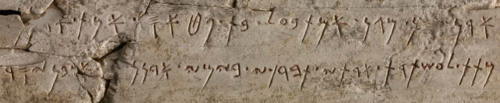
- Primary Domains: Beauty, Love, War, and Hunting.
- Major Cult Centers: Ugarit, Emar, Sidon, and Tyre.
- Celestial Association: Likely associated with the planet Venus.
- Primary Symbols: The lion, the horse, and the chariot.
- Cross-Cultural Equivalents: Aphrodite (Greek), Venus (Roman), Ishtar (Mesopotamian), and Isis (Egyptian).
Divine Origins and Relationships
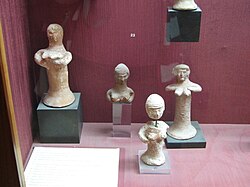
The lineage of Astarte varies depending on the cultural tradition. In the Hellenised Phoenician tradition, she is regarded as the daughter of Epigeius/Ouranos (the Sky) and Ge/Gaea (the Earth). Conversely, Egyptian traditions sometimes link her to the creator gods Ptah or Ra.
In terms of divine partnerships, Astarte is frequently associated with Baal (Hadad), often serving as his consort. In some contexts, she is referred to as the "Name of Baal" or the "Face of Baal," suggesting a deep theological intertwining between the two deities.
The Many Faces of Astarte
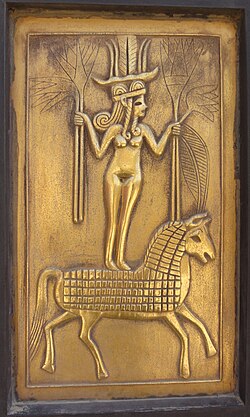
Astarte was not a static deity; she manifested in various roles that served the needs of her worshippers.
The Huntress and Warrior
Ancient texts from Ugarit, specifically KTU 1.92, describe Astarte as ʿAṯtartu Ṣawwādatu (Astarte the Huntress). These records depict her venturing into the desert, taking cover in low ground, and using weapons to slay animals, which she then offered as food to the gods El and Yarikh.
Beyond the hunt, she was a formidable warrior. In Emar, she was known as ʿAṯtartu ša tāḫāzi, or "Astarte of Battle." This martial aspect is mirrored in Egyptian stelae, where she is often depicted as an archer riding a horse.
![Archer Astarte riding a horse on an Egyptian stele[82]](/images/5c/37/5c3706dad1bff80fb73a4a6a22f6cdf056f7eac7d6441a133ce85ef3b19d4453.jpg)
The Leonine and Healing Goddess
The lion is one of Astarte's most enduring symbols, representing power and ferocity. This leonine attribute links her directly to her East Semitic equivalent, Ishtar. In Egypt, she was identified with several lion-goddesses, further cementing her role as a protector and a force of nature.
Despite her association with war, Astarte also functioned as a healer. Her role in medical and protective magic is evidenced by her presence in various ancient incantations used to ward off illness or danger.
Gender and Iconography
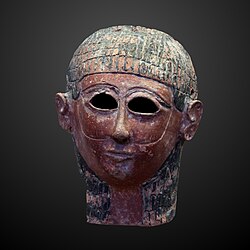
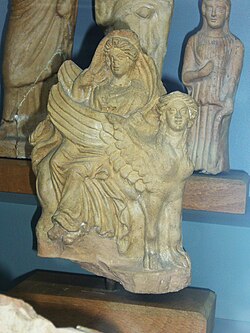
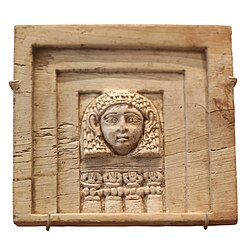
Astarte's iconography is diverse. While typically depicted as a woman, some archaeological finds suggest a more fluid representation. A 4th-century BC mask from Carthage depicts an androgynous, bearded individual argued to be Astarte, hinting at a gender non-conforming aspect of her divinity.
Cult and Worship Across the Mediterranean
The worship of Astarte was widespread, with temples and shrines appearing across several continents.
The Levant and Phoenicia
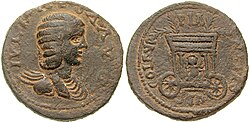
In Ugarit, her temple was likely located within the royal palace complex, supported by a staff of singers and dedicated servants. In the Phoenician cities of Sidon and Tyre, she was a primary deity. In Tyre, coins from the time of Hadrian depict her on a galley, holding a crown and scepter.
![A Bronze coin from Tyre from the time of Hadrian, depicting Tyche (left) and Astarte on a galley holding a crown in her right hand and a scepter in her left hand (right)[121]](/images/1a/17/1a17d2fa93c586de6f506d2f22365a78952b40b55bbfbb9027d532a8bca5e667.jpg)
Expansion into Egypt and Cyprus
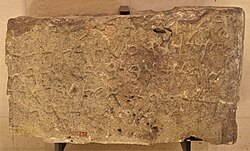
In Egypt, Astarte was integrated into the local pantheon, sometimes appearing as the consort of Set. In Cyprus, her influence was immense, particularly in Kition, where administrative records (the Kition Tariffs) detail the monthly expenses of her temple.
The Punic World and Beyond
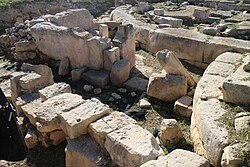
As the Phoenicians founded Carthage, Astarte traveled with them. In the Punic world, she often merged with the goddess Tanit, appearing in inscriptions as Tanit-ʿAštart. Her cult eventually reached Malta, Sicily, Italy, and as far as Hispania and Britannia.
Summary of Astarte's Cultural Equivalents
| Culture | Equivalent Deity | Primary Shared Attributes |
|---|---|---|
| Greek | Aphrodite | Love, Beauty, Desire |
| Roman | Venus | Love, Fertility, Gardens |
| Mesopotamian | Ishtar | War, Love, Lions, Venus (Planet) |
| Sumerian | Inanna | Love, War, Political Power |
| Egyptian | Isis | Magic, Motherhood, Healing |
Frequently Asked Questions
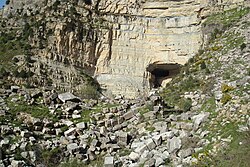
![The remains of the castle which was built on ʿštrt ʾrk/Venus Erycina temple[125]](/images/83/ed/83ede5bb0c9fc4ca125b551da02fb9deba4657e7873d4f99e07e586d5c69e5e2.jpg)
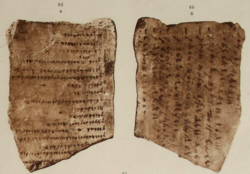
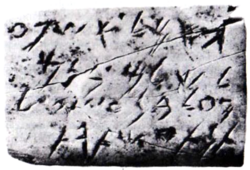
![A view in the sanctuary in Pyrgi, which included a temple to Astarte (as mentioned in the Pyrgi Tablets)[127]](/images/ca/0b/ca0b7e9e6698dd8fef129c24b90af96887d9566aa0231eb5c5ceeaf2f990d919.png)
Was Astarte only a goddess of love?
No. While she is often compared to Aphrodite or Venus, Astarte was equally a goddess of war and hunting. She was frequently depicted with weapons, chariots, and lions, representing her fierce and protective nature.
How is Astarte related to the biblical Astaroth?
Astaroth is generally considered the biblical Hebrew rendering of Astarte. In the Old Testament, the worship of Astarte (and other similar deities) was often condemned as idolatry.
What were the symbols associated with Astarte?
Her most common symbols include the lion (representing power), the horse and chariot (representing war and the hunt), and the planet Venus (representing beauty and the celestial realm).
Where were her most important temples located?
Her major cult centers were in the Levant, specifically in the cities of Ugarit, Emar, Sidon, and Tyre. She also had significant sanctuaries in Cyprus (Kition) and Carthage.
Did Astarte have a husband?
In many traditions, she is identified as the consort of the storm god Baal (Hadad), though her relationships varied across different regions and time periods.