Assyria: The Rise and Fall of Mesopotamia's First Great Empire
Long before the modern borders of the Middle East were drawn, the region of Assyria emerged as one of the most formidable powers of the ancient world. From its humble beginnings as a city-state centered around the city of Assur, it evolved into a sprawling empire that dominated the Near East through military innovation, administrative precision, and a deep devotion to its national deity.
The trajectory of Assyria is a story of cyclical power: a rise to independence, a period of territorial expansion, a dramatic collapse, and a final, thunderous resurgence as the Neo-Assyrian Empire. Its legacy survives not only in the ruins of its great capitals but in the very foundations of imperial governance.
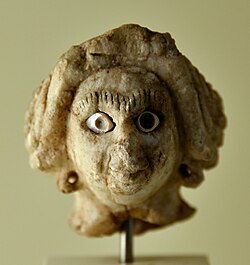
Key Facts
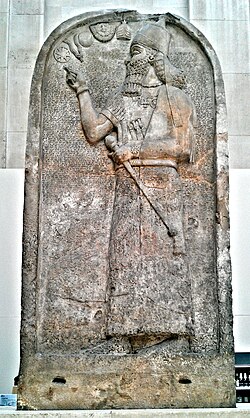
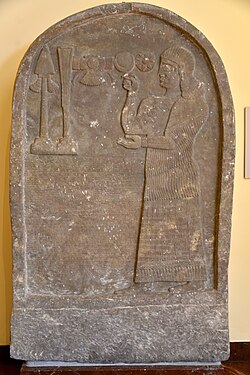
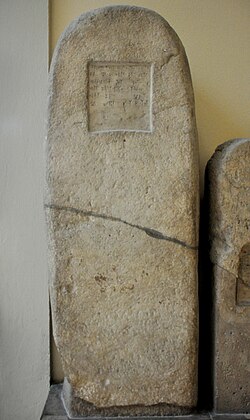
![Detail of a stele in the style of the Neo-Assyrian royal steles, erected in Assur in the 2nd century AD under Parthian rule, by the local ruler Rʻuth-Assor[85]](/images/fa/ef/faef59eb0d9617fee1a7f60d655c3e859b3a93050d0d18d6b5045e7b8b08964b.jpg)
- Timeline: Existed from approximately 2025 BC to 609 BC.
- National Deity: Ashur, the personification of the capital city and later the embodiment of the land.
- Major Capitals: Assur, Nimrud, Dur-Sharrukin, and Nineveh.
- Official Languages: Akkadian, Sumerian, and Aramaic.
- Peak Power: Reached its greatest extent under Esarhaddon (r. 681–669 BC) with the conquest of Egypt.
The Evolution of the Assyrian State
From City-State to Territorial Power
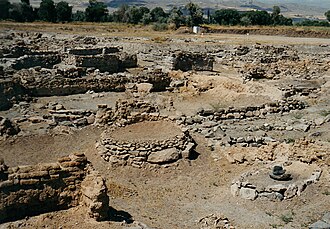
The earliest evidence of settlement in the Assyrian heartland dates back to the Hassuna culture (c. 6300–5800 BC), though the city of Assur itself shows archaeological evidence from c. 2600 BC. For centuries, Assur was not independent, falling under the influence of southern Mesopotamian powers like the Akkadian Empire and the Third Dynasty of Ur.
Around 2025 BC, following the collapse of the Third Dynasty of Ur, Assur became an independent city-state under Puzur-Ashur I. During this Old Assyrian period, the state was known as ālu Aššur ("city of Ashur"). The rulers of this era did not call themselves kings, but rather Išši'ak (governors), acknowledging the deity Ashur as the formal king.
The Middle Assyrian Empire
By the 14th century BC, Assyria transitioned into a regional polity, referred to in official documents as māt Aššur ("land of Ashur"). This shift began under Ashur-uballit I (c. 1363–1328 BC). The Middle Assyrian period saw significant expansion, peaking under Tukulti-Ninurta I, who defeated the Hittites at the Battle of Nihriya (c. 1237 BC) and briefly conquered Babylonia.
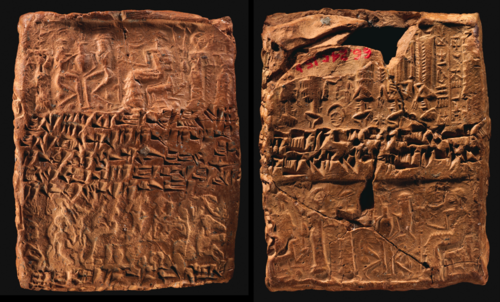
![A line-drawing of a royal seal of the Old Assyrian king Erishum I, r. c. 1974–1934 BC. The seated ruler is thought to represent the god Ashur, with Erishum being the bald figure being led toward him.[109]](/images/fa/6e/fa6e72f39e4c571c0c369f4fc830696b10ffae712f47cb02b85053644da01e75.png)
However, this era ended in instability. Following the assassination of Tukulti-Ninurta I in 1207 BC, the state suffered a decline that coincided with the broader Late Bronze Age collapse. While some kings attempted to reverse this trend, Assyria remained largely restricted to its heartland until the 10th century BC.
The Neo-Assyrian Empire: The Height of Power
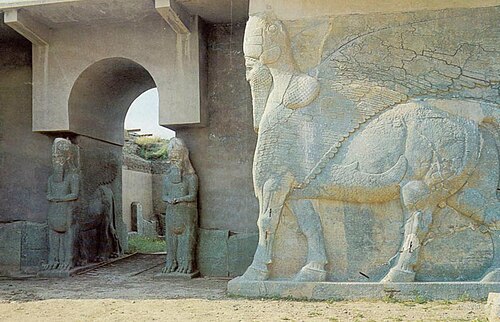
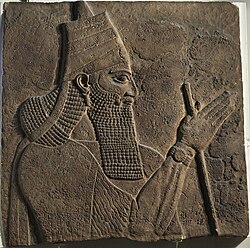
The reversal of Assyrian decline began under Ashur-dan II (r. 934–912 BC), marking the start of the Neo-Assyrian Empire. This period is characterized by unprecedented military aggression and centralized administration. Tiglath-Pileser III (r. 745–727 BC) is credited with consolidating and expanding the empire into a truly global power.
The Sargonid Dynasty and the Great Capitals
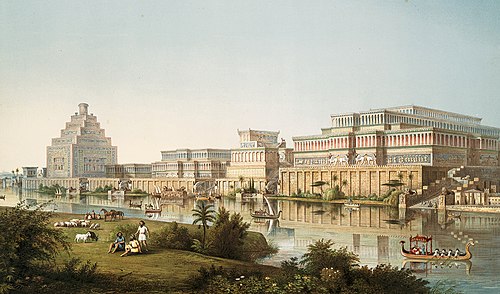
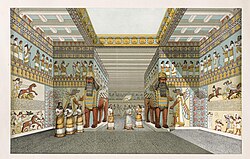
The empire reached its zenith under the Sargonid dynasty. Sargon II (r. 722–705 BC) founded the capital Dur-Sharrukin, while his son Sennacherib (r. 705–681 BC) moved the capital to Nineveh. Sennacherib extensively renovated Nineveh and is possibly responsible for the Hanging Gardens, one of the Seven Wonders of the Ancient World.
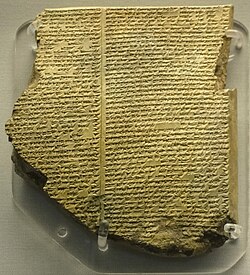
The empire's territorial peak occurred under Esarhaddon, who conquered Egypt in 671 BC. The final great king of this era, Ashurbanipal (r. 669–631 BC), is remembered not only for his military campaigns but for his vast library, which preserved essential works of literature, including the Epic of Gilgamesh.
Society, Culture, and Administration
Government and Military
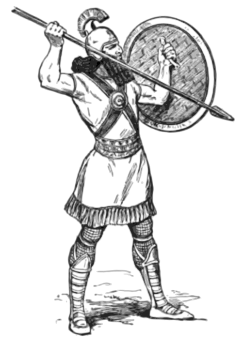
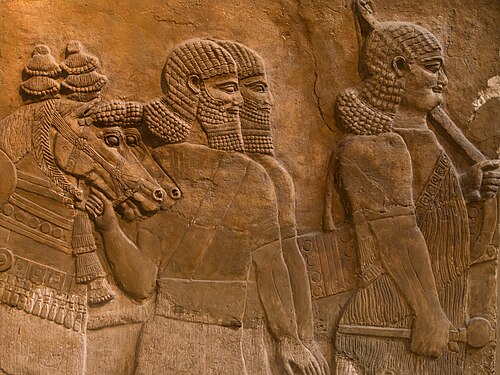
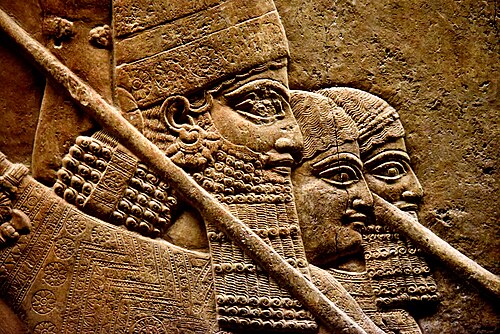
The Assyrian state was a monarchy supported by a complex aristocracy and a highly organized military. Their army was one of the first to utilize professional soldiers and advanced siege tactics, allowing them to maintain control over diverse populations across the Near East.
The Role of Women
While predominantly patriarchal, some women exerted significant political influence. Shammuramat, queen of Shamshi-Adad V, may have served as regent and participated in military campaigns. Naqi'a, the wife of Sennacherib, was one of the most documented women in Assyrian history, influencing the reigns of three successive kings.
![Naqi'a, Sennacherib's wife, 8th-7th centuries BC, the most documented woman in Assyrian history.[174]](/images/70/ac/70acb4ef25a79d876f563121c079e6b1d408eb9ce233028cca3175c4a9edd58e.png)
Language and Literacy
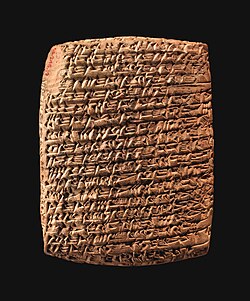
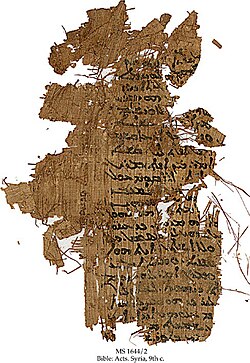
Assyria utilized cuneiform (wedge-shaped writing on clay tablets). The language evolved through three stages: Old Assyrian (2000–1500 BC), Middle Assyrian (1500–1000 BC), and Neo-Assyrian (1000–500 BC). Over time, Aramaic became increasingly prevalent alongside Akkadian.
The Fall of the Empire
The collapse of the Neo-Assyrian Empire was as swift as its rise. Internal instability, particularly the "Babylonian problem"—constant revolts in the south—weakened the state. In 626 BC, Babylon revolted under Nabopolassar, and by 615/614 BC, the Medes joined the conflict.
The great cities fell in rapid succession: Assur was sacked in 614 BC, and Nineveh fell in 612 BC. The final ruler, Ashur-uballit II, was defeated at Harran in 609 BC, ending the ancient line of Assyrian kings.
| Period | Approximate Dates | Key Characteristic | Primary Capital |
|---|---|---|---|
| Old Assyrian | c. 2025–1364 BC | Independent city-state; trade focus | Assur |
| Middle Assyrian | c. 1363–912 BC | Rise as a territorial state | Assur / Kar-Tukulti-Ninurta |
| Neo-Assyrian | 911–609 BC | Imperial expansion; military dominance | Nimrud / Nineveh |
Frequently Asked Questions
Who was the national deity of Assyria?
The national deity was Ashur. Originally a personification of the city of Assur, the god eventually came to represent the entire Assyrian land and the divine authority behind the king's rule.
What were the most important capitals of the empire?
The most significant capitals included Assur (the original center), Nimrud, Dur-Sharrukin, and Nineveh, the latter of which became the most famous capital under Sennacherib.
What language did the ancient Assyrians speak?
The official languages were Akkadian and Sumerian, written in cuneiform. However, Aramaic also became a widely used language throughout the empire's later stages.
Why did the Neo-Assyrian Empire collapse so quickly?
The collapse was primarily caused by frequent revolts in Babylonia and a coordinated invasion by the Medes and Babylonians, leading to the fall of Nineveh and Assur.
Who was Ashurbanipal?
Ashurbanipal was the last great king of the Neo-Assyrian Empire. He is best known for establishing a massive library at Nineveh, which preserved a vast amount of Mesopotamian knowledge and literature.