Arthropods in Cinema: From Giant Monsters to Superheroes
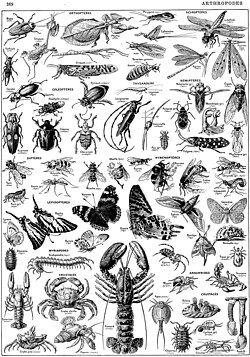
Arthropods—a vast phylum including crustaceans, arachnids, and insects—are some of the most diverse creatures on Earth, with over 1,000,000 known species. Defined by their segmented bodies, jointed appendages, and protective cuticles (hard outer shells), these animals have long fascinated and repelled human audiences. From the tiny ants in our gardens to the crabs on our shores, arthropods possess a variety of shapes and colors that evoke strong emotional responses, ranging from admiration for a butterfly's beauty to a deep-seated fear of spiders.
In the world of film, these creatures are often used as powerful symbols. Depending on the genre, they are either portrayed as monstrous entities designed to instill fear and disgust or anthropomorphized—given human characteristics—to serve as sympathetic, relatable characters in children's stories.
Key Facts
- Species Diversity: There are more than 1,000,000 species of arthropods, including ants, spiders, shrimps, and butterflies.
- Cinematic Roles: Arthropods typically oscillate between being symbols of horror (monsters) or symbols of empathy (animated sidekicks).
- The "Big Bug" Genre: Popular in the 1950s, these films often used giant mutated insects as metaphors for nuclear anxiety.
- Professional Handling: "Bug Wranglers," such as Norman Gary and Steven R. Kutcher, are hired to control live insects on set.
- Psychological Impact: Modern positive depictions in superhero films may help reduce arachnophobia and other arthropod fears.
The Evolution of Arthropods on Screen
Capturing arthropods on film was not always easy. In the early 20th century, filmmakers struggled with technical limitations in lens quality and film-stock exposure, making it difficult to film small insects in live-action. This led many early creators to turn to animation. Winsor McCay, a pioneer of the medium, produced How a Mosquito Operates in 1912.
Some filmmakers took more drastic measures. Władysław Starewicz discovered that live stag beetles became immobile under hot studio lights. To solve this, he used deceased insects, attaching wires to their bodies to puppeteer them before eventually moving toward fully created puppets.
The Rise of Computer Animation
The advent of computer-generated imagery (CGI) revolutionized the depiction of insects. Pixar's 1984 short The Adventures of André and Wally B. demonstrated that early computer animation was perfectly suited for rendering the shiny, metallic surfaces and rod-like appendages of arthropods. By 1996, films like Joe’s Apartment could render hundreds of photorealistic insects, while later hits like A Bug's Life (1998), Antz (1998), and Bee Movie (2007) used anthropomorphism to make strange creatures feel approachable and heroic.
Arthropods as Icons of Horror
The use of arthropods in horror and thriller films leverages a conditioned human aversion to "creepy crawlies." As noted by Jamie Whitten, insects are often viewed as an omnipresent enemy that destroys crops, spreads disease, and invades human spaces. This inherent danger makes them an ideal tool for creating tension.
The "Big Bug" Movies of the 1950s
Following World War II, a subgenre known as "big bug movies" emerged. Films like Them! (1954), featuring radiation-mutated giant ants, and The Deadly Mantis (1957) reflected the era's nuclear anxieties. These films provided a cathartic experience: the terrifying, remote threat of the nuclear bomb was replaced by a tangible monster that could be defeated by competent government officials and soldiers.
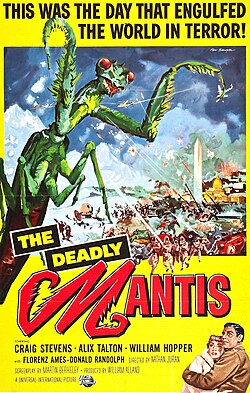
Beyond nuclear metaphors, some theorists suggest these giant swarms represent repressed sexual desires incompatible with civilized society. From a biological perspective, however, such creatures face immense physical hurdles. While higher oxygen levels in Earth's early history allowed for crow-sized dragonflies, modern giant insects would struggle with the square-cube law. Their hollow exoskeleton tubes would be prone to buckling, and their pin-like joints would face extreme stress compared to vertebrate joints.
Modern Perspectives: Action and Fantasy
In recent years, the cinematic portrayal of arthropods has shifted toward the positive. The Marvel Cinematic Universe has played a significant role in this transition through characters like Ant-Man and Spider-Man.
Superpowers and Sympathy
In the Ant-Man series, characters utilize technology to communicate with various species, including the crazy ant (Paratrechina longicornis), carpenter ant (Camponotus pennsylvanicus), bullet ant (Paraponera clavata), and fire ant (Solenopsis geminata). By framing arthropod traits—such as immense strength and web-weaving—as "superpowers," these films recast insects and arachnids as allies rather than enemies.
This shift may have real-world psychological benefits. A 2019 study by Hoffman et al. suggested that exposure to clips from Spider-Man and Ant-Man led to a small decrease in fear among individuals with arthropod phobias.
Lessons from A Bug's Life
Pixar's A Bug's Life further humanized the phylum by depicting a colony of ants fighting against oppressive grasshoppers. While fictionalized, the film touches on real biological truths, such as the necessity of colony-wide cooperation to locate and protect food sources, as a single ant cannot typically transport large amounts of food alone.
| Era/Genre | Typical Portrayal | Emotional Goal | Example Films |
|---|---|---|---|
| 1950s Horror | Giant, mutated monsters | Fear, Anxiety, Catharsis | Them!, The Deadly Mantis |
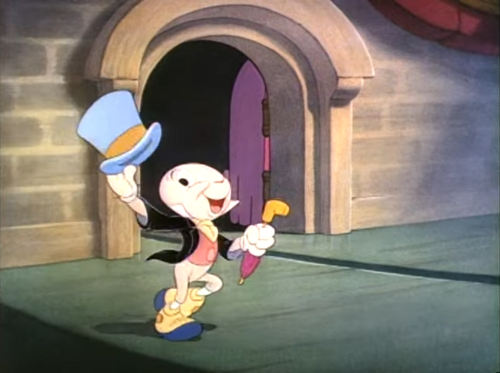
| Classic Animation | Wise or cute sidekicks | Comfort, Sympathy | Pinocchio (Jiminy Cricket) |
| Modern CGI | Heroic societies | Empathy, Adventure | A Bug's Life, Antz |
| Modern Superhero | Source of superpowers | Admiration, Empowerment | Spider-Man, Ant-Man |
Frequently Asked Questions
What is a Bug Wrangler?
A Bug Wrangler is a specialist hired by film productions to control and direct live insects and arachnids on set, as these creatures cannot be tamed or trained like traditional animals. Notable experts include Norman Gary and Steven R. Kutcher.
Why were giant insect movies popular in the 1950s?
These films often served as metaphors for the fear of nuclear radiation following World War II. They allowed audiences to process the terror of the atomic age by depicting a monster that could be physically fought and defeated.
Could giant insects actually exist today?
Biologically, it is unlikely. Due to the square-cube law, a giant insect's exoskeleton would likely buckle under its own weight, and its respiratory system (tracheae) would be insufficient unless the atmosphere had a much higher oxygen concentration, as it did in Earth's early history.
Can watching superhero movies help with phobias?
Some preliminary evidence suggests yes. A 2019 study found that people with a fear of arthropods experienced a slight reduction in their symptoms after watching clips from Spider-Man and Ant-Man, which portray these creatures in a positive light.
How did early filmmakers handle insects before CGI?
Early filmmakers used hand-drawn animation or physical puppets. Some, like Władysław Starewicz, used deceased insects attached to wires to create the illusion of movement through stop-motion puppetry.