Argentine Naval Prefecture: Guardians of the Coast and Rivers
The Argentine Naval Prefecture (Spanish: Prefectura Naval Argentina or PNA) is the specialized federal agency responsible for the protection of Argentina's vast river networks and maritime territories. Operating under the Ministry of Security, the PNA serves a dual purpose: it functions as a coast guard for the open seas and as a gendarmerie—a military-style police force—for the country's navigable rivers.
Because the Argentine Constitution prohibits the Armed Forces from intervening in internal civil conflicts, the PNA is legally defined as a civilian security force of a military nature. This unique status allows it to maintain a functional relationship with the Ministry of Defense, ensuring it can integrate into joint military planning while remaining a law enforcement body.
With a strength of 45,750 sworn members, the PNA is a massive organization, slightly larger than the Argentine Navy itself.
Key Facts
- Founded: June 1810.
- Parent Agency: Ministry of Security.
- Primary Roles: Coastal patrol, marine border protection, and search and rescue (SAR).
- Personnel: 45,750 sworn members.
- Jurisdiction: 10 operational zones across Argentina.
- Assets: A diverse fleet of patrol vessels, 10 planes, and 7 helicopters.
History and Evolution
Founding and Early Years
The roots of the PNA date back to June 1810, when the first autonomous Argentine government established a ports service. The first commander, Colonel Martín Jacobo Thompson, was appointed as the "Captain of Ports." While this marks the official founding date, the modern structure was formalized in October 1896 as the "National Maritime Prefecture," an initiative led by Senator Manuel Florencio Mantilla.
The Falklands War
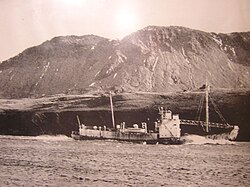
The PNA played a limited but significant role during the Falklands War. Two patrol vessels, the Islas Malvinas (GC-82) and Rio Iguazu (GC-83), were deployed. The Rio Iguazu was strafed by British Sea Harrier aircraft, resulting in one crew fatality and the ship running aground. The Islas Malvinas was captured by the Royal Navy and renamed HMS Tiger Bay.
The PNA also deployed Short SC.7 Skyvan transport aircraft for reconnaissance and rescue. Two of these aircraft, PA-50 and PA-54, were destroyed during the conflict—one by British naval gunfire and the other by a raiding party at Pebble Island.
Operational Mandate and Challenges
Combatting Illegal Fishing
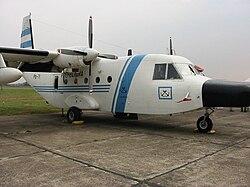
A primary modern mission for the PNA is the fight against illegal fishing within Argentina's Exclusive Economic Zone (EEZ). This effort involves detecting foreign vessels, often from eastern nations, using a combination of patrol ships and maritime surveillance aircraft, such as the CASA 212 S68 and Beechcraft 350ER.
The Chian-der 3 Incident
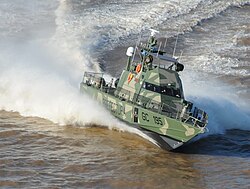
The PNA's enforcement history includes the controversial 1986 sinking of the Chian-der 3, a Taiwanese naval trawler. The vessel was tracked and sunk by the PNA ship Prefecto Derbes, resulting in two deaths and four injuries. The incident drew international condemnation from the British government and Taiwanese fishing unions.
Organizational Structure
Command and Headquarters
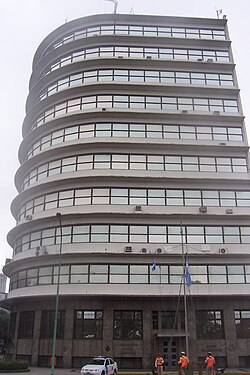
The PNA is headquartered at the Edificio Guardacostas (Coastguard Building) in Buenos Aires. It is led by the National Naval Prefect, supported by a Deputy National Naval Prefect. The organization is divided into three main departments: Security, Logistics, and Planning and Development.
Regional Jurisdiction
To manage the country's diverse waterways, the PNA is divided into ten operational zones:
- Alto Paraná, Alto Uruguay, and Lower Uruguay.
- Paraná Superior and Paraguay, Lower Paraná, and the Delta.
- Río de la Plata.
- North and South Argentine Seas.
- Lacustre and Comahue.
Equipment and Inventory
Maritime Fleet
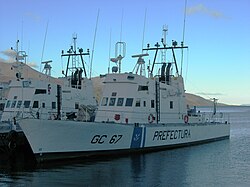
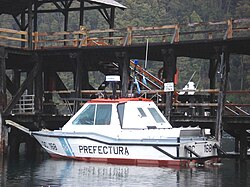
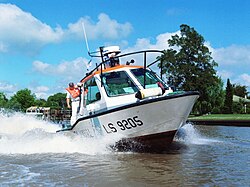
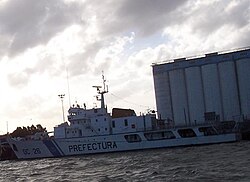
The PNA utilizes a tiered fleet of vessels for different environments. The Mantilla class (1,000 tons) provides heavy patrol capabilities with helicopter decks, while the Z-28 class and Damen vessels handle coastal and riverine duties.
| Category | Key Models/Classes | Primary Use |
|---|---|---|
| Heavy Patrol | Mantilla class (e.g., GC-24, GC-26) | Deep sea patrol & helicopter ops |
| Coastal Patrol | Z-28, Stan Tender, Shaldag-class | Border protection & river patrol |
| Specialized | PNA Dr. Bernardo Houssay, SB-15 Tango | Research, training, and salvage |
| Fixed-Wing | CASA C-212, Beechcraft King Air | Maritime surveillance & transport |
| Rotary-Wing | Eurocopter AS365, EC225 | Search and Rescue (SAR) & utility |
Aviation and Armament
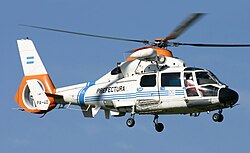
The PNA maintains a robust aviation wing for SAR and surveillance, featuring Eurocopter AS365 and EC225 helicopters. For security operations, personnel are equipped with a variety of firearms, including the Beretta 92 and Bersa TPR9 pistols, FN FAL battle rifles, and specialized equipment for the Grupo Albatros, such as the SIG SG550 assault rifle.
Frequently Asked Questions
Is the Argentine Naval Prefecture part of the Navy?
No. While it was attached to the Navy for a long period, it is now a civilian security force under the Ministry of Security, though it maintains a military nature and coordinates with the Ministry of Defense.
What is the difference between the PNA and a standard Coast Guard?
While it performs standard coast guard duties (maritime safety and border protection), the PNA also acts as a gendarmerie, meaning it has police authority over navigable rivers within the interior of the country.
How does the PNA handle illegal fishing?
The PNA uses maritime surveillance aircraft (like the CASA 212) to detect unauthorized vessels in the Exclusive Economic Zone (EEZ) and deploys patrol ships to intercept and capture them.
What is the highest rank in the PNA?
The highest rank is Prefect-General. The National Naval Prefect and Deputy National Naval Prefect hold this rank, with their titles equated to the naval ranks of Admiral and Vice Admiral, respectively.
What role did the PNA play in the Falklands War?
The PNA provided coastguard services to the islands using patrol vessels and transport aircraft. Two ships were lost or captured, and two Skyvan aircraft were destroyed during the conflict.