Argentina vs England: A History of Football Rivalry and British Influence
The footballing relationship between Argentina and England is one of the most complex and emotionally charged in sports. What began as a mentorship—with British expatriates introducing the game to the shores of South America—evolved into a fierce international rivalry defined by geopolitical tension and legendary sporting controversies.
Key Facts
- Total Meetings: 15 official matches.
- Overall Lead: England holds the edge with 6 victories to Argentina's 4.
- World Cup Record: Evenly split with 3 wins each.
- Knockout Success: Argentina leads 3–1 in World Cup elimination matches.
- Top Scorer: Michael Owen leads with 3 goals.
The British Roots of Argentine Football
Football in Argentina was born from the influence of the British community in Buenos Aires during the late 19th century. In 1867, the Buenos Aires Cricket Club organized the first recorded match in Palermo, played between two teams of British railway workers known as the White Caps and the Red Caps.
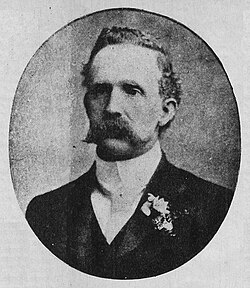
The development of the sport was spearheaded by Alexander Watson Hutton, a Glaswegian schoolteacher regarded as the "father of Argentine football." Hutton introduced the game at St. Andrew's Scots School and later founded the Buenos Aires English High School in 1884. His students eventually formed the Alumni Athletic Club in 1898, which became the most successful early team in Argentina, winning 22 titles before dissolving in 1913.
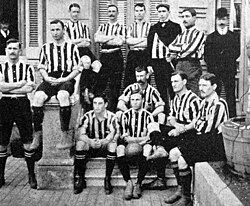
Alumni A.C. achieved a historic milestone by becoming the first local team to defeat a British side, beating South Africa 1–0. This era saw the establishment of the Argentine Football Association (AFA) and the founding of iconic clubs like Rosario Central, Newell's Old Boys, and Quilmes A.C., all of which were started by British expatriates.
Between 1904 and 1929, several British clubs toured South America. While early tours, such as Southampton's in 1904, were dominant, the gap closed over time. By the time Chelsea toured in 1929, the South American style of play had improved significantly, and the English side suffered eight defeats across 16 games.
Early International Encounters
The national teams first met at Wembley Stadium on May 9, 1951, resulting in a 2–1 win for England. In 1953, the teams met twice in Buenos Aires. The first match, a 3–1 victory for Argentina, is viewed by Argentines as their first win over England, though it is not officially recognized as a full international by FIFA or the AFA because England fielded a second-string "FA XI" team.
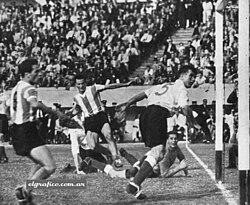
The second 1953 meeting was abandoned after 23 minutes due to torrential rain, despite a record attendance of 91,000 spectators. The rivalry intensified in the 1962 World Cup, where England's 3–1 victory knocked Argentina out of the tournament.
Crucial World Cup Moments and Controversies
The rivalry reached a fever pitch during the second half of the 20th century, fueled by high-stakes World Cup clashes and political friction.
The 1966 World Cup
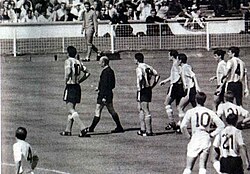
The 1966 quarter-final remains a point of contention for Argentina, particularly regarding the sending-off of captain Rattín and the nature of the match, which England won 1–0.
The 1986 World Cup and the "Hand of God"
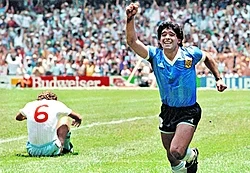
The 1986 quarter-final in Mexico was heavily influenced by the 1982 Falklands War. For Argentina, the match was an opportunity for symbolic revenge. The game is immortalized by Diego Maradona's two goals: the first, a handball known as the "Hand of God," and the second, a brilliant solo run often cited as the greatest World Cup goal in history.
Modern Era: 1998 to 2026
In 1998, Argentina eliminated England via a penalty shoot-out after a 2–2 draw. The 2002 World Cup saw a more sporting atmosphere, with David Beckham scoring a penalty to give England a 1–0 win, and a public reconciliation between Beckham and Diego Simeone.

The rivalry continued through various friendlies, including a 3–2 English victory in 2005. Most recently, the teams faced off in the 2026 World Cup semi-finals in Atlanta, where Argentina secured a 2–1 victory to advance.
Statistical Summary
| Category | Argentina | England |
|---|---|---|
| Total Wins | 4 | 6 |
| World Cup Wins | 3 | 3 |
| Knockout Stage Wins | 3 | 1 |
| Total Goals Scored | 17 | 22 |
| Senior International Titles | 23 | 1 |
Frequently Asked Questions
Who introduced football to Argentina?
Football was introduced by the British community in Buenos Aires, specifically through British railway workers and educators like Alexander Watson Hutton.
What is the significance of the "Hand of God" goal?
Scored by Diego Maradona in the 1986 World Cup, it was a goal scored with the hand. It is viewed by England as a cheat and by Argentina as a moment of brilliance and symbolic revenge for the Falklands War.
Which team has won more official matches?
England has won more official matches overall, with 6 victories compared to Argentina's 4.
How have the teams performed in World Cup knockout stages?
Argentina has been more successful in knockout matches, eliminating England in 1986, 1998, and 2026, while England eliminated Argentina in 1966.
Who is the top scorer in the rivalry?
Michael Owen is the top scorer in meetings between the two nations, having scored 3 goals.