Argentina Debt Restructuring: A History of Defaults and Financial Recovery
Argentina's financial history has been marked by a volatile cycle of sovereign defaults and complex restructuring efforts. A sovereign default occurs when a national government is unable or unwilling to meet its debt obligations to creditors. For Argentina, this process began in earnest during the depths of its worst economic crisis in 2001, triggering a decades-long legal and financial battle with international investors.
The 2001 Financial Crisis
Between 1998 and 2002, Argentina suffered a severe recession. On December 26, 2001, the nation defaulted on US$93 billion of its external debt. Of the US$81.8 billion in defaulted bonds, over half had been issued in the three years leading up to the crash. The fallout was immediate: foreign investment vanished, and capital flows ceased almost entirely until 2003.
To manage the collapse, Argentina floated its currency exchange rate, abandoning the previous 1-to-1 parity between the Argentine peso and the U.S. dollar. This led to a rapid devaluation of the peso to nearly 4-to-1, causing inflation to surge above 40% and real GDP to plummet by 11% in 2002.
The Path to Restructuring (2005–2010)
On January 14, 2005, the Argentine government launched its first major debt restructuring effort. This allowed the country to resume payments on 76% of the US$82 billion in sovereign bonds that had defaulted in 2001. Bondholders who participated accepted repayments of approximately 30% of the face value, deferred payment terms, and warrants linked to annual economic growth.

A second restructuring in 2010 further expanded this coverage, bringing the total percentage of bonds under repayment to 93%. During this period, Venezuela emerged as a significant player, purchasing over US$5 billion in restructured bonds between 2005 and 2007.
IMF Repayment and Debt Reduction
Argentina also worked to settle its obligations with the International Monetary Fund (IMF). By paying off installments due between 2006 and 2008, the government saved approximately US$842 million in interest, though the move reduced Central Bank reserves from US$28 billion to US$18.6 billion. By January 2006, total official public debt had decreased to US$124.3 billion.
The Holdout Problem and "Vulture Funds"
Despite the success of the swaps, a small group of bondholders—often referred to as vulture funds (investors who buy distressed debt at a deep discount to sue for full face value)—refused to participate. These "holdouts" represented only 1.6% of the total debt but created a massive legal hurdle.
The conflict centered on the pari passu (equal step) clause, which holdouts argued meant they must be paid in full if other bondholders were being paid. In August 2013, a U.S. appeals court ruled in favor of the holdouts, demanding full face value repayment.
This created a dangerous precedent: if Argentina paid the holdouts in full, other bondholders could invoke the Rights Upon Future Offers (RUFO) clause. This would have forced Argentina to pay all previous participants in full, creating an unaffordable liability of up to US$120 billion.
Resolution Under Mauricio Macri (2015–2016)
The deadlock persisted until 2015, when Mauricio Macri assumed the presidency. Macri sought to reintegrate Argentina into international credit markets. In early 2016, the government reached a settlement with holdout creditors, paying them roughly 25% less than their original demands.
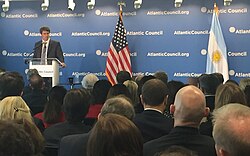
While the media reported the default had ended, several hundred million dollars in bonds remained unpaid. In November 2016, Argentina announced a further settlement of US$475 million with additional creditors. This shift led to a positive outlook from Moody's Investors Services and the eventual re-inclusion of Argentina in benchmark indices like the MSCI.

Recent Defaults and Ongoing Challenges
The stability achieved in 2016 was short-lived. On May 22, 2020, under the presidency of Alberto Fernández, Argentina defaulted again after failing to pay US$500 million to its creditors. As of the latest reports, negotiations continue for the restructuring of approximately US$66 billion in debt.
Key Facts
- 2001 Default: Argentina defaulted on US$93 billion of external debt.
- 2005 Swap: Restructured 76% of defaulted bonds at roughly 30% of face value.
- 2010 Swap: Increased restructured debt to 93%.
- The Holdout Risk: Paying holdouts in full risked triggering RUFO clauses, potentially adding US$120 billion in liabilities.
- 2020 Default: A new default occurred on May 22, 2020, involving a missed US$500 million payment.
| Period | Key Action | Outcome/Impact |
|---|---|---|
| 2001 | Sovereign Default | US$93 billion external debt default; Peso devaluation. |
| 2005 | First Restructuring | 76% of bonds exchanged; 30% face value repayment. |
| 2010 | Second Restructuring | Total restructured debt reached 93%. |
| 2016 | Macri Settlement | Settled with holdouts; returned to international markets. |
| 2020 | Second Major Default | Missed US$500 million payment; US$66 billion under negotiation. |
Frequently Asked Questions
What is a "vulture fund" in the context of Argentina's debt?
Vulture funds are distressed-debt investors who purchase sovereign bonds at a steep discount during a default and then sue the issuing government in court to demand the full face value of the bond plus interest.
What is the RUFO clause?
The Rights Upon Future Offers (RUFO) clause is a provision in debt restructuring agreements that ensures if a government offers better terms to holdout creditors in the future, the original participants in the restructuring are entitled to those same better terms.
Why did the peso devalue so sharply in 2002?
The peso devalued because Argentina abandoned its fixed 1-to-1 exchange rate parity with the U.S. dollar, allowing the currency to float. This resulted in the peso dropping to nearly 4-to-1 against the dollar.
Did Mauricio Macri fully end the Argentine default?
While Macri's administration settled with the majority of holdouts and restored access to credit markets in 2016, the resolution was temporary, as the country defaulted again in May 2020.
How much debt is currently being restructured as of 2020?
Following the May 2020 default, Argentina entered negotiations to restructure approximately US$66 billion of its debt.