Argentine Great Depression (1998–2002): Collapse and Recovery
The Argentine Great Depression was a severe economic collapse that gripped Argentina from the third quarter of 1998 through the second quarter of 2002. This period of turmoil followed fifteen years of economic stagnation and a brief window of free-market reforms. Triggered in part by financial crises in Russia and Brazil, the depression led to a systemic failure of the nation's financial architecture, resulting in widespread unemployment, social unrest, and a historic default on foreign debt.
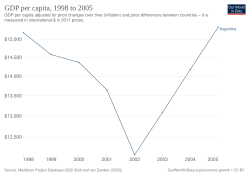
At its peak, the crisis devastated the population. The economy shrank by 28% between 1998 and 2002, pushing over 50% of Argentines below the official poverty line. Most alarmingly, 25% of the population was classified as indigent—meaning their most basic needs were unmet—and seven out of ten children lived in poverty by 2002.
Key Facts
- Duration: Q3 1998 to Q2 2002.
- Economic Impact: GDP contracted by 28% over the period.
- Social Cost: Poverty rates peaked at 57.5% in October 2002.
- Political Fallout: Led to the resignation of President Fernando de la Rua in December 2001.
- Financial Shift: Ended the peso's fixed exchange rate to the US dollar.
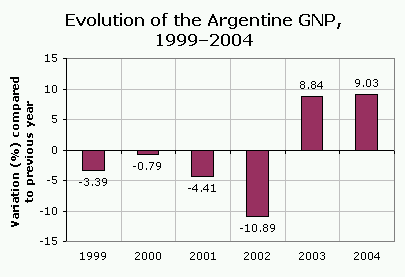
- Recovery: Average GDP growth of 9% for five years starting in 2003.
The Path to Collapse
The roots of the depression lay in a combination of fiscal indiscipline and labor market inflexibility. For years, Argentina had maintained a fixed exchange rate, pegging the peso to the US dollar to control inflation. However, this rigidity made the economy vulnerable to external shocks and internal imbalances.
As the crisis intensified, the government struggled to maintain the peg, leading to a depletion of foreign currency reserves. The tension culminated in late 2001 with the implementation of the corralito, a measure that limited bank withdrawals to prevent a total banking collapse.
Political Turmoil and the 2001 Riots
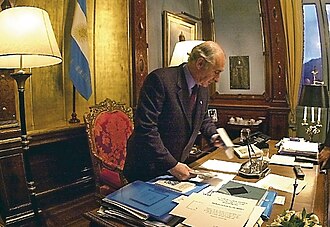
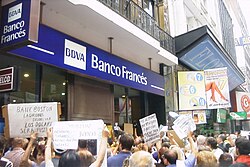
The restriction of savings sparked outrage across the country. In December 2001, massive riots and cacerolazos (pot-banging protests) erupted. The social chaos reached a breaking point on December 21, 2001, when President Fernando de la Rua resigned from office.
Financial Default and Currency Devaluation
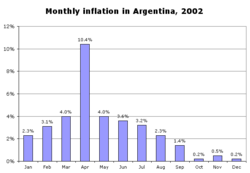
Following the political collapse, Argentina defaulted on its foreign debt, one of the largest sovereign defaults in history. The government abandoned the fixed exchange rate, allowing the peso to float. This led to a sharp devaluation and a spike in inflation, which peaked at 10.4% in April 2002.
Depositors faced further hardship as dollar-denominated accounts were frozen and converted to pesos at rates significantly lower than their market value, sparking further protests.
Recovery and Debt Restructuring
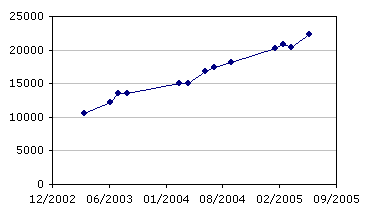
The recovery began surprisingly quickly. By the first half of 2003, GDP growth returned, averaging 9% annually for the next five years. By 2005, the economy had exceeded its pre-crisis levels.
A critical part of the stabilization process was the restructuring of the national debt. In 2005, the government reached an agreement where 76% of defaulted bonds were exchanged for new bonds at 25% to 35% of their original nominal value. A second restructuring in 2010 increased the percentage of bonds out of default to 93%.
Despite these efforts, a small group of holdout creditors, often referred to as vulture funds, pursued lawsuits in international courts. This dispute lasted until April 2016, when the Argentine government finally repaid the full amount to these hedge funds to officially exit the default.
Relationship with the IMF
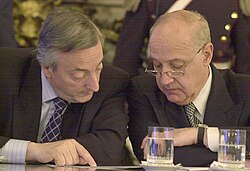
Argentina's relationship with the International Monetary Fund (IMF) was strained during the crisis. Seeking financial independence, President Kirchner announced in December 2005 that Argentina would pay its entire IMF debt in one lump sum. On January 6, 2006, Argentina used its central bank reserves to pay US$9.810 billion, settling the debt ahead of the original 2008 schedule.
Impact on Living Standards
The recovery in living standards was significant. Between 2003 and 2013, real wages rose by approximately 72% from their lowest point. The industrial sector also saw a dramatic rebound; the domestic auto market grew from a low of 83,000 units in 2002 to a record 964,000 units by 2013.
The following table illustrates the dramatic shift in poverty levels from the onset of the crisis through the recovery period:
| Date of Measurement | Extreme Poverty | Under Poverty Line |
|---|---|---|
| May 2001 | 11.6% | 35.9% |
| October 2001 | 13.6% | 38.3% |
| May 2002 | 24.8% | 53.0% |
| October 2002 | 27.5% | 57.5% |
| May 2003 | 26.3% | 54.7% |
| 2nd sem 2004 | 15.0% | 40.2% |
| 2nd sem 2006 | 8.7% | 26.4% |
| 2nd sem 2008 | 4.4% | 15.3% |
Frequently Asked Questions
What caused the Argentine Great Depression?
The depression was caused by a combination of internal factors, such as fiscal indiscipline and labor market inflexibility, and external shocks, including the Russian and Brazilian financial crises. The rigid fixed exchange rate of the peso to the US dollar further exacerbated the instability.
What was the "corralito"?
The corralito was a government-imposed restriction on bank withdrawals designed to prevent a total collapse of the banking system as depositors rushed to take their money out during the crisis.
How did Argentina handle its defaulted debt?
Argentina underwent two major debt restructurings in 2005 and 2010, exchanging defaulted bonds for new ones at a lower nominal value. While most bondholders accepted these terms, a small percentage of "vulture funds" held out until they were paid in full in 2016.
How long did it take for the economy to recover?
GDP growth returned by the first half of 2003. The economy grew at an average rate of 9% for five years, and GDP levels exceeded pre-crisis figures by 2005.
What happened to the IMF loans?
Argentina repaid its International Monetary Fund loans in full on January 6, 2006, paying a total of US$9.810 billion using the central bank's foreign currency reserves to regain financial independence.