Arctic Region: Climate Change, Geopolitics, and Ecosystems
The Arctic is one of the most extreme and rapidly changing environments on Earth. Defined by its unique temperature profiles and the northern tree line, this region encompasses a vast array of frozen oceans, tundra, and ice caps. While once viewed as a remote frontier, the Arctic has become a focal point for global climate research and international strategic competition.
From the indigenous cultures that have thrived in the cold for millennia to the modern scientific stations monitoring the melting ice, the Arctic is a critical barometer for the health of our planet.
Key Facts
- Isotherm Migration: Global warming is pushing isotherms (lines of equal temperature) poleward at approximately 56 km (35 mi) per decade.
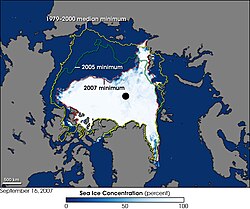
- Sea Ice Loss: Models predict a near-complete or complete loss of September sea ice between 2035 and 2067.
- Territorial Claims: Norway, Russia, Canada, and Denmark have launched projects to claim extended continental shelves under UNCLOS.
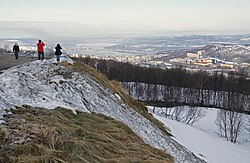
- Urban Centers: Murmansk, Russia, holds the title of the largest city in the world located north of the Arctic Circle.
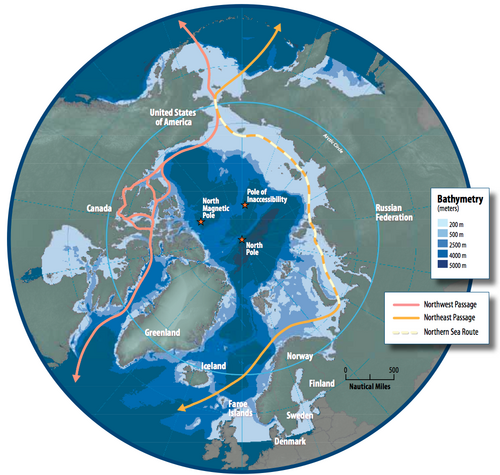
- Strategic Routes: The region contains critical shipping lanes, including the Northeast Passage and the Northwest Passage.
Climate and Environmental Shifts
The Arctic is currently shrinking in terms of its traditional definition based on temperature and vegetation. The most critical manifestation of this change is the reduction of Arctic sea ice. This shrinkage is not merely a local issue but a global one, as it affects weather patterns and sea levels worldwide.
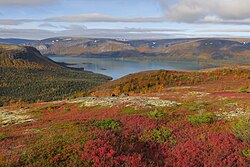
Recent data indicates that parts of Norway north of the Arctic Circle are transitioning to a temperate climate. For example, Skrova near Svolvær now records a mean annual temperature of 6 °C (43 °F), with no month falling below 0 °C (32 °F).
![The shrinking Arctic: Parts of Norway north of the Arctic Circle has a temperate climate with the 1991–2020 normals, such as Skrova near Svolvær with mean annual temperature of 6 °C (43 °F), four months above 10°C and no month below 0 °C (32 °F).[64]](/images/89/a8/89a8a051e00c7f2fdab4ce26c52db37e43cc67999bbf54bc08924267aa53f3e9.jpg)
The Impact of Warming
As temperatures rise, the region faces significant ecological disruptions. The thawing of permafrost—ground that remains frozen for two or more consecutive years—is accelerating the release of carbon into the atmosphere, creating a feedback loop that further drives global warming.
Flora and Fauna
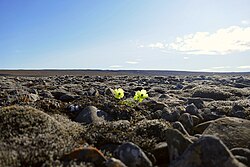
Despite the harsh conditions, the Arctic supports a specialized array of life. Vegetation is characterized by low-growing plants and tundra that can withstand extreme cold and short growing seasons.
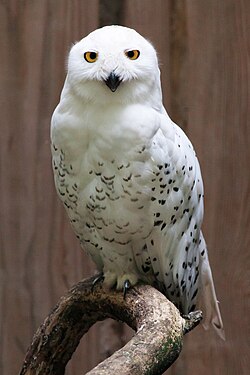
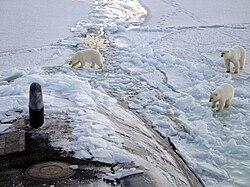
The animal kingdom in the Arctic includes highly adapted species such as the muskox, snowy owl, and polar bear. These animals rely heavily on the sea ice for hunting, breeding, and migration, making them particularly vulnerable to the current rate of ice loss.

Human Presence and Indigenous Cultures
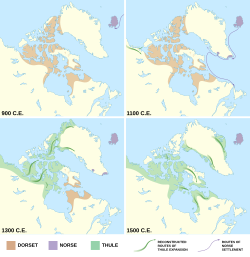
Humans have inhabited the Arctic for thousands of years. The region's history is marked by the transition of cultures, such as the decline of the Dorset culture and the subsequent expansion of the Thule people between 900 and 1500.
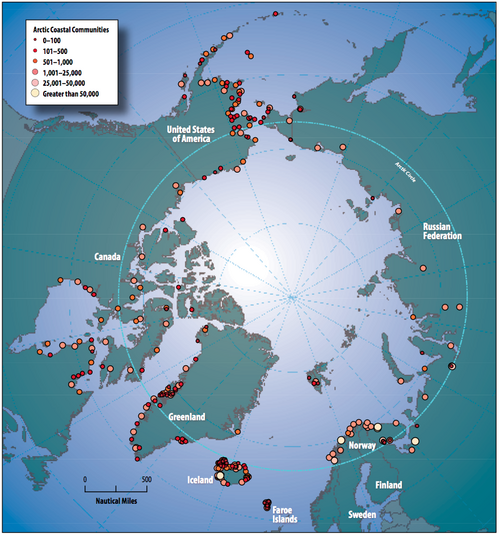
Today, the population is a mix of indigenous peoples—such as the Nenets reindeer herders in Russia—and non-indigenous settlers. Population distribution is primarily concentrated along the circumpolar coasts.
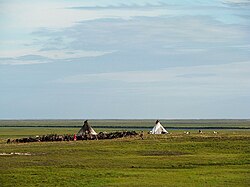
Regional Settlements
Human habitation ranges from small indigenous communities to significant urban centers. Notable locations include Kotzebue in Alaska, Uummannaq Island in Greenland, and Baffin Island in Nunavut.
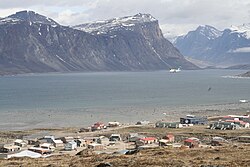
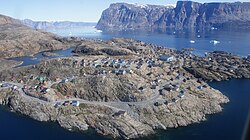
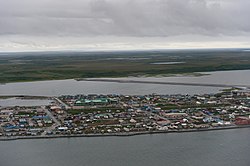
Geopolitics and Territorial Claims
The Arctic is a zone of increasing strategic competition, driven largely by the potential for vast hydrocarbon resources (oil and gas) and the opening of new shipping routes.
Under the United Nations Convention on the Law of the Sea (UNCLOS), nations can claim an extended continental shelf beyond their 200 nautical mile zone. This has led to overlapping claims by Russia, Canada, Norway, and the Kingdom of Denmark.
A symbolic peak in this competition occurred on August 2, 2007, when Russian bathyscaphes MIR-1 and MIR-2 descended to the seabed beneath the North Pole to plant a titanium Russian flag.
Exploration and Research
Historically, the Soviet Union and Russia led exploration through crewed drifting ice stations. Between 1937 and 1991, 88 international crews occupied these settlements. Modern research has shifted toward the use of unmanned buoys and ice-tethered observatories to gather data more safely and efficiently.
Pollution and Preservation
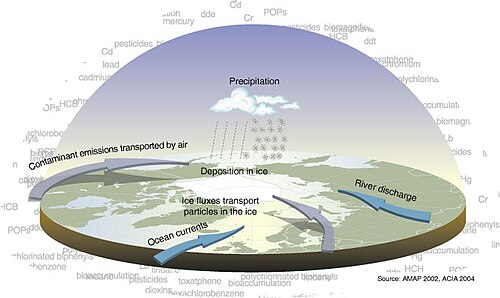
The Arctic acts as a sink for long-range pollution. Contaminants from distant industrial regions are transported via atmospheric and oceanic pathways, accumulating in the Arctic food chain and affecting apex predators and indigenous populations.
| Category | Key Details | Primary Examples/Locations |
|---|---|---|
| Major Water Bodies | Arctic Ocean and marginal seas | Beaufort Sea, Barents Sea, Kara Sea, Laptev Sea |
| Claimant Nations | UNCLOS signatories | Russia, Canada, Norway, Denmark |
| Key Wildlife | Ice-dependent species | Polar bears, Muskox, Snowy owls |
| Shipping Routes | Trans-Arctic passages | Northwest Passage, Northern Sea Route |
Frequently Asked Questions
What is the impact of global warming on the Arctic's size?
The Arctic region is effectively shrinking because isotherms are migrating poleward at about 56 km per decade, causing the areas that meet the temperature and tree-line definitions of "Arctic" to decrease.
When is the Arctic sea ice expected to disappear?
Predictions vary, but some models suggest a near-complete or complete loss of sea ice in September between the years 2035 and 2067.
Why are countries claiming the Arctic seabed?
Countries are seeking to establish ownership of the extended continental shelf to secure rights to the vast hydrocarbon resources, such as oil and natural gas, located beneath the ocean floor.
What is the significance of the MIR-1 and MIR-2 missions?
These Russian bathyscaphes were the first to reach the Arctic seabed beneath the North Pole, where they placed a titanium flag to symbolize Russia's presence and interests in the region.
How has Arctic research evolved over time?
Research has transitioned from high-risk crewed drifting ice stations, which were common from 1937 to 1991, to the use of modern unmanned buoys and ice-tethered observatories.