Archnet: The Digital Hub for Islamic Architecture and Built Environments
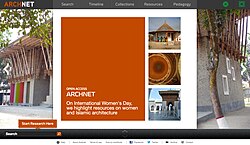
Archnet is a premier collaborative digital humanities project dedicated to the study of Islamic architecture and the built environment of Muslim societies. By bridging the gap between historical archives and modern accessibility, it serves as an open-access resource for architecture, urban design, and development across the Muslim world.
The project was conceptualized in 1998 at the MIT School of Architecture and Planning in cooperation with the Aga Khan Trust for Culture (AKTC). Since 2011, it has been maintained through a partnership between the AKTC and the Aga Khan Documentation Center at MIT (AKDC @ MIT).
Key Facts
- Founded: Conceptualized in 1998; officially launched September 27, 2002.
- Access: Fully open access since the launch of Archnet 2.0 in January 2014.
- Reach: Over 75,000 users from more than 150 countries, averaging 5,000 unique daily visitors.
- Content: A massive digital library including photographs, CAD drawings, published papers, and videos.
- Academic Integration: Home to the International Journal of Architectural Research (IJAR).
History and Conceptualization
The origins of Archnet lie in a 1983 speech by Aga Khan IV in Istanbul, where he expressed a desire to share the extensive dossiers from the Aga Khan Award for Architecture (AKAA) to support the training of future professionals. This vision materialized in 1998 through discussions between Aga Khan IV, MIT President Charles Vest, and Dean William J. Mitchell.
Archnet was designed to transcend geographic, socio-economic, and religious barriers, fostering a spirit of open dialogue and collaboration. Its philosophy mirrors MIT’s OpenCourseWare initiative by providing high-quality educational materials free of charge to the global public.
The platform officially launched in 2002, inaugurated by Lawrence Summers (then President of Harvard University), Charles Vest, and the Aga Khan. In 2013, following a decade of data analysis, the site underwent a major redevelopment. The resulting version, Archnet 2.0, removed all registration and login barriers to ensure truly universal access.

Partners and Digital Resources
Archnet functions as a massive repository, aggregating resources from over 1,000 individuals and institutions. It is an essential tool for those with limited access to physical architectural publications.
The library began with 200,000 images from the AKTC and 400,000 from MIT and Harvard. Today, it includes a diverse array of media, including the Dictionary of Islamic Architecture, line drawings, and video recordings. Key contributors include:
- Academic Institutions: The American University of Beirut, American University of Sharjah, University of Damascus, Istanbul Technical University, and Universiti Teknologi MARA in Malaysia.
- Cultural Organizations: The Indian National Trust for Art and Cultural Heritage and the Erciyes University Architectural Association.
- Architectural Archives: The personal archives of Michel Ecochard, Hassan Fathy, and the founders of the School of Architecture at the University of Baghdad.
Additionally, the site hosts research and case studies derived from the AKTC’s Historic Cities Support Programme and the Aga Khan Award for Architecture.
Comprehensive Site Content
The Archnet digital library is organized into several specialized categories to facilitate research and learning:
Publications and Media
- Publications: Books, journals, and project reports. This includes full runs of ceased publications like Majallat al-Imarah and Mimar: Architecture in Development.
- Video/Audio: Lectures, interviews, 3D visualizations, and specialized collections such as the Music of Morocco.
- Images: The largest section of the site, featuring everything from digitized negatives and engravings to contemporary architectural photographs.
Research Tools and Databases
- Associated Names: A database of nearly 7,000 records (as of March 2018) including architects, patrons, and artists.
- Collections: Curated sets of resources from the Aga Khan Museum and the Aga Khan Historic Cities Programme.
- Pedagogy Project: A specialized section providing syllabi and course information focused on Islamic architecture.
- Timeline: A visual tool representing key periods and sites in Islamic architectural history.
| Resource Category | Examples of Content | Primary Purpose |
|---|---|---|
| Digital Library | CAD drawings, photos, Dictionary of Islamic Architecture | Visual and technical reference |
| Academic Journals | IJAR, Majallat al-Imarah | Scholarly research and theory |
| Pedagogy Project | Syllabi, course materials | Educational support for instructors/students |
| Archives | Hassan Fathy, Michel Ecochard collections | Preservation of architectural legacies |
The International Journal of Architectural Research (IJAR)
The International Journal of Architectural Research (IJAR) is a blind-reviewed online publication hosted by Archnet. Developed in 1999 and debuting in March 2007, the journal is currently edited by Ashraf M. Salama.
Published three times a year (March, July, and November), IJAR aims to bridge the gap between architectural theory and practice, with a specific emphasis on the developing world. It serves as a platform for architects, planners, and landscape architects to share knowledge on how environments are created and used across social, cultural, and economic dimensions.
Frequently Asked Questions
What is Archnet?
Archnet is an open-access digital humanities project and library focused on the architecture, urban design, and built environment of Muslim societies.
Who manages Archnet?
It is a collaborative effort maintained by the Aga Khan Trust for Culture (AKTC) and the Aga Khan Documentation Center at MIT (AKDC @ MIT).
Is there a cost to use Archnet?
No. Since the launch of Archnet 2.0 in January 2014, all registration and login barriers have been removed, making the resource completely free and open access.
What kind of materials can be found in the digital library?
The library contains photographs, CAD drawings, line drawings, published papers, videos, and specialized archives from renowned architects and global academic institutions.
What is the IJAR?
The International Journal of Architectural Research (IJAR) is a peer-reviewed academic journal published by Archnet three times a year, focusing on architecture and planning in the developing world.