Archer M. Huntington: A Legacy of Art and Philanthropy
Archer M. Huntington was a prolific philanthropist whose contributions fundamentally shaped the landscape of American art, education, and conservation. Alongside his wife, the sculptor Anna Hyatt Huntington, he dedicated a significant portion of his wealth and land to create public spaces and institutions that continue to serve the public today.
Key Facts
- Founded Brookgreen Gardens in South Carolina to showcase American figurative sculpture.
- Established the endowment for the Poet Laureate Consultant in Poetry to the Library of Congress.
- Co-founded the Mariners' Museum in Virginia, one of the world's largest maritime museums.
- Created the Archer M. Huntington Museum Fund, which significantly expanded the art collections at the University of Texas at Austin.
- Donated land for the American Academy of Arts and Letters and the National Academy in New York City.
Contributions to Art and Culture in New York
Huntington's impact on New York City's cultural infrastructure began in 1915 when he donated land in Washington Heights for the construction of a permanent building for the American Academy of Arts and Letters. This philanthropic effort extended to the relocation of the Museum of the American Indian and the Numismatic Society to the Audubon Terrace complex.
In 1939, the Huntingtons further supported the arts by donating their mansion at 1083 Fifth Avenue and adjacent properties to the National Academy, the oldest artists' organization in the United States. This site now serves as the home for the National Academy Museum and Art School.
The South Carolina Estate and Brookgreen Gardens
In coastal South Carolina, near Georgetown, the Huntingtons maintained an estate known as Atalaya Castle. During the Great Depression, they donated substantial portions of their property for public and research purposes. In 1932, this led to the creation of Brookgreen Gardens, a public sculpture garden dedicated to American figurative sculpture, featuring many works by Anna Hyatt Huntington.
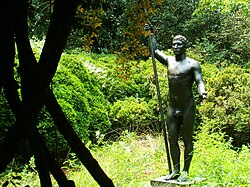
The site is a multifaceted preserve. It includes a nature reserve and the Brookgreen Plantation, an antebellum-era site listed on the National Register of Historic Places in 1978. Additionally, a portion of the land is leased to the state for Huntington Beach State Park. In 2012, the gardens, the plantation, and Atalaya Castle were designated as a National Historic Landmark District.
National Endowments and Conservation
Beyond visual arts, Huntington sought to support literature and maritime history. In 1932, he partnered with Homer L. Ferguson to found the Mariners' Museum in Newport News, Virginia. In 1936, he established an endowment for a Consultant in Poetry to the Library of Congress—a role now known as the Poet Laureate. By 2006, this annual stipend reached $40,000, covering a $35,000 salary and $5,000 for travel.
Environmental conservation was also a priority. Between 1932 and 1939, the Huntingtons donated land to create the 15,000-acre Archer Milton Huntington and Anna Hyatt Huntington Wildlife Forest in Newcomb, New York, which is currently part of the State University of New York College of Environmental Science and Forestry.
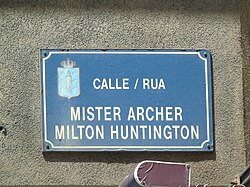
The Archer M. Huntington Museum Fund at UT Austin
The connection between Huntington and the University of Texas at Austin began in 1927 after Mrs. Thomas Sheldon Maxey donated a sculpture by Anna Hyatt Huntington to the campus. This inspired Huntington to donate 4,300 acres of land in Galveston County, originally valued at $145,000, to establish the Archer M. Huntington Museum Fund.
Over the next 35 years, the Fund contributed $600,000 toward the $1.5 million needed to build the Art Building, which opened the Archer M. Huntington Gallery in 1963. The Fund's assets grew significantly through land sales and reinvestment, reaching a total value of $24.6 million by the fiscal year 2000.
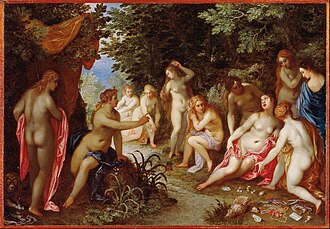
These resources eventually supported the Blanton Museum of Art, which opened in 2006. The museum houses over 1,400 works acquired via the Huntington Fund, spanning millennia of art—from a Corinthian round aryballos (an ancient oil bottle) from c. 600 B.C.E. to a 2003 video piece titled Nuevo by Anton Vidokle.
Summary of Major Philanthropic Contributions
| Institution/Project | Location | Primary Purpose | Key Detail |
|---|---|---|---|
| Brookgreen Gardens | South Carolina | Public Sculpture Garden | National Historic Landmark District (2012) |
| Mariners' Museum | Virginia | Maritime History | One of the world's largest maritime museums |
| Poet Laureate Stipend | Washington, D.C. | Literary Support | Endowment for Library of Congress consultant |
| Blanton Museum Fund | Texas | Art Acquisition/Education | Over 1,400 works acquired |
| Wildlife Forest | New York | Conservation/Education | 15,000-acre forest for SUNY ESF |
Frequently Asked Questions
What is the significance of Brookgreen Gardens?
Brookgreen Gardens is a public sculpture garden in South Carolina dedicated to American figurative sculpture. It also serves as a nature reserve and preserves the historic Brookgreen Plantation.
How did Huntington support the Library of Congress?
In 1936, he created an endowment to provide an annual stipend for the Consultant in Poetry, a position now known as the Poet Laureate Consultant in Poetry to the Library of Congress.
What is the Archer M. Huntington Museum Fund?
It is an endowment at the University of Texas at Austin, started with a land donation in 1927, used to fund art acquisitions, exhibitions, and the construction of art facilities, including the Blanton Museum of Art.
Which New York institutions benefited from Huntington's land donations?
Huntington donated land for the American Academy of Arts and Letters, the Numismatic Society, and the Museum of the American Indian, as well as his mansion to the National Academy.
What is the relationship between Atalaya Castle and Brookgreen Gardens?
Atalaya Castle was the Huntingtons' residence in South Carolina and is part of the same National Historic Landmark District that includes Brookgreen Gardens and the historic plantation sites.