Princeton University Art Museum: A Legacy of Global Art and Scholarship
The Princeton University Art Museum (PUAM) serves as a premier center for artistic study and public engagement in Princeton, New Jersey. With a collecting history stretching back to 1755, the museum has evolved from a small collection of portraits into a world-class institution housing over 117,000 works of art. Spanning from antiquity to the contemporary era, the museum supports the university's mission of teaching, research, and service while welcoming visitors from across the globe.
The museum's diverse holdings focus on the Mediterranean region, Western Europe, Asia, the United States, and Latin America, providing a comprehensive visual record of human creativity.
Key Facts
![Hieronymus Bosch or a member of his circle, Christ Before Pilate, ca. 1520, gift of Allan Marquand[8]](/images/34/34/34345743187bc17d3c3973bb2e292e1a949c336d3319bc20c51dbdfb098fcacd.jpg)
- Established: Formally created in 1882.
- Collection Size: Over 117,000 objects.
- Annual Visitors: Approximately 200,000.
- Current Director: James Christen Steward.
- New Facility: A $300 million building opened on October 31, 2025.
- Admission: Free to the public.
A History of Growth and Evolution
Early Beginnings
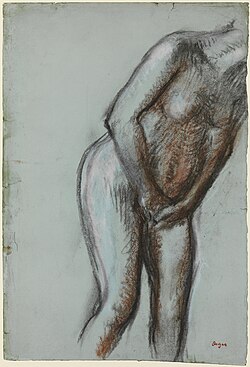
The roots of the collection date back to the mid-18th century at the College of New Jersey (renamed Princeton University in 1896). The first acquisitions were portraits of Jonathan Belcher and King George II, which hung in the central prayer hall of Nassau Hall. While these early works were destroyed during the 1777 Battle of Princeton and a subsequent fire in 1802, the institution maintained its commitment to collecting art for educational purposes.
The Marquand and Mather Eras
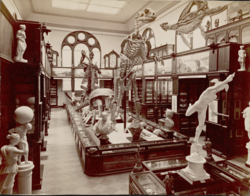
The museum was formally established in 1882 under the leadership of Allan Marquand, who served as director until 1922. Under Marquand, the first purpose-built fireproof Romanesque Revival museum was completed in 1890.
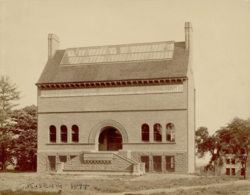
Frank Jewett Mather Jr. succeeded Marquand in 1922, significantly expanding the museum's reach. Mather utilized his personal fortune and secured major bequests, such as the 1933 gift from Junius Spencer Morgan II. In 1923, the Venetian Gothic McCormick Hall, designed by Ralph Adams Cram, was added to the complex, allowing the original building to be dedicated entirely to the museum.
Modern Expansion and the Putnam Collection
Under the directorship of Patrick Joseph Kelleher (1960–1973), the museum added the Putnam Collection of Sculpture. Established via a 1968 donation in honor of Lieutenant John B. Putnam Jr., this collection features 20th-century masters including Pablo Picasso, Alexander Calder, and Henry Moore.
![Henry Moore, Oval with Points, 1969–1970, part of the Putnam Collection, often called "Nixon's Nose" by students[12]](/images/0d/11/0d1165092c254bb6d0fef5ae35b1b67a215a4f3f677b68b0685b077437c66a1d.jpg)
Kelleher also prioritized photography, leading to the 1971 acquisition of a major collection from David Hunter McAlpin and the establishment of the country's first endowed chair in the history of photography, held by Peter Bunnell.
The New Museum Facility
![Ethiopian, Illuminated Manuscript, 18th century[24]](/images/fd/74/fd74f40128e6c96ec8e3c5d162c6de33b6d7fc9e85960da1cb158c486dec5271.jpg)
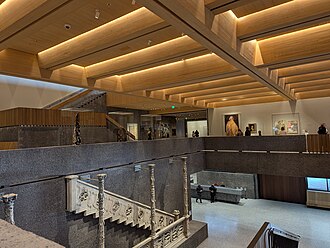
To modernize its operations and display capabilities, the museum underwent a massive transformation. Following interim gallery periods at Art@Bainbridge and Art on Hulfish, a new $300 million facility opened on October 31, 2025. This state-of-the-art building allows for a more intimate yet comprehensive experience of the vast collection, supported by an operating budget of $30 million.
Curated Collections
![Winslow Homer, At the Window, 1872[26]](/images/e3/0d/e30df6dfa474c40aa4d3b08952c2df0134c282a5253b3bd2c3e6e0445421e20c.jpg)
American and European Art
The American collection is among the finest in any academic museum, with particular strengths in landscape painting from the Hudson River School and portraits of university-affiliated figures.
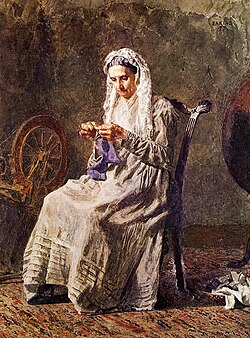
The European collection spans centuries, featuring works by masters such as Claude Monet, Paul Cézanne, and Anthony van Dyck.
![Claude Monet, Water Lilies and Japanese Bridge, 1899[52]](/images/c0/6a/c06aeb01156d92c465468af0c1b17a7541cbd0c5d4bb22234d876757cc2b69ee.jpg)
Asian, Ancient, and Pre-Columbian Art
The Asian collection began with a focus on Japanese art and expanded in the 1930s and 40s to include Chinese ritual bronzes and a renowned collection of snuff bottles. The Pre-Columbian collection, while initially smaller, grew significantly under faculty curator Gillett G. Griffin (1967–2004).
![Huang Tingjian, Scroll for Zhang Datong, A.D. 1100,[34] a canonical work of Chinese calligraphy[35]](/images/7d/4e/7d4eec7fb72b67bb85d554d9b936ca4dc05f93e03216c9f38fb81d8e9e2c7339.jpg)
The museum also houses significant Ancient Mediterranean works, including Roman mosaics and Maya ceramics.
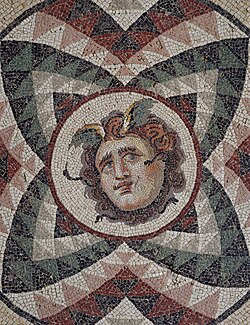
Photography, Prints, and Drawings
The photography department is a cornerstone of the museum, featuring the archives of Minor White and the Clarence H. White collection. The prints and drawings section includes works by Albrecht Dürer and Mary Cassatt.
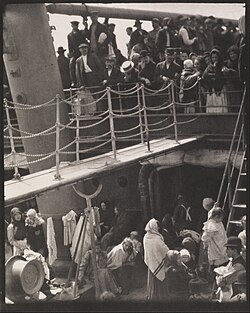
Summary of Museum Details
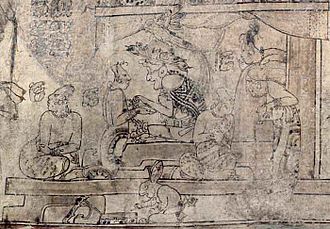
| Category | Details |
|---|---|
| Location | McCormick Hall, Princeton, New Jersey |
| Total Works | 117,000+ |
| Key Architectural Style | Venetian Gothic (McCormick Hall) |
| Notable Collections | Putnam Sculpture, Pearlman Collection, Minor White Photography |
| New Building Cost | $300 Million |
Frequently Asked Questions
![Charles Willson Peale, George Washington at the Battle of Princeton, 1784[38]](/images/39/3e/393e36e21934790830e934a9df3c6f77acf4cea65ca5b082718c2b2803d7aea7.jpg)
![Anthony van Dyck, The Mocking of Christ, 1628-30[45]](/images/65/7a/657acf39706f7c19ade6329e9e5e1e770fc076b97743a347e997b7cec2142305.jpg)
![David Octavius Hill and Robert Adamson, Dumbarton Presbytery, 1845[56]](/images/a7/3e/a73e08e471a4cd4c10e31c6d2adc8607e130b91253b936a3f9176af5ee01b359.jpg)
![Edgar Degas, Dancers, 1900, pastel with charcoal on tracing paper mounted on cream wove paper[62]](/images/9a/a9/9aa9456aa2f8ac19ddebe8d1bc7d24ffb43c654e772e61353d1908f941ebed62.jpg)
![Paul Cézanne, Mont Sainte-Victoire, c. 1904-06[71]](/images/c4/3f/c43f607d5f94ba5cd8aad94967cd5c26fa3e00055ed2f28e9073198a03a2f2a2.jpg)
Is admission to the Princeton University Art Museum free?
Yes, admission to the museum is free for all visitors.
What are the museum's operating hours?
The museum is open Tuesday, Wednesday, Friday, and Saturday from 10:00 am to 5:00 pm; Thursday from 10:00 am to 9:00 pm; and Sunday from 12:00 pm to 5:00 pm.
What is the Putnam Collection?
The Putnam Collection is a significant assembly of 20th-century sculpture featuring seventeen major artists, including Henry Moore and Pablo Picasso, established in 1969-1970 in honor of Lieutenant John B. Putnam Jr.
When did the new museum building open?
The new facility officially opened on October 31, 2025, following a construction period that cost approximately $300 million.
Does the museum have a photography collection?
Yes, the museum has extensive holdings in photography, including major works of Pictorialism and the archives of Minor White, Ruth Bernhard, and William B. Dyer.