Archaeology Journals: A History of Academic Publishing and Current Trends
Archaeology, the scientific study of the human past through the analysis of material remains, relies heavily on the rigorous documentation and dissemination of findings. The evolution of archaeological publishing reflects the growth of the field itself, moving from irregular illustrated folios to a diverse ecosystem of peer-reviewed academic journals and multidisciplinary scientific publications.
The Evolution of Archaeological Periodicals
Long before the standardized modern journal format, the Society of Antiquaries of London pioneered the recording of antiquarian studies. Between 1718 and 1909, they produced Vetusta Monumenta, a series of illustrated folios published at irregular intervals.
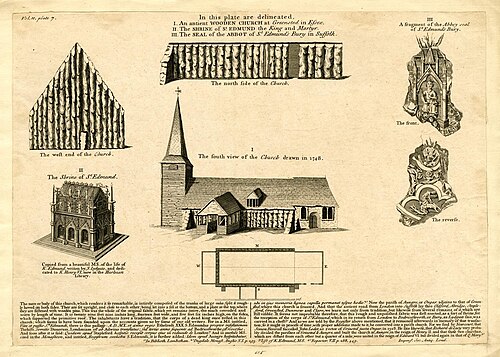
As the field formalized, the Society transitioned to more structured formats. In 1770, they began publishing papers from their meetings in a quarto format via Archaeologia, which continued until 2007. In 1843, the Proceedings of the Society of Antiquaries of London was established; this publication remains active today, though it is now known as the Antiquaries Journal.
Long-Standing Active Publications
Several other journals established in the mid-19th century continue to contribute to the field today, including:
- The Archaeological Journal and La Revue Archéologique (both established in 1844).
- Archaeologia Cambrensis, published by the Cambrian Archaeological Association since 1846.
- Sussex Archaeological Collections, published by the Sussex Archaeological Society since 1848.
Diverse Outlets for Archaeological Scholarship
While dedicated archaeology journals are central to the discipline, scholarship is frequently distributed across various other publication types depending on the focus of the research.
General Science and Semi-Scholarly Media
High-impact research often appears in general-purpose scientific journals such as Science or Nature. For a broader audience, semi-scholarly periodicals like Archaeology, Discover, National Geographic, and Scientific American provide accessible insights into archaeological discoveries.
Interdisciplinary Approaches
The venue for publication often depends on regional academic structures and specific sub-disciplines:
- Anthropology: In North America, archaeology is categorized as one of four subfields of anthropology. Consequently, research is frequently published in general anthropology journals such as American Anthropologist or Current Anthropology.
- Environmental Archaeology: This specialized field often utilizes multidisciplinary environmental science journals, most notably Quaternary International or The Holocene, and occasionally journals focused on ecology or development studies.
Key Facts
- The Antiquaries Journal is the modern successor to the Proceedings of the Society of Antiquaries of London (est. 1843).
- Archaeology is treated as a subfield of anthropology in North American academic publishing.
- Environmental archaeology often overlaps with journals specializing in the Holocene and Quaternary periods.
- Male authors publish two to three times more papers than female authors across the field.
- The gender imbalance in publications is primarily attributed to lower submission rates from women rather than peer-review bias.
Demographics and Publication Trends
Despite the growth of the field, archaeological publishing exhibits significant demographic imbalances. Men dominate the landscape, producing two to three times as many papers as women. Furthermore, a gender citation gap exists, where articles authored by women are less likely to be cited, particularly by male researchers.
Research indicates that this disparity is not typically the result of bias during the peer-review process, but rather a result of fewer submissions from women. While the number of female authors has increased in recent years, gendered publication rates remained unequal as of 2020. Beyond gender, the most prestigious journals remain largely homogenous, dominated by straight, white, cisgender men in terms of race, ethnicity, and sexual orientation.
Summary of Major Archaeological Publication Types
| Category | Examples | Primary Focus |
|---|---|---|
| Dedicated Academic | Antiquaries Journal, La Revue Archéologique | Specialized archaeological research |
| General Scientific | Science, Nature | High-impact, broad scientific discovery |
| Semi-Scholarly | National Geographic, Archaeology | Public engagement and accessibility |
| Anthropological | American Anthropologist | Human-centric study (Common in North America) |
| Environmental | The Holocene, Quaternary International | Interdisciplinary environmental data |
Frequently Asked Questions
What is the difference between archaeology and antiquarian studies?
While the terms are related, early antiquarian studies—such as those found in the Vetusta Monumenta—preceded the modern, standardized scientific approach to archaeology used in contemporary academic journals.
Why is archaeology published in anthropology journals in North America?
In North America, archaeology is formally considered one of the four subfields of anthropology, leading scholars to publish in general anthropology periodicals like Current Anthropology.
What is the gender citation gap in archaeology?
The gender citation gap refers to the trend where research papers written by women are cited less frequently than those written by men, especially when the citing author is male.
Is the lack of female authors due to bias in peer review?
Generally, no. Studies suggest the imbalance in publication rates is due to a lower volume of submissions from women rather than detectable bias during the peer-review process.
Which journals are best for environmental archaeology?
Environmental archaeology is frequently published in multidisciplinary journals such as Quaternary International or The Holocene, as well as some ecology or development studies journals.