Appalachian Folk Music: From Oral Traditions to Commercial Success
At the turn of the 20th century, a passionate movement emerged to document the rich musical heritage of the Appalachian region. For generations, this music existed as an unwritten tradition, passed down through oral transmission—the process of learning songs by ear and memory, often within families. What began as a scholarly effort to preserve disappearing ballads eventually evolved into a global commercial phenomenon, laying the groundwork for modern country music.
The Era of Fieldwork and Preservation
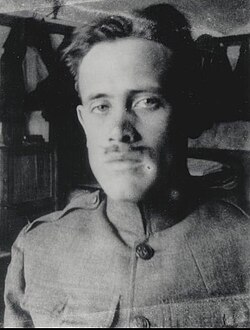
Early scholars and collectors ventured into the remote valleys and hollows of the mountains to transcribe songs into musical notation. One of the pioneers was Kentucky native John Jacob Niles (1892–1980). Starting in 1907, Niles collected ballads across a vast area including the Smokies, the Cumberland Plateau, and the Upper Tennessee Valley. To avoid plagiarism and imitation by other collectors, he kept his work private for decades, finally publishing 110 songs in The Ballad Book of John Jacob Niles in 1960.
In May 1916, soprano Loraine Wyman and pianist Howard Brockway undertook a 300-mile walking trek through eastern Kentucky to gather folk songs, which they later performed for urban audiences in New York City. Shortly after, British folklorists Cecil Sharp and Maud Karpeles spent three summers (1916–1918) touring Southern Appalachia. They visited locations such as Hot Springs, North Carolina, and various settlement schools in Kentucky and Tennessee.
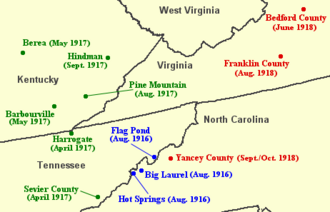
Sharp and Karpeles collected over 200 "Old World" ballads, discovering that many had remained remarkably similar to their British Isles origins. Their findings included medieval-themed songs like "The Elfin Knight" and seafaring tales like "Young Beichan." They notably documented 16 versions of "Barbara Allen" and 22 versions of "The Daemon Lover" (known locally as "The House Carpenter"), proving that Appalachia served as a vast repository for ancient musical forms.
The Rise of Commercial Recordings
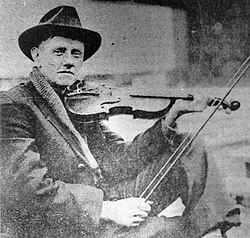
By the 1920s, the recording industry had advanced enough to make regional music a viable commercial product. In 1923, Ralph Peer, a talent scout for OKeh Records, organized the first recording sessions for Appalachian musicians in Atlanta, Georgia. Among the early stars was Fiddlin' John Carson, a champion fiddle player from North Georgia.
The success of these sessions led Peer to record a North Carolina string band led by Al Hopkins. When the band described themselves as "a bunch of hillbillies," Peer adopted the term for their marketing, effectively branding the genre as Hillbilly music.
A pivotal moment occurred in 1927 during the Bristol sessions in Tennessee. Organized by Peer for the Victor Talking Machine Company, these recordings featured the Carter Family and Jimmie Rodgers. Many historians cite these sessions as the birth of commercial country music. While other artists like Clarence Ashley and Dock Boggs found moderate success, the Great Depression of the early 1930s caused a decline in demand, pushing many of these early pioneers back into obscurity.
The Folk Revival and Cultural Rediscovery
Interest in the region was sustained through the 1930s by radio programs like the Grand Ole Opry and the field recordings of musicologist Alan Lomax. A major catalyst for the 1950s and 60s folk revival was the 1952 release of the Anthology of American Folk Music, compiled by ethnomusicologist Harry Smith. This collection reintroduced the works of artists like G. B. Grayson and Dock Boggs to a new generation.
Urban enthusiasts, including Mike Seeger, John Cohen, and Ralph Rinzler, traveled to remote areas to conduct interviews and recordings. This era saw Appalachian musicians performing at prestigious venues, from the Newport Folk Festival to universities in Chicago and Berkeley. Films such as Cohen's High Lonesome Sound, featuring Kentucky banjoist Roscoe Holcomb, provided a visual and auditory window into the authentic performance styles of the region.
Music of the Mines: Protest and Change
The arrival of large-scale coal mining in the late 19th century shifted the social landscape of Appalachia. The traditional ballad form was adapted to address the hardships of mining life, including low wages, strikes, and disasters. Early examples include the "Coal Creek March," inspired by the 1891 Coal Creek War in Tennessee.

Labor strife in West Virginia (1914) and the Harlan County War in Kentucky (1931) inspired powerful protest songs such as Ralph Chaplin's "Solidarity Forever" and Florence Reece's "Which Side Are You On?" In 1940, George Korson recorded miners' songs for the Library of Congress. Later, Merle Travis achieved massive commercial success with "Sixteen Tons," a song subsequently covered by Johnny Cash and Tennessee Ernie Ford.
In the 1990s, the introduction of Mountain Top Removal (MTR) mining sparked a new wave of musical protest. Artists like Todd Burge, Jean Ritchie, and Rising Appalachia used traditional string-band and a cappella sounds to express grief over the environmental desecration of their homeland.
| Period/Era | Key Figures | Major Contribution/Event |
|---|---|---|
| Early 1900s Fieldwork | John Jacob Niles, Cecil Sharp | Preservation of "Old World" ballads via notation |
| 1920s Commercialization | Ralph Peer, Carter Family | Bristol Sessions; birth of "Hillbilly" and Country music |
| 1950s-60s Folk Revival | Harry Smith, Alan Lomax | Anthology of American Folk Music; urban folk interest |
| Mining/Protest Era | Florence Reece, Merle Travis | Songs addressing labor strife and Mountain Top Removal |
Key Facts
- Oral Transmission: Appalachian music was historically unwritten and passed down through generations by ear.
- British Roots: Cecil Sharp's research confirmed that many Appalachian ballads were nearly identical to those from the British Isles.
- The Bristol Sessions: The 1927 recordings of the Carter Family and Jimmie Rodgers are considered the start of commercial country music.
- Hillbilly Music: The term originated from a North Carolina string band's self-description during Ralph Peer's recording sessions.
- Protest Tradition: Music was used as a tool to document coal mining disasters and labor struggles, such as the Harlan County War.
Frequently Asked Questions
How did the term "Hillbilly music" originate?
The term was applied by talent scout Ralph Peer to a North Carolina string band fronted by Al Hopkins, who described themselves as "a bunch of hillbillies." The success of their recordings led to the term being used for the broader genre of Appalachian string band music.
Who were Cecil Sharp and Maud Karpeles?
They were British folklorists who toured the Southern Appalachian region from 1916 to 1918, collecting over 200 "Old World" ballads and publishing English Folk Songs from the Southern Appalachians.
What was the significance of the Bristol sessions?
Held in 1927 by the Victor Talking Machine Company, these sessions featured the Carter Family and Jimmie Rodgers, marking what many music historians consider the beginning of commercial country music.
How did coal mining influence Appalachian music?
Mining brought social upheaval, leading musicians to adapt traditional ballads into protest songs. These songs documented low pay, mine disasters, and labor strikes, such as those seen in the 1931 Harlan County War.
What is Mountain Top Removal (MTR) and its link to music?
MTR is a type of mining introduced in the 1990s that removes the tops of mountains. This led to a new wave of music by artists like Jean Ritchie and Todd Burge, who used traditional sounds to protest the destruction of the Appalachian landscape.