Antonio J. Benítez: A Legacy of Law and Peronist Politics
Antonio Juan Benítez (1903–1992) was a distinguished Argentine politician and legal scholar whose career spanned several decades of the country's turbulent political history. A lawyer by training, Benítez became a pivotal figure within the Justicialist Party, serving in high-ranking cabinet positions under multiple Peronist administrations.
His life was marked by a cycle of high political office and severe persecution, reflecting the broader volatility of 20th-century Argentina. From drafting pioneering aviation laws to navigating the corridors of power as a Minister, Benítez left a lasting imprint on both the legal framework and the political landscape of his nation.
Key Facts
- Political Affiliation: Transitioned from the Radical Civic Union (UCR) to the Justicialist Party in 1946.
- Cabinet Roles: Served as Minister of Justice and Minister of the Interior.
- Legislative Leadership: Elected President of the Chamber of Deputies from 1953 to 1955.
- Legal Contribution: Co-authored Argentina's first aviation law code (Código Aeronáutico de la Nación).
- Academic Impact: Established the first aviation law department at the University of Buenos Aires.
Early Life and Legal Foundations
Born on March 3, 1903, in Rosario, Santa Fe, Benítez was the son of Cipriano A. Benítez, a politician from the Radical Civic Union who briefly served as the mayor of Rosario. Following in his father's footsteps of public service, Antonio studied Judicial Sciences at the Universidad Nacional del Litoral, earning his doctorate in law in 1925 at the age of 22.
Upon moving to Buenos Aires, Benítez entered politics under the mentorship of Senator Armando Antille. His commitment to justice was evident early on when he served as a defense lawyer for the deposed president Hipólito Yrigoyen following the 1930 coup d'état.
Rise Through the Peronist Era
Benítez's ascent to national prominence began during the de facto administration of President Edelmiro Farrell, where he was appointed Minister of Justice and Public Instruction. By 1946, Benítez shifted his allegiance to General Juan Perón, running as a candidate for the Chamber of Deputies under the Labour Party – UCR (JR) coalition.
His legislative career was prolific. He was re-elected in 1951 and ascended to the presidency of the Chamber of Deputies in 1953. During this time, he was a member of the Constitutional Convention that drafted the 1949 Argentine Constitution.
Beyond administrative duties, Benítez used his legislative power to champion social and ethical causes. He authored Ley 14.346, which increased penalties for animal cruelty, and sponsored legislation granting equal inheritance rights to extramarital children—a cause closely linked to the personal history of First Lady Eva Perón. He also facilitated the creation of the Faculty of Philosophy, Letters, and Education Sciences at the National University of Rosario.
Persecution and Political Return
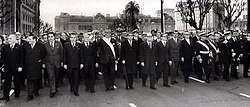
The 1955 coup d'état brought an abrupt end to Benítez's first period of power. As a high-ranking Peronist, he faced intense persecution and was arrested in 1956. Records from a 2006 Senate report indicate that Benítez narrowly escaped execution by a civilian military squad at Caseros Prison on June 10, 1956.
Benítez returned to the national stage in 1973 following the election of Héctor Cámpora. He resumed his role as Minister of Justice, a position he maintained through the interim presidency of Raúl Lastiri and the return of Juan Perón. Following Perón's death in 1974, he served under Isabel Perón, who eventually appointed him Minister of the Interior in July 1975. He resigned from this post on August 11, 1975.
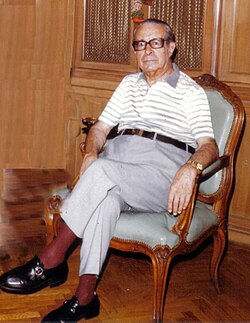
History repeated itself after the 1976 coup d'état. Benítez was again detained and imprisoned for two years at the Magdalena military prison. Due to his age, he was eventually moved to house arrest, remaining there until his release shortly before the end of the military regime in 1983.
Academic Contributions and Legal Legacy
Parallel to his political life, Benítez was a dedicated academic. He taught civil law at the National University of the Littoral and later transitioned to the University of Buenos Aires (UBA), where he specialized in maritime and terrestrial transport law.
His most significant academic achievement was the creation of the first aviation law department in an Argentine university. As the director of the Instituto de Derecho Comercial at UBA, he co-authored the Código Aeronáutico de la Nación, establishing the foundational legal framework for aviation in Argentina.
| Period | Role/Position | Administration/Affiliation |
|---|---|---|
| 1943–1945 | Minister of Justice | Edelmiro Farrell |
| 1946–1955 | National Deputy | Justicialist Party |
| 1953–1955 | President of the Chamber of Deputies | Justicialist Party |
| 1973–1975 | Minister of Justice | Cámpora, Lastiri, Perón, Isabel Perón |
| 1975 | Minister of the Interior | Isabel Perón |
Frequently Asked Questions
What was Antonio J. Benítez's primary contribution to Argentine law?
Benítez is most noted for his work in aviation law, having co-authored the Código Aeronáutico de la Nación and establishing the first aviation law department at the University of Buenos Aires.
Which political parties was Benítez affiliated with?
He began his career with the Radical Civic Union (UCR) but joined the Justicialist Party in 1946, remaining a supporter of Peronism for the rest of his life.
What social legislation did Benítez sponsor?
He authored Ley 14.346 to combat animal cruelty and sponsored a law ensuring equal inheritance and rights for children born outside of marriage.
How did the military coups of 1955 and 1976 affect him?
In both instances, Benítez was deposed from office and persecuted. He was imprisoned in 1956 (narrowly avoiding execution) and again imprisoned/placed under house arrest following the 1976 coup.
Where did Antonio J. Benítez study?
He studied Judicial Sciences at the Universidad Nacional del Litoral, where he graduated as a Doctor in Law in 1925.