António Guterres: A Legacy of Global Diplomacy and Leadership
António Guterres is a distinguished Portuguese diplomat and politician who currently serves as the 9th Secretary-General of the United Nations. With a career spanning decades of high-level governance, Guterres has transitioned from leading a sovereign nation to steering the world's premier international organization through some of the most complex geopolitical challenges of the 21st century.
Born on April 30, 1949, in Lisbon, Portugal, Guterres laid his academic foundation at the University of Lisbon, where he earned a Bachelor of Engineering (B.Eng). His journey into public service began in the mid-1970s, marking the start of a trajectory that would lead him from the Portuguese parliament to the global stage.
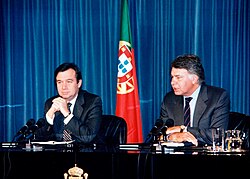
Key Facts
- Current Role: 9th Secretary-General of the United Nations (assumed office January 1, 2017).
- Former National Leadership: Served as the Prime Minister of Portugal from 1995 to 2002.
- Humanitarian Leadership: Former United Nations High Commissioner for Refugees (UNHCR) from 2005 to 2015.
- Political Affiliation: Member of the Socialist Party.
- Citizenship: Holds citizenship in both Portugal and East Timor.
Political Ascent in Portugal
Guterres' early political career was defined by his commitment to the Socialist Party. He served as a Member of the Assembly of the Republic for the Castelo Branco constituency from 1976 to 2002. His leadership capabilities became evident early on when he served as the Leader of the Opposition from 1992 to 1995 and as the Secretary-General of the Socialist Party starting in February 1992.
In October 1995, Guterres reached the pinnacle of Portuguese politics, becoming the Prime Minister. He led the country through two terms, serving until April 6, 2002. During his tenure, he was recognized for his leadership in stabilizing and advancing the nation's democratic and social frameworks.
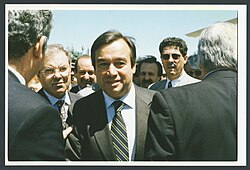
Electoral Success
Guterres demonstrated significant electoral strength during his time in national politics. In the 1995 legislative election, his party secured 43.8% of the vote, resulting in 112 seats. He maintained this momentum in the 1999 elections, where the Socialist Party garnered 44.1% of the vote and increased its seat count to 115.
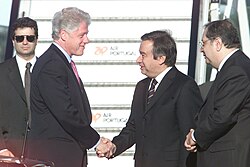
Transition to International Diplomacy
Following his premiership, Guterres shifted his focus toward global humanitarianism and international relations. He served as the President of the Socialist International from 1999 to 2005, a global organization of social democratic, socialist, and labor parties.
In June 2005, Guterres was appointed as the United Nations High Commissioner for Refugees (UNHCR), the UN agency mandated to protect refugees and resolve refugee problems worldwide. He held this position for a decade, concluding his term in December 2015. His tenure was marked by efforts to address massive displacement crises, including those in Iraq and the Mediterranean.
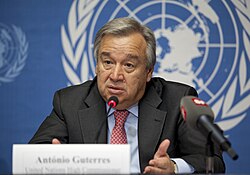
Secretary-General of the United Nations
On October 13, 2016, the UN General Assembly formally elected António Guterres as the Secretary-General. He officially assumed office on January 1, 2017, succeeding Ban Ki-moon. As the chief administrative officer of the UN, Guterres has focused on peace, security, and sustainable development.
His first term saw him navigating tensions with major world powers and addressing the urgent threat of climate change. Due to his continued leadership, he was acclaimed for a second term in June 2021, calling for a new era of solidarity and equality.
Global Engagement and Crisis Management
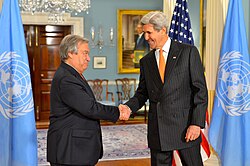
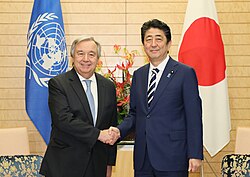
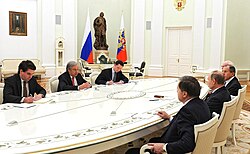
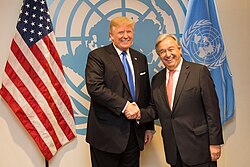
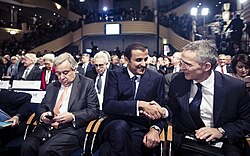
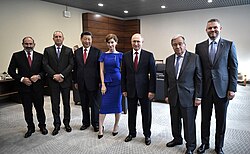
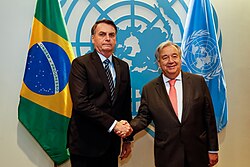
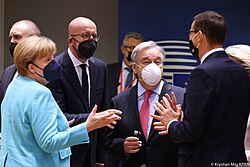
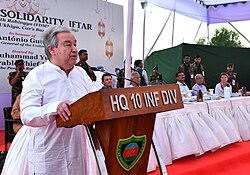
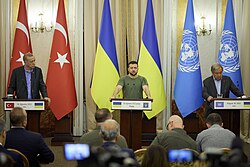
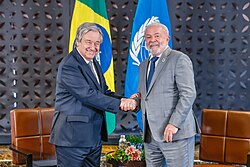
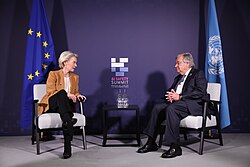
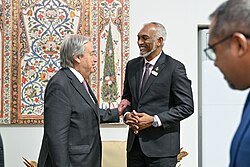
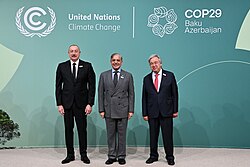
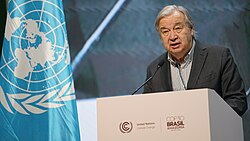
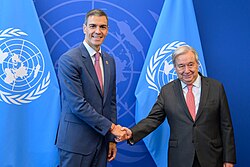
Throughout his tenure, Guterres has engaged with world leaders to mitigate conflict and promote humanitarian aid. His work has taken him from the frontlines of the Rohingya refugee crisis in Bangladesh to high-level summits with leaders from the United States, Russia, China, and the European Union.
Summary of Career Milestones
| Period | Role | Organization/Country |
|---|---|---|
| 1976–2002 | Member of the Assembly of the Republic | Portugal |
| 1995–2002 | Prime Minister | Portugal |
| 1999–2005 | President | Socialist International |
| 2005–2015 | High Commissioner for Refugees | UNHCR |
| 2017–Present | Secretary-General | United Nations |
Recognition and Honors
Guterres' contributions to peace and diplomacy have been recognized globally. He has received numerous honorary doctorates from prestigious institutions, including the University of Cambridge, the University of Coimbra, and Meiji University. Among his most notable awards are the Charlemagne Prize (2019) and the Atatürk International Peace Prize (2025).
Frequently Asked Questions
When did António Guterres become the UN Secretary-General?
António Guterres assumed office as the 9th Secretary-General of the United Nations on January 1, 2017.
What role did he hold before joining the United Nations?
Before becoming Secretary-General, he served as the United Nations High Commissioner for Refugees (UNHCR) from 2005 to 2015, and previously as the Prime Minister of Portugal from 1995 to 2002.
Which political party is António Guterres affiliated with?
He is a member of the Socialist Party in Portugal.
What is Guterres' educational background?
He holds a Bachelor of Engineering (B.Eng) from the University of Lisbon.
Has he received any major international peace awards?
Yes, he has received several, including the Charlemagne Prize in 2019 and the Atatürk International Peace Prize in 2025.