Antarctic Realm: Ecology, Biodiversity, and Geological History
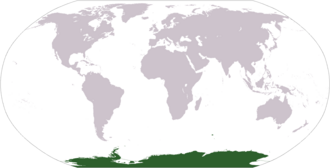
The Antarctic realm is one of eight terrestrial biogeographic realms on Earth. This unique ecosystem encompasses the continent of Antarctica and various island groups scattered across the southern Atlantic and Indian oceans. Characterized by extreme cold and isolation, the realm hosts a specialized array of life forms adapted to some of the harshest conditions on the planet.
While the interior of the continent is largely inhospitable, the coastal areas of exposed rock and soil support a variety of non-vascular plants. The flora primarily consists of approximately 250 lichens, 100 mosses, 25–30 liverworts, and around 700 species of terrestrial and aquatic algae. Only two vascular plants—plants with specialized tissues for conducting water and nutrients—have survived here for millions of years: the Antarctic hair grass (Deschampsia antarctica) and the Antarctic pearlwort (Colobanthus quitensis). These two flowering species are found specifically on the western and northern parts of the Antarctic Peninsula.
Key Facts
- Vascular Plants: Only two species exist in the entire realm.
- Keystone Species: Antarctic krill support the majority of the Southern Ocean food web.
- Geological Origin: Antarctica was once part of the supercontinent Gondwanaland.
- Sub-Antarctic Islands: Includes groups like the Kerguelen, South Georgia, and South Shetland Islands.
- Hidden Life: Microorganisms have been confirmed 800 metres below the ice.
The Marine Ecosystem and the Southern Ocean
The waters surrounding the realm are teeming with life, driven by a process where nutrient-rich water rises from the depths to the photic zone—the upper layer of the ocean that receives enough sunlight for photosynthesis. This influx of nutrients fuels a massive growth of phytoplankton.
At the center of this marine web is the Antarctic krill, the keystone species of the Southern Ocean. Krill serve as the primary food source for a vast array of animals, including whales, squid, icefish, penguins, albatrosses, and several seal species, such as leopard, fur, and crabeater seals.
Sub-Antarctic Islands
The Antarctic realm extends beyond the mainland to include several island groups, such as Bouvet Island, the Crozet Islands, Heard Island, the Kerguelen Islands, the McDonald Islands, the Prince Edward Islands, the South Georgia Group, the South Orkney Islands, the South Sandwich Islands, and the South Shetland Islands.
These islands experience a milder climate than the mainland, allowing for a greater diversity of tundra plants. However, the combination of extreme wind and cold prevents the growth of trees across these territories.
Geological History and Climate Shift
Millions of years ago, Antarctica was a vastly different environment—warmer, wetter, and covered in forests of southern beech and podocarps. During this era, it was part of the supercontinent Gondwanaland.
Starting approximately 110 million years ago, continental drift began to break Gondwanaland apart. A pivotal moment occurred 30–35 million years ago when South America separated from Antarctica. This separation led to the formation of the Antarctic Circumpolar Current, which thermally isolated the continent and triggered a drastic drop in temperature. Consequently, the ancient forests died out, though their descendants remain in the Australasian and southern Neotropical realms (Latin America and the Caribbean).
Due to these shared origins, some botanists recognize an Antarctic Floristic Kingdom that links Antarctica with New Zealand and parts of temperate South America.
Ecoregions of the Antarctic Realm
The realm is categorized into 18 distinct tundra ecoregions, ranging from the high mountains to the coastal peninsulas.
| Ecoregion Type | Key Locations |
|---|---|
| Antarctic Peninsula Tundra | Northwest, Northeast, Central South, and South Antarctic Peninsula |
| Mainland Tundra | Adélie Land, Queen Maud Land, Eastern Antarctica, Marie Byrd Land, Victoria Land |
| Mountain Tundra | Ellsworth Mountains, Prince Charles Mountains, Transantarctic Mountains |
| Island Tundra | Scotia Sea Islands, Southern Indian Ocean Islands |
Frequently Asked Questions
What are the only flowering plants in Antarctica?
The only two flowering vascular plants are the Antarctic hair grass (Deschampsia antarctica) and the Antarctic pearlwort (Colobanthus quitensis), both found on the Antarctic Peninsula.
Why is the Southern Ocean so productive?
The ocean is rich in phytoplankton because deep, nutrient-dense water rises to the surface photic zone, providing the necessary elements for massive algal growth.
How did Antarctica become so cold?
The separation of South America from Antarctica about 30–35 million years ago created the Antarctic Circumpolar Current, which isolated the continent climatically.
Can life exist beneath the Antarctic ice?
Yes, scientists confirmed in 2014 that microorganisms exist 800 metres (2,600 feet) below the ice surface.
Do trees grow on the sub-Antarctic islands?
No. While these islands have a milder climate than the mainland and more diverse tundra plants, they are too cold and windy to support tree growth.