Anno Domini: The History and Evolution of the Christian Era
Timekeeping is more than just a matter of clocks and calendars; it is a reflection of cultural, religious, and political shifts. The most widely used dating system in the world today is the anno Domini (AD) system, often referred to as the Common Era (CE). While it seems universal now, its journey from a specialized tool for calculating Easter to a global standard spanned over a millennium.
Key Facts
- Origin: Devised in 525 by Dionysius Exiguus to replace the Diocletian era.
- Purpose: Originally created to enumerate years in an Easter table.
- Popularization: Spread across Europe via the Carolingian Renaissance under Emperor Charlemagne.
- Terminology: "Before Christ" (BC) became common much later, popularized by Denis Pétau in 1627.
- Modern Alternatives: Common Era (CE) and Before Common Era (BCE) are used as non-religious alternatives.
- The Zero Gap: In common usage, there is no year zero; the timeline jumps from 1 BC directly to AD 1.
The Origins of the Dionysian Era
The anno Domini system was established in 525 by a monk named Dionysius Exiguus. At the time, Easter tables—used to determine the date of the holiday—relied on the Diocletian era. Dionysius sought to replace this because he did not wish to continue honoring Diocletian, a tyrant known for persecuting Christians.
Dionysius identified the "present year" as the consulship of Probus Junior, which he calculated as 525 years since the incarnation of Jesus Christ. This established the epoch of the system, though he did not explicitly state the exact year of birth or conception. Some historians suggest he may have used a 532-year astronomical cycle established by Victorius of Aquitaine, while others point to the Chronograph of 354 as a potential source.
Another theory proposed by Georges Declercq suggests that Dionysius shifted the calendar to discourage the belief that the world would end in the year 6000 of the Anno Mundi (Year of the World) calendar, a date that had already passed by the 6th century.
Popularization and Global Spread
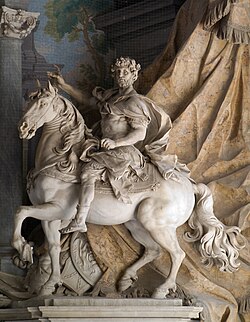
For centuries, the AD system remained relatively obscure. It gained significant momentum during the Carolingian Renaissance in the late eighth century, when the scholar Alcuin introduced it to the continent. The system was endorsed by Emperor Charlemagne, whose influence spread the epoch throughout the Carolingian Empire.
Despite this royal endorsement, adoption was gradual. Popes continued using regnal years (dating by the length of a monarch's reign) for some time. Western Europe transitioned fully between the 11th and 14th centuries, with Portugal being the last to switch in 1422. Eastern Orthodox nations followed much later, with Russia adopting the system in 1700.
Variations in the New Year
Before the system was standardized, different regions used various "styles" to determine when a new year actually began. This often led to the same day being recorded as three different years depending on the location.
- Nativity Style: The year began on December 25. This was spread by Bede and used in much of Western Europe until the 12th century.
- Annunciation Style: The year began on March 25 (the date of the Annunciation). This appeared in Arles in the 9th century and later became common in England until 1752.
- Mos Gallicanus: A French custom where the year began on Easter, a moveable feast. This was used primarily by the ruling elite under King Philip Augustus.
Alternative Eras and Modern Terminology
Throughout history, other systems coexisted with AD. Byzantine chroniclers used the Byzantine Era, which dated from the creation of the world (Anno Mundi). Others used the Anno Passionis (AP), which dated from the Year of the Passion; experts generally note a 27-year difference between AP and AD.
In recent centuries, the terms Common Era (CE) and Before Common Era (BCE) have gained popularity. These terms maintain the same numerical timeline as AD and BC but remove the explicit religious reference, making them more suitable for interfaith dialogue and secular scholarly work.
Comparison of Dating Systems
| Era Name | Starting Point (Epoch) | Primary Usage/Context |
|---|---|---|
| Anno Domini (AD) | Incarnation of Christ | Global standard / Christian tradition |
| Common Era (CE) | Incarnation of Christ | Secular / Academic standard |
| Anno Mundi (AM) | Creation of the World | Byzantine / Hebrew traditions |
| Anno Passionis (AP) | The Passion of Christ | Early medieval records (e.g., Historia Brittonum) |
| Diocletian Era | Accession of Diocletian | Pre-6th century Easter tables |
The Technicality of Year Zero
One of the most confusing aspects of the AD/BC system is the absence of a year zero. The timeline moves directly from 1 BC to AD 1. This creates challenges for mathematical calculations of time spans.
To solve this, the ISO 8601 standard and astronomical year numbering introduce a year 0. In these systems, AD 1 remains year 1, but 1 BC is designated as year 0, and 2 BC becomes year -1. Because of this discrepancy, dates involving the transition between BC and AD often require careful verification.
Frequently Asked Questions
What does Anno Domini actually mean?
Anno Domini is Latin for "in the year of our Lord," referring specifically to Jesus Christ.
Is there a difference between AD and CE?
Numerically, there is no difference. Both AD (Anno Domini) and CE (Common Era) use the same starting point. The difference is purely terminological, with CE being a non-religious alternative.
Why is there no year zero in the traditional calendar?
The system was developed before the concept of zero was widely used in Western mathematics. Consequently, the sequence jumps from the last year of the BC era directly to the first year of the AD era.
Who was responsible for making the AD system popular?
While Dionysius Exiguus invented it, the English scholar Alcuin and Emperor Charlemagne were instrumental in popularizing it across Europe during the Carolingian Renaissance.
How does the Julian calendar relate to the AD system?
The Julian calendar is the system of organizing days and months, whereas Anno Domini is the era (the system of numbering the years). Dionysius used Julian calendar years to build his original Easter tables.