Andrew Bell and the Madras System of Education
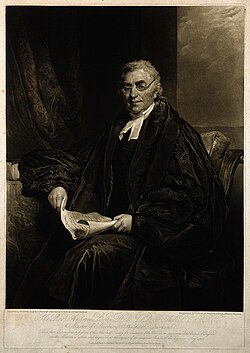
Andrew Bell (1753–1832) was a Scottish Anglican priest and educationalist who fundamentally altered the landscape of early 19th-century schooling. He is best known for pioneering the Madras System of Education, a method of mutual instruction that allowed a single teacher to educate hundreds of students by utilizing the pupils themselves as instructors.
Born in St Andrews, Scotland, Bell excelled in mathematics and natural philosophy at St Andrews University, graduating in 1774. His early career was marked by international travel, serving as a private tutor in Virginia until 1781. After returning to Scotland and surviving a shipwreck, he served at an Episcopalian chapel in Leith before being ordained as a priest in the Church of England in 1785.
The Birth of the Monitorial System
In 1787, Bell traveled to Madras, India, where he spent a decade serving as a chaplain to East India Company regiments and as the superintendent of an orphan asylum for the sons of officers. It was here that Bell observed Malabar children teaching the alphabet to their peers by drawing in the sand. Inspired by this, he developed the monitorial system (also known as mutual instruction).
Under this system, a schoolmaster would teach a small group of the most capable or older pupils. These students, acting as monitors, would then relay the lessons to other groups of children. Bell was a strong advocate for positive reinforcement, utilizing a system of rewards and strictly opposing corporal punishment.

Expansion and Institutional Influence
Bell returned to England in 1796 due to failing health and began promoting his methods. While serving as the rector of St Mary's Church in Swanage, Dorset, he established a school for infants and taught straw-plaiting to girls. During this period, he and his wife, Agnes, also promoted the early adoption of smallpox vaccinations in their district.
The growth of Bell's system led to a famous rivalry with Joseph Lancaster, another educationist promoting a similar method. The primary distinction was religious: Bell's schools were firmly committed to the Church of England, whereas Lancaster's were not. This alignment earned Bell the support of the Church and the military.
In 1811, Bell became the superintendent of the National Society for the Education of the Poor in the Principles of the Christian Church. By the time of his death, approximately 12,000 schools across Great Britain and its colonies had adopted his system.
Legacy and Educational Contributions
Despite his professional success and affinity for children, Bell was known to be an intolerant and difficult man to work under. He retired to Cheltenham at age 75 and passed away on January 27, 1832. He was buried in Westminster Abbey with a monument carved by William Behnes.
Bell left a significant portion of his wealth to educational causes, though his bequests often came with strict conditions. His funding led to the creation of Madras College in St Andrews and supported schools in Glasgow, Edinburgh, Leith, Cupar (Bell Baxter High School), and the Royal Naval School. He also funded the building that now serves as the Inverness Public Library.

Key Facts
- Core Method: The Madras System used "monitors" (advanced students) to teach basic lessons to other pupils.
- Scale: Approximately 12,000 schools utilized the system in Great Britain and the colonies.
- Philosophy: Bell rejected corporal punishment in favor of a reward-based system.
- Major Institutions: Founded Madras College and influenced the National Society for the Education of the Poor.
- Academic Background: Graduated from St Andrews University in 1774 with a focus on mathematics and natural philosophy.
| Category | Details |
|---|---|
| Lifespan | March 27, 1753 – January 27, 1832 |
| Primary Innovation | Madras System / Monitorial System |
| Key Locations | Scotland, Virginia, Madras (India), Dorset, England |
| Religious Affiliation | Church of England (Anglican) |
| Notable Bequests | Madras College, Royal Naval School, various Scottish schools |
Frequently Asked Questions
What exactly was the Madras System of Education?
The Madras System, or monitorial system, was a method where a teacher instructed a small group of advanced students, who then acted as monitors to teach the material to other students. This allowed for the education of large numbers of children with very few adult teachers.
How did Andrew Bell's system differ from Joseph Lancaster's?
While both used mutual instruction, the primary difference was religious. Bell's schools were integrated with the Church of England, while Lancaster's schools were non-denominational.
Why did the monitorial system eventually decline?
The system required exceptionally close and enthusiastic supervision to be effective. It was primarily a solution for times when funds were sparse and teachers were in short supply; as educational resources grew, more personalized teaching methods replaced it.
What were Andrew Bell's views on discipline?
Bell was opposed to the use of corporal punishment in the classroom, preferring instead to motivate students through a structured system of rewards.
What happened to Bell's fortune after his death?
Bell bequeathed most of his wealth to educational purposes, including the founding of Madras College in St Andrews and providing funds for schools in several Scottish cities and the Royal Naval School.