Parochial Schools: History, Global Systems, and Educational Models
A parochial school is a private primary or secondary institution affiliated with a religious organization. These schools integrate general religious education into a curriculum that also covers secular subjects, including mathematics, science, and language arts. The term originates from the word "parish," reflecting the historical role of these schools as the educational arms of local parish churches.
While the term is most commonly associated with Christian "church schools," religious education is also provided by Jewish, Muslim, and other faith-based groups, though they are not typically referred to as "parochial" due to the term's specific historical ties to Christian parishes.
Key Facts
- Definition: Private schools affiliated with religious organizations combining secular and religious curricula.
- United States: The Wisconsin Evangelical Lutheran Synod (WELS) operates the fourth largest private school system in the U.S.
- United Kingdom: Many "faith schools" follow the national curriculum but maintain religious ethos and selection rights.
- Funding: Varies by region; some are privately funded via donations, while others receive state support.
- Global Presence: Significant systems exist in the Philippines, India, and historically in the Russian Empire.
Parochial Education in the United Kingdom
In the UK, parish schools from the established church provided the foundation for the state-funded education system. Many current schools maintain a church connection while delivering secular education based on government standards. These are often primary schools, designated as either C.E. (Church of England) Schools or C.E. (Aided) Schools, depending on their funding source.
The role of faith schools has been a subject of political debate. In 2002, a proposal to require faith schools to offer 25% of their places to children of other or no religion was defeated in Parliament. However, in 2006, Bishop Kenneth Stevenson committed that all new Church of England schools would reserve at least 25% of places for children regardless of their practicing Christian status.
England currently hosts 6,955 Christian faith schools, alongside 36 Jewish, seven Muslim, and two Sikh faith schools. While these follow the national curriculum, voluntary-aided schools may discriminate against teachers based on religious opinions or attendance at worship. Additionally, there are approximately 700 unregulated madrassas (Islamic schools) serving about 100,000 children.
Education in Scotland
Scotland's system is distinct, with a history of universal parish schools pioneered by the Church of Scotland starting in 1560. These were handed over to the state in 1872 and are now known as "non-denominational" schools, though they often retain traditional links to Presbyterian and Episcopalian clergy.
Roman Catholic schools in Scotland were integrated into the state system via the Education (Scotland) Act 1918. While open to all, they prioritize families of faith and often require practicing Catholics for leadership roles, such as headteachers and religious education teachers.
The American Parochial System
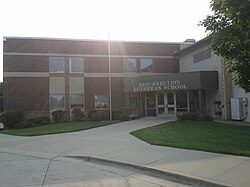
Historically, the U.S. system has been dominated by Catholic schools, though Seventh-day Adventists, Episcopalians, Lutherans, Calvinists, and Orthodox Jews also operate such institutions. Since the 1960s, many Fundamentalist religious schools have emerged, particularly in the South, often utilizing curricula from Bob Jones University Press and Abeka Books.
Catholic education in the U.S. is split between parochial schools (attached to a parish) and private Catholic schools (often college preparatory and not parish-linked). Parochial schools often act as quasi-public networks, funded largely by parish donations rather than taxes.
Economic and Legal Landscape
Financial structures in American parochial schools often result in higher out-of-pocket costs for parents and lower salaries for teachers. In 1998, parochial teachers earned approximately 45% less than their public school counterparts.
Legally, 39 states have "Blaine Amendments" in their constitutions forbidding the use of tax money for parochial schools. However, the Supreme Court has intervened in key cases, such as Pierce v. Society of Sisters (1925), which overturned an Oregon law that had outlawed all non-public schools.
Evolution of Catholic Schools
The development of the Catholic system occurred in three phases: first, as ad hoc parish efforts (1750–1870); second, as a committed separate system often divided by ethnicity (1870–1910); and third, as a modernized system modeled after public schools (1910–1945).
Global Perspectives: Russia, Philippines, and India
The Russian Empire
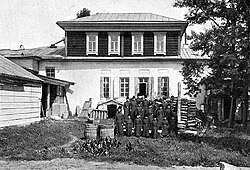
Introduced in 1804, parochial schools (prikhodskie uchilishcha) were part of the Ministry of National Enlightenment. Alongside these were church-parochial schools of the Russian Orthodox Church; both were government-funded.
The Philippines
Since the Spanish Era, education has been heavily influenced by the Catholic Church and institutes like the Society of Jesus and the Order of Preachers. Today, a distinction is made between parochial schools (run by local parishes) and Catholic schools (administered by dioceses or religious institutes).
India
While the ancient Gurukula system persists, Catholic institutions are the second most numerous after government schools, totaling 14,539. This includes 13,004 primary and secondary schools, 448 colleges, and 534 technical institutions.
Summary of Global Parochial Models
| Region | Primary Affiliation | Funding Model | Key Characteristic |
|---|---|---|---|
| United Kingdom | Church of England / Catholic | Mixed (State & Church) | Follows National Curriculum |
| United States | Catholic / Protestant / Jewish | Private / Donations | Strong legal separation from state funds |
| Scotland | Presbyterian / Catholic | State-integrated | Historical transition from parish to state |
| Philippines | Catholic | Private / Diocesan | Distinction between parish and diocesan run |
| India | Catholic / Traditional | Mixed | Large network of technical and higher ed |
Frequently Asked Questions
What is the difference between a parochial school and a private religious school?
A parochial school is specifically affiliated with a local parish, whereas a private religious school may be independent or run by a larger religious organization or diocese without a direct link to a single local parish.
Do parochial schools follow the same academic standards as public schools?
In many regions, yes. For example, faith schools in England follow the same national curriculum as state schools, though they add religious instruction to the timetable.
Can parochial schools discriminate in hiring?
In some jurisdictions, yes. In England, voluntary-aided schools are permitted to discriminate against teachers based on their religious opinions or willingness to provide religious education.
How are parochial schools typically funded?
Funding varies by country. In the U.S., they are largely supported by parish donations and tuition. In the UK and Scotland, many have varying levels of state funding.
What are Blaine Amendments in the United States?
Blaine Amendments are provisions in 39 state constitutions that forbid the use of public tax money to fund parochial schools.