Catholic Schools: A Global Overview of History, Funding, and Education
Catholic schools are pre-primary, primary, and secondary educational institutions administered in association with the Catholic Church. By integrating religious education with secular subjects, these institutions provide a holistic curriculum designed to preserve faith and tradition while meeting academic standards. As of 2011, the Catholic Church operates the world's largest religious, non-governmental school system.
The scale of this network is immense. In 2016 alone, the Church supported 95,200 primary schools and 43,800 secondary schools globally. These institutions are frequently linked with local Catholic church parishes, creating a community-centric approach to learning.
Key Facts
- Global Scale: The Catholic Church manages the largest non-governmental religious school system in the world.
- Curriculum: Schools combine secular academic subjects with religious instruction.
- Historical Drivers: Irish immigration played a major role in establishing Catholic schools in North America, Australia, and New Zealand.
- Academic Impact: Studies in the US and Australia suggest higher high school completion rates and better performance on social and economic indicators compared to public counterparts.
- Diverse Funding: Models range from fully private (fee-based) to state-integrated and fully state-funded.
Historical Development and Purpose
The growth of Catholic education was often a response to social and political pressures. In Europe, the creation of the Church of England during the Elizabethan Religious settlements (1558–63) led to a period of anti-Catholicism, prompting the Church to build its own systems to preserve its traditions. This shifted in England with the Roman Catholic Relief Act 1782 and the Catholic Emancipation Act 1829, which allowed the Church to establish charitable institutions, including schools, hospitals, and orphanages.
In other regions, such as Australia and New Zealand, the establishment of schools was heavily driven by Irish immigration. In Australia, many of the first Catholics arrived as convicts, with Irish Catholics making up roughly one-tenth of the convict population by 1803.
Regional Systems and Governance
North America
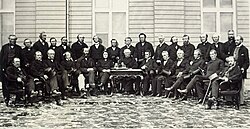
In Canada, the status of Catholic schools is deeply tied to the country's constitutional history. Section 93 of the Constitution protected the rights of minority Catholic and Protestant schools during the Confederation negotiations of the 1860s. This was a critical point of debate at the 1864 Quebec Conference to resolve tensions between the French-speaking Catholic population and the English-speaking Protestant majority.
While Quebec and Newfoundland and Labrador moved to secular public systems by 1997, Ontario continues to provide public funding for Catholic school boards. Currently, the Ontario Ministry of Education funds 29 English-language and 8 French-language Catholic school boards. Public funding in Ontario was extended to cover the final three years of secondary education (Grades 11 to 13) in 1985.
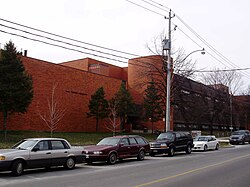
In the United States, Catholic schools have faced recent challenges. Between 2020 and 2024, the system saw a 6.4% decrease in enrollment and the closure or merger of over 200 schools. This decline is largely attributed to economic downturns and the impact of the COVID-19 pandemic, which left many families struggling with financial uncertainty.
Asia and South America
The Philippines hosts one of the most prominent Catholic educational landscapes in Asia, a legacy of Spanish colonization. The University of Santo Tomas, established by the Dominican Order in 1611, is the oldest existing university in Asia and the largest single Catholic university globally.
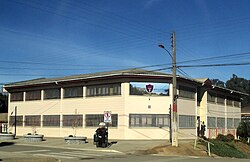
In Pakistan, the Church remains active in education, managing 534 schools, 8 colleges, 7 technical institutes, and 53 hostels as of 2008 statistics.
Europe and Oceania
In Belgium, Catholic Education Flanders is the largest educational provider in the region, overseeing approximately 935,000 students across 2,200 schools. In the United Kingdom, schools vary between private (fee-funded) and state-maintained. In England and Wales, "Voluntary Aided" schools receive 10% of their capital funding from the Church, while "Academies" are fully state-funded.
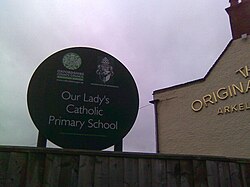
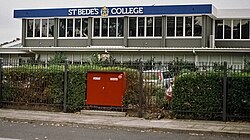
In Australia, Catholic schools represent about 18% of all non-government institutions. In New Zealand, the Private Schools Conditional Integration Act 1975 allowed Catholic schools to become "state-integrated." This means the government funds salaries and operations, but the property remains owned by the diocese. To maintain this separation of church and state, parents pay "attendance dues" to cover property costs.
Educational Performance and Outcomes
Research indicates that Catholic schools often yield strong academic and social results. In the United States, an experiment by Evans and Schwab (1998) found that attending a Catholic school increased the probability of starting college or finishing high school by 13%. Similarly, Australian research by Williams and Carpenter (1990) suggested that students in private Catholic education outperformed government school students across educational, social, and economic indicators.
Summary of Global Catholic School Models
| Region/Country | Funding Model | Key Characteristic |
|---|---|---|
| Ontario, Canada | Publicly Funded | Constitutionally protected separate school boards. |
| United States | Primarily Private | Facing enrollment declines due to economic factors. |
| New Zealand | State-Integrated | Publicly funded operations; parents pay property dues. |
| England & Wales | Mixed (Private/State) | Includes Voluntary Aided and fully state-funded Academies. |
| Philippines | Private | Home to the oldest university in Asia (UST). |
Frequently Asked Questions
What is the difference between a private and a state-integrated Catholic school?
Private Catholic schools are funded through tuition fees and private donations. State-integrated schools, such as those in New Zealand, receive government funding for teacher salaries and operations but maintain their religious character and require parents to pay dues for property maintenance.
Why are Catholic schools publicly funded in some parts of Canada?
This is due to Section 93 of the Canadian Constitution, which was a result of 1860s negotiations to protect the educational rights of religious minorities (Catholics and Protestants) during the formation of the Confederation.
How has the COVID-19 pandemic affected Catholic schools in the US?
The pandemic contributed to an economic downturn that led to a 6.4% decrease in enrollment between 2020 and 2024, resulting in the closure or merger of more than 200 schools.
Do Catholic schools only admit Catholic students?
While they maintain a Catholic character and provide religious education, many Catholic schools are open to students of other faiths or no faith, depending on the specific regional laws and school policies.
What is the largest Catholic university in the world?
The University of Santo Tomas in the Philippines, established in 1611 by the Dominican Order, is the largest single Catholic university in the world.