Ancient Spiral Stairs: The Evolution of Helical Architecture in Antiquity
The development of the spiral stair—a stairway characterized by a complex helical structure—represents a sophisticated leap in ancient engineering. Unlike straight flights of stairs, the helical design allows for vertical movement within a compact footprint, making it a highly efficient space-saving solution. While these structures appeared sporadically in early designs, they eventually became a hallmark of Roman architectural ingenuity.
The Rise of Helical Design
Spiral stairs were introduced relatively late into the architectural lexicon of classical antiquity. The earliest known examples date back to the 5th century BC, yet they remained uncommon for several centuries. The turning point for the widespread adoption of this design occurred following the construction of Trajan's Column. This influential monument demonstrated the viability and aesthetic appeal of the spiral form, leading to its permanent integration into Roman architecture.
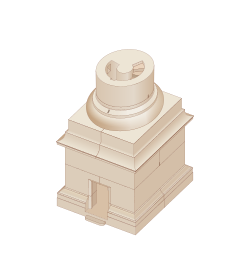
Applications in Roman Urbanism
Once the concept gained traction, spiral stairways were incorporated into a diverse array of civic and religious structures. Beyond the famous triumphal columns found in the imperial hubs of Rome and Constantinople, these stairs were utilized in:
- Temples: Providing access to upper tiers or hidden chambers.
- Thermae: Integrated into the complex heating and service levels of Roman public baths.
- Basilicas: Used in large public halls for administrative or judicial access.
- Tombs: Allowing descent or ascent within funerary monuments.
Military and Late Antiquity Transitions
Interestingly, the adoption of spiral stairs was not universal across all sectors of Roman engineering. Their notable absence in the towers of the Aurelian Wall suggests that helical designs had not yet become a standard feature of Roman military fortifications. However, as architecture evolved toward late antiquity, a new trend emerged: the construction of separate stair towers located adjacent to main buildings, a feature exemplified by the Basilica of San Vitale.
Key Facts
- Earliest Examples: Date back to the 5th century BC.
- Catalyst for Popularity: The design of Trajan's Column popularized the form in Rome.
- Primary Benefit: The helical structure serves as a space-saving architectural solution.
- Military Gap: Spiral stairs were not prominently used in the Aurelian Wall towers.
- Legacy: The technique was passed down to both Christian and Islamic architecture.
| Category | Examples/Locations | Architectural Role |
|---|---|---|
| Imperial Monuments | Trajan's Column, Constantinople | Triumphal and commemorative access |
| Civic Buildings | Thermae, Basilicas | Functional space-saving circulation |
| Religious/Funerary | Temples, Tombs | Access to sacred or burial levels |
| Late Antiquity | Basilica of San Vitale | Externalized stair towers |
Frequently Asked Questions
When did spiral stairs first appear in history?
The oldest known examples of spiral stairs date back to the 5th century BC, though they were not widely used until later.
Which monument influenced the use of spiral stairs in Rome?
Trajan's Column served as the influential design that led to the permanent adoption of spiral stairways in ancient Roman architecture.
Were spiral stairs used in Roman military defenses?
No, they do not appear prominently in Roman military engineering, as evidenced by their absence in the towers of the Aurelian Wall.
How did spiral stair design change in late antiquity?
In late antiquity, architects began constructing separate stair towers adjacent to the main buildings, such as those seen in the Basilica of San Vitale.
What happened to the tradition of spiral stairs after the Roman era?
The construction techniques for spiral stairs were passed on to subsequent architectural traditions, specifically influencing Christian and Islamic architecture.