Anchiornis: The Four-Winged Dinosaur Bridging the Gap to Birds
In the transition from ground-dwelling dinosaurs to the skies, few creatures offer as much insight as Anchiornis huxleyi. A small, feathered theropod from the Late Jurassic, Anchiornis represents a critical morphological link in the evolution of birds. Its discovery in China has provided paleontologists with a window into how early paravians—the group containing birds and their closest dinosaur relatives—developed the plumage and anatomy that would eventually enable flight.
The name Anchiornis is derived from Ancient Greek, meaning "nearby bird," reflecting its position as a transitional figure between traditional dinosaur body plans and those of early birds. It was named in honor of Thomas Henry Huxley, one of the first scientists to propose that birds evolved from dinosaurs.
Key Facts
- Temporal Range: Late Jurassic (Oxfordian), approximately 160.89 to 160.25 million years ago.
- Location: Found in the Tiaojishan Formation of Liaoning, China.
- Physical Traits: Possessed four wings (feathers on both arms and legs).
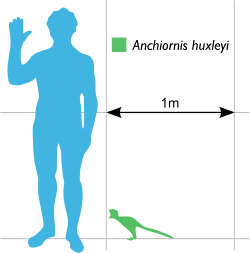
- Size: Ranged from 34 cm (subadults) to roughly 62 cm in length.
- Diet: Carnivorous; evidence of gastric pellets containing fish and lizards.
- Flight Status: Likely flightless or capable only of limited gliding/assisted leaping.
Discovery and Fossil Record
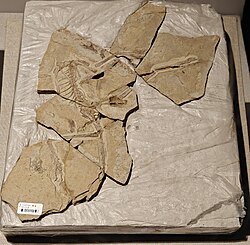
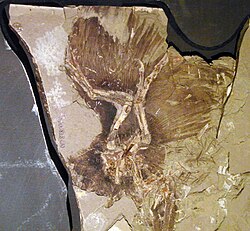
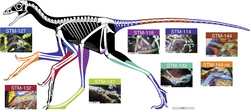
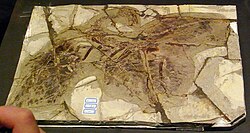
The first Anchiornis specimen, the holotype, was discovered in the Yaolugou area of Jianchang County, China. While this initial find lacked a skull and part of its tail, subsequent discoveries greatly expanded our understanding of the species. A second, more complete specimen revealed the presence of long wing feathers on the hands, arms, legs, and feet, confirming that Anchiornis was a four-winged dinosaur, similar to the later Microraptor.
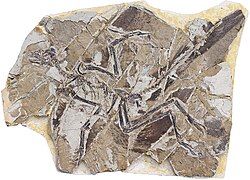
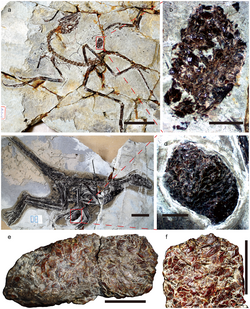
The fossil record for Anchiornis is remarkably rich. The Shandong Tianyu Museum of Nature reported holding 255 specimens as of 2010. These fossils have allowed scientists to perform advanced analyses, including scanning electron microscope studies of melanosomes—microscopic organelles that contain the pigment of feathers—to determine the animal's original coloration.
Physical Characteristics
Anchiornis was a lightweight creature. Subadults weighed around 110 grams, while the largest adults reached weights of 0.6 to 1 kilogram. Their total body length peaked at about 62 centimeters, with a wingspan of approximately 57.4 centimeters.
Wing Anatomy
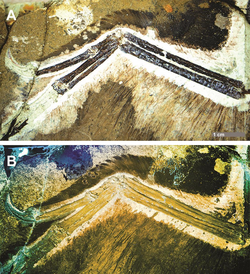
The wings of Anchiornis consisted of 20 to 28 primary feathers. Unlike modern birds, whose wings are pointed for efficient flight, the wings of Anchiornis were rounded. The longest feathers were located near the wrist rather than the tip, a structure that suggests poor aerodynamic efficiency.
Legs and Hindwings
One of the most striking features of Anchiornis was its long legs, which were covered in extensive feathers. While long legs typically suggest a strong runner, the presence of dense plumage is unusual for cursorial (running) animals. These "hindwings" consisted of 12 to 13 feathers on the tibia and 10 to 11 on the tarsus. Unlike perching birds, the first toe (hallux) was not reversed.
The Mystery of Coloration
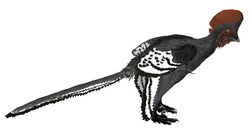
Determining the color of Anchiornis has led to scientific debate. An initial 2010 study of a specimen from the Beijing Museum of Natural History suggested a complex color pattern, including rufous (reddish-brown) tones. However, a 2015 study of a different specimen found only gray-black melanosomes.
Researchers have proposed three theories for this discrepancy: the differences could be due to varying preservation techniques, the animals may have changed color as they aged (ontogenetic change), or there may have been regional variations and different species within the genus.
Paleobiology and Flight Capability
Whether Anchiornis could fly remains a subject of intense study. A 2016 analysis concluded that while juveniles might have used their wings to assist in running up inclines or leaping, adults were likely too heavy for their wing area to achieve true flapping flight. Furthermore, Anchiornis lacked a bony sternum (breastbone), which is essential for anchoring the powerful muscles needed for flight; it is believed their sternum was made of cartilage.
Further research in 2025 examined the moulting patterns of the wings. Unlike modern flight-capable birds that undergo sequential moulting, Anchiornis exhibited irregular moulting. This pattern is more common in secondarily flightless birds, reinforcing the theory that Anchiornis was primarily ground-based.
Diet and Digestion
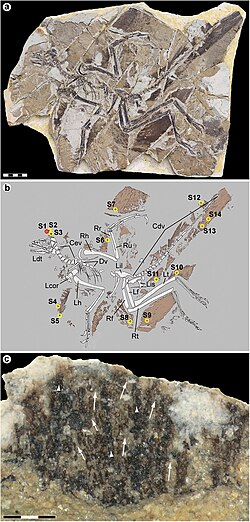
Anchiornis is the earliest known theropod to produce gastric pellets—masses of undigested material regurgitated by the animal. Fossils have been found with these pellets still inside the body, containing the remains of ptycholepid fish scales and lizard bones, confirming its role as a small predator.
Summary of Anchiornis Characteristics
| Feature | Description |
|---|---|
| Body Length | 34 cm (subadult) to 62 cm (adult) |
| Weight | 110 g to 1 kg |
| Wing Structure | Rounded; 20-28 primary feathers |
| Plumage | Four-winged (arms and legs); Gray-black or Rufous |
| Skeletal Note | Lacked an ossified sternum |
| Dietary Evidence | Gastric pellets (fish and lizards) |
Frequently Asked Questions
Did Anchiornis actually fly?
Most evidence suggests it was not capable of sustained flapping flight. While juveniles may have used their wings to assist in leaping or climbing, adults were likely too heavy for their wing size, and their lack of a bony sternum further indicates a flightless or gliding lifestyle.
What does "four-winged" mean in this context?
Unlike modern birds, which only have wings on their forelimbs, Anchiornis had long, pennaceous feathers attached to its legs (tibia and tarsus), effectively creating a second pair of wings on its hindlimbs.
How do scientists know what color it was?
Scientists use scanning electron microscopes to examine melanosomes, which are pigment-containing organelles preserved in the fossils. The shape of these melanosomes correlates with specific colors, such as gray-black or rufous.
What is the significance of the gastric pellets?
The discovery of gastric pellets makes Anchiornis the earliest known theropod to exhibit this digestive behavior. It provides direct evidence of its diet, showing that it preyed upon small lizards and fish.
Where does Anchiornis fit in the dinosaur family tree?
It is classified within the family Anchiornithidae, a group of basal paravians. It is viewed as a transitional form that fills the morphological gap between non-avian theropod dinosaurs and early birds.