Anaerobic Respiration: Mechanisms, Ecology, and Industrial Applications
While most people associate cellular energy production with the intake of oxygen, many organisms possess the remarkable ability to generate energy without it. This process, known as anaerobic respiration, is a form of cellular respiration that uses electron acceptors other than molecular oxygen (O2) to drive its electron transport chain (ETC).
In aerobic organisms, oxygen serves as the final electron acceptor because it is highly oxidizing, allowing for maximum energy extraction. Anaerobes, however, utilize substances with smaller reduction potentials—meaning they are less oxidizing—such as nitrate, sulfate, or elemental sulfur. Because these alternatives are less efficient than oxygen, anaerobic respiration releases less energy per oxidized molecule.
Key Facts
- Definition: Respiration that uses terminal electron acceptors other than oxygen.
- Efficiency: Less energy-efficient than aerobic respiration due to lower reduction potentials of acceptors.
- Mechanism: Uses an electrochemical gradient and ATP synthase, distinguishing it from fermentation.
- Ecological Role: Drives the global cycling of nitrogen, carbon, iron, and sulfur.
- Applications: Essential for wastewater treatment, bioremediation of toxins, and microbial fuel cells.
Anaerobic Respiration vs. Fermentation
It is a common misconception to use the terms anaerobic respiration and fermentation interchangeably, but they are biologically distinct processes. The primary difference lies in how they produce ATP (adenosine triphosphate).
Cellular Respiration (Aerobic and Anaerobic)
Both types of respiration rely on highly reduced chemical compounds, such as NADH and FADH2, to establish an electrochemical gradient (typically a proton gradient) across a membrane. This gradient creates an electrical potential or ion concentration difference. Electrons are passed through a series of integral membrane proteins with increasing reduction potentials until they reach the final electron acceptor. This proton motive force then drives protons through ATP synthase, which synthesizes ATP from ADP and inorganic phosphate.
Fermentation
Fermentation does not utilize an electron transport chain or an electrochemical gradient. Instead, it relies solely on substrate-level phosphorylation to produce ATP. To keep the process running, the cell must regenerate NAD from NADH. This is achieved by reducing oxidized compounds; for example, lactic acid bacteria reduce pyruvate to lactic acid, while yeast reduce acetaldehyde to ethanol.
Ecological Importance and Biogeochemical Cycles
Anaerobic respiration is fundamental to the Earth's health, driving the reduction of oxyanions in the nitrogen, iron, sulfur, and carbon cycles. These processes occur in diverse environments, including marine sediments, soil, subsurface aquifers, and biofilms. Even in oxygen-rich soils, micro-environments can exist where oxygen is depleted due to slow diffusion.
One critical example is dissimilatory denitrification, where nitrate is used as the terminal electron acceptor. This is the primary mechanism by which fixed nitrogen is returned to the atmosphere as nitrogen gas (N2). Some single-cellular anaerobic ciliates even maintain denitrifying endosymbionts to produce energy, similar to how aerobic organisms use mitochondria.
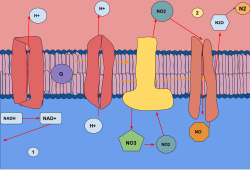
Other ecologically significant processes include:
- Methanogenesis: A form of carbon-dioxide respiration that produces methane (CH4). While biogenic methane is a sustainable fuel alternative, uncontrolled release from landfills contributes to global warming.
- Sulfate Respiration: This process produces hydrogen sulfide (H2S), creating the "rotten egg" smell in coastal wetlands and aiding in the deposition of sulfidic metal ores by precipitating heavy metal ions.
Industrial and Environmental Applications
The unique metabolic capabilities of anaerobes are harnessed in several critical technologies:
- Wastewater Treatment: Dissimilatory denitrification is used to remove toxic nitrites and nitrates from municipal water, preventing the eutrophication (nutrient over-enrichment) of waterways.
- Bioremediation: Anaerobic bacteria are used to clean contaminated sites by reducing toxic chemicals into less harmful forms. Examples include the reduction of arsenate, selenate, and chlorinated pollutants like carbon tetrachloride and vinyl chloride.
- Microbial Fuel Cells: Some bacteria can respire solid electron acceptors, such as oxidized iron. By transferring electrons to an electrode, these cells can simultaneously degrade organic waste and generate electricity.
Comparison of Respiratory Electron Acceptors
The following table summarizes various types of respiration, their acceptors, and the organisms that utilize them.
| Respiration Type | Electron Acceptor | Final Product | Reduction Potential (V) | Example Organisms |
|---|---|---|---|---|
| Aerobic | O2 | H2O | +0.82 | E. coli |
| Perchlorate | ClO4−, ClO3− | H2O, O2, Cl | +0.797 | Azospira suillum |
| Iron Reduction | Fe | Reduced Fe | +0.75 | Geobacter, Shewanella |
| Denitrification | NO3− | N2 | +0.40 | Paracoccus denitrificans |
| Sulfate Respiration | SO42− | H2O, HS− | -0.22 | Deltaproteobacteria |
| Methanogenesis | CO2 | CH4 | -0.25 | Methanosarcina barkeri |
| Acetogenesis | CO2 | Acetate | -0.30 | Acetobacterium woodii |
Frequently Asked Questions
How does anaerobic respiration differ from fermentation?
Anaerobic respiration uses an electron transport chain and an electrochemical gradient to produce ATP via ATP synthase. Fermentation does not use a membrane gradient and instead produces ATP through substrate-level phosphorylation.
Why is anaerobic respiration less efficient than aerobic respiration?
It is less efficient because the terminal electron acceptors used (such as sulfate or nitrate) have smaller reduction potentials than molecular oxygen, resulting in less energy being released during the oxidation of molecules.
What is the role of denitrification in the environment?
Denitrification is the primary process that returns fixed nitrogen from the soil and water back into the atmosphere as molecular nitrogen gas (N2), completing the nitrogen cycle.
Can anaerobic respiration be used to clean up pollution?
Yes, through a process called bioremediation. Specific anaerobic bacteria can reduce toxic substances, such as arsenate, selenate, and chlorinated organic pollutants, into less harmful molecules.
What causes the "rotten egg" smell in wetlands?
The smell is caused by hydrogen sulfide (H2S), which is a byproduct of sulfate respiration carried out by anaerobic microorganisms in those environments.