Ammonia: Properties, Industrial Applications, and Chemical Behavior
Ammonia (systematically known as azane) is a colorless gas with a characteristically pungent odor. Composed of one nitrogen atom and three hydrogen atoms (NH3), it is a fundamental compound in chemistry, serving as a critical building block for fertilizers, cleaning agents, and various industrial chemicals. From its presence in the atmospheres of giant planets to its role in modern agriculture, ammonia is one of the most significant nitrogen-containing compounds on Earth.
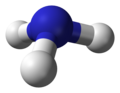
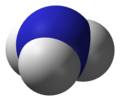
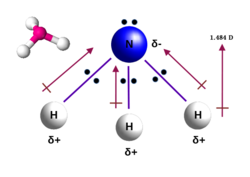
At a molecular level, ammonia is characterized by a trigonal pyramidal shape, which gives the molecule a net dipole moment of approximately 1.484 D. This polarity makes it highly soluble in water and other polar solvents like ethanol and methanol.

Key Facts
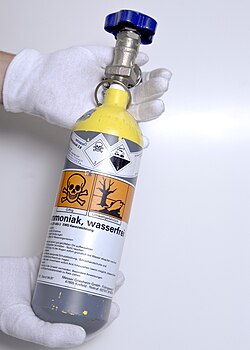
- Chemical Formula: NH3
- Molar Mass: 17.031 g/mol
- Physical State: Colorless gas at room temperature; liquid below -33.34 °C.
- Primary Use: Production of nitrogen-based fertilizers.
- Key Industrial Process: The Haber-Bosch process.
- Safety Profile: Corrosive and toxic; classified as a danger under GHS labeling.
Chemical and Physical Properties

Ammonia exhibits a wide range of physical states depending on temperature and pressure. While it is a gas at standard temperature and pressure (STP), it can be liquefied through cooling or compression. Liquid ammonia is used extensively in industrial refrigeration (where it is referred to as R-717).
Molecular Structure and Basicity
The structure of ammonia is a trigonal pyramid (Point group C3v). Because the nitrogen atom possesses a lone pair of electrons, ammonia acts as a base. When it reacts with acids, such as hydrochloric acid (HCl), it forms ammonium salts like ammonium chloride ([NH4]Cl).
Solubility and Thermodynamics
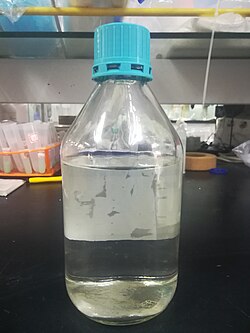
Ammonia is exceptionally soluble in water, with a solubility of 530 g/L at 20 °C. In aqueous solution, it forms ammonium hydroxide. Its boiling point is -33.34 °C, and its melting point is -77.73 °C.
Industrial Production and Applications

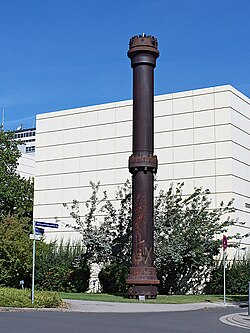
The history of ammonia production is inextricably linked to the Haber-Bosch process, developed by Fritz Haber and Carl Bosch. This process synthesizes ammonia from nitrogen gas and hydrogen gas under high pressure and temperature, enabling the mass production of synthetic fertilizers.
Agriculture and Fertilizers
The most prominent use of ammonia is in the creation of nitrogenous fertilizers. Anhydrous ammonia (ammonia without water) is often applied directly to soil or used to produce urea, ammonium nitrate, and ammonium phosphate.
Refrigeration and Energy
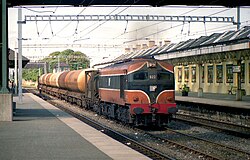
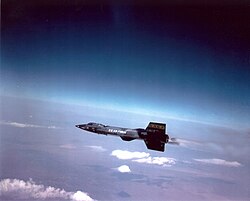
Due to its favorable thermodynamic properties, ammonia is a primary refrigerant in large-scale industrial cooling systems. More recently, it has been explored as a carbon-free fuel for maritime transport, power stations, and rocket engines, such as those used in the X-15 aircraft.
Chemical Synthesis
Ammonia serves as a precursor to numerous organonitrogen and inorganic compounds, including:
- Amines: Formed by reacting ammonia with alkyl halides or alcohols.
- Nitric Acid: Produced via the oxidation of ammonia.
- Hydrazine: Synthesized through the Olin Raschig or peroxide processes.
- Cisplatin: A widely used anticancer drug containing ammonia ligands.

Safety, Toxicity, and Environmental Impact

While useful, ammonia is hazardous. It is corrosive to the skin, eyes, and respiratory tract. High concentrations can lead to hyperammonemia, a condition where ammonia reaches toxic levels in the blood, potentially causing neurological damage.

In industrial and agricultural settings, anhydrous ammonia is stored in pressurized tanks. Because it is a critical ingredient in the illegal manufacture of methamphetamine, some regions have implemented security measures, such as locks on storage tanks, to prevent theft.
![Anti-meth sign on tank of anhydrous ammonia, Otley, Iowa. Anhydrous ammonia is a common farm fertiliser that is also a critical ingredient in making methamphetamine. In 2005, Iowa used grant money to provide thousands of locks to prevent criminals from gaining access to the tanks.[132]](/images/2c/25/2c25d44bd962a1b31033f83a3e5c78758f663f1a17a29f2de6697c8eac89c244.jpg)
Summary of Ammonia Properties
![The world's longest ammonia pipeline (roughly 2400 km long),[138] running from the TogliattiAzot plant in Russia to Odesa in Ukraine](/images/c7/2e/c72e5c85036b9f5b2856c27194dfdbc451a17cef2515f45668857e86f989662a.jpg)
| Property | Value/Description |
|---|---|
| IUPAC Name | Ammonia (Systematic: Azane) |
| Molar Mass | 17.031 g/mol |
| Boiling Point | -33.34 °C |
| Melting Point | -77.73 °C |
| Water Solubility | 530 g/L (at 20 °C) |
| Dipole Moment | 1.42 - 1.484 D |
| NFPA 704 Rating | Health: 3, Fire: 1, Reactivity: 0 |
Frequently Asked Questions

![Main symptoms of hyperammonemia (ammonia reaching toxic concentrations).[173]](/images/d3/a7/d3a7e08b0f48d0347737d63973a383e5dee576df927e009c17de4f6cd8781cfd.webp)
What is the difference between ammonia and ammonium?
Ammonia (NH3) is a neutral molecule and a weak base. Ammonium (NH4+) is the conjugate acid of ammonia, formed when ammonia gains a proton (H+).
Why is ammonia used in fertilizers?
Plants require nitrogen for growth, but they cannot use nitrogen gas (N2) from the air. Ammonia provides a form of "fixed" nitrogen that plants can absorb and utilize.
Is ammonia toxic to humans?
Yes, ammonia is toxic and corrosive. Inhalation of high concentrations can cause severe respiratory irritation, and contact with the skin or eyes can cause chemical burns.
Where does ammonia occur naturally?
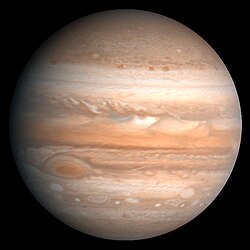
Ammonia occurs in the atmospheres of giant planets like Jupiter (0.026%) and Saturn (0.012%), as well as in the ices of Uranus and Neptune. It is also found in interstellar space.
What is anhydrous ammonia?
Anhydrous ammonia is pure ammonia gas that has been liquefied under pressure, containing no water. It is primarily used in industrial refrigeration and as a high-concentration fertilizer.