Americanization: The Global Influence of U.S. Culture and Economy
Americanization refers to the profound influence that the culture, economy, and political techniques of the United States exert on other nations. This process manifests across various sectors, including media, cuisine, business practices, technology, and popular culture. Unlike "hard power," which relies on military or coercive force, Americanization is a primary example of soft power—the ability to shape the preferences of others through appeal and attraction.
From the global reach of Hollywood cinema to the ubiquity of Silicon Valley software, the American way of life has become a visible benchmark of modernity in many parts of the world.

Key Facts
- Media Dominance: U.S. cinema has dominated global media markets since the 1910s.
- Economic Reach: American investments in Europe grew by 800% between 1950 and 1965.
- Cold War Strategy: Americanization was used as a soft power tool to counter Sovietization.
- Digital Shift: Since 2008, high-speed internet and smartphones have accelerated the spread of U.S. tech giants.
- Financial Hegemony: The U.S. dollar maintains a dominant position in the international currency system.
The Role of Media and Hollywood
Since the 1910s, the American film and television industry, centered in Hollywood, has served as the primary window through which the international community views American fashions, customs, and scenery. The commercial success of U.S. studios is unparalleled; the majority of the top 50 highest-grossing films of all time were produced or financed by U.S. companies.
Interestingly, this influence extends to works that are not inherently American. Films set in the United Kingdom or based on British source material—such as the Harry Potter or Lord of the Rings franchises—are often classified as American productions for financial reasons. Critics argue that this coopting of other cultures into "American" works is a central component of cultural hegemony.
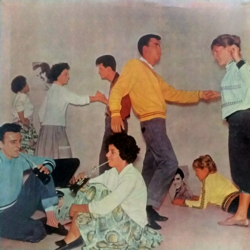
Economic Influence and Global Brands
The economic dimension of Americanization is characterized by the spread of U.S. business models and iconic brands. Fast food franchises, in particular, are often viewed as symbols of Americanization globally.
A landmark moment occurred on January 31, 1990, when the first McDonald's opened in Moscow's Pushkin Square. Despite the restrictions of the era, approximately 38,000 customers waited in long lines, signaling a hunger for American consumer culture even before the full collapse of the Soviet Union. By 1997, the chain had expanded to 21 locations in Russia.
![United States-based fast food franchises, such as this McDonald's location in China, are widely seen as a symbol of Americanization in many countries.[1][2][3]](/images/bc/1c/bc1c5c2af11226532862d64794e2b49651a7d2f81ab21051c513bcccda25f313.jpg)
Investment in Europe
Between 1950 and 1965, U.S. investments in Europe soared from 15% to 28% of total European investment, reaching $13.9 billion. While these investments were highly visible, they employed only 2% to 3% of the total labor force in the European Economic Community. The primary driver for these investments was not necessarily lower costs, but the desire to maintain a competitive edge through American technological superiority.

Political Context and the Cold War
During the Cold War, the United States utilized Americanization as a strategic tool to counter Sovietization (the spread of Soviet political and social systems). Education and universities became primary targets for this influence. While some university communities resisted these efforts, American soft power generally proved more successful than the Soviet alternative.
Following the collapse of the Soviet Union in 1991, the United States emerged as the world's sole superpower, further accelerating the prevalence of its cultural and economic norms.

Modern Trends: The Digital Frontier
In the 21st century, Americanization has entered a new phase driven by high-speed internet and smartphone technology. Since 2008, a vast majority of global apps and hardware have been designed in Silicon Valley. This has led to the dominance of corporations such as Google, Facebook, Twitter, Uber, and Apple.
This digital pervasiveness has sparked a new wave of anti-Americanism, particularly in Europe. Governments have expressed deep concerns regarding privacy violations, antitrust issues, and tax evasion by these "American giants." Similarly, leaders like Vladimir Putin have criticized the American concept of "exceptionalism," arguing that it is dangerous for a nation to view itself as indispensable.

Summary of Americanization Influence
| Sector | Primary Driver | Key Examples/Impacts |
|---|---|---|
| Media | Hollywood Studios | Global dominance of top-grossing films; export of U.S. lifestyle. |
| Economy | Global Brands & FDI | McDonald's, Coca-Cola; high U.S. investment in Europe (1950s-60s). |
| Technology | Silicon Valley | Google, Facebook, iPhone; dominance of internet infrastructure. |
| Politics | Soft Power | Countering Sovietization; promotion of U.S. educational models. |

Frequently Asked Questions
What is the difference between Americanization and American imperialism?
Americanization refers to the influence of U.S. culture and economy through soft power (attraction and appeal), whereas American imperialism typically refers to the use of hard power, such as military or political coercion, to exert control.
How did the Cold War affect Americanization?
During the Cold War, the U.S. used Americanization as a soft power strategy to counter the spread of Soviet influence, specifically targeting educational institutions and universities.
Why is the internet considered a new tool for Americanization?
Because most of the world's dominant social media platforms, search engines, and smartphone operating systems are designed by companies in Silicon Valley, the digital experience for billions of people is shaped by American corporate standards and values.
Has Americanization always been welcomed globally?
No. It has faced significant opposition, including concerns in 1960s Europe regarding U.S. business methods and the English language, as well as modern European concerns over data privacy and antitrust issues related to U.S. tech firms.
Does Americanization include non-American films?
Yes, in a financial sense. Many films produced in the UK or based on non-U.S. material are classified as American productions because they are financed by U.S. companies, which critics cite as an example of cultural hegemony.