globalizationeconomic globalizationcultural globalizationpolitical globalizationinternational trade

Globalization: The Evolution of Global Interdependence and Integration

Understanding Globalization: The Forces Shaping Our Interconnected World Globalization is the process of increasing interdependence and integration among the economies, markets, societies...

Understanding Globalization: The Forces Shaping Our Interconnected World

Globalization is the process of increasing interdependence and integration among the economies, markets, societies, and cultures of different countries worldwide. It is not a single event, but a complex phenomenon driven by the reduction of trade barriers, the liberalization of capital movements, advancements in transportation, and the rapid evolution of information and communication technologies.

While the term first appeared in the early 20th century, it gained widespread popularity in the 1990s to describe the intense international connectivity of the post–Cold War era. Today, globalization influences almost every aspect of human life, from the food we eat to the way we communicate and govern.
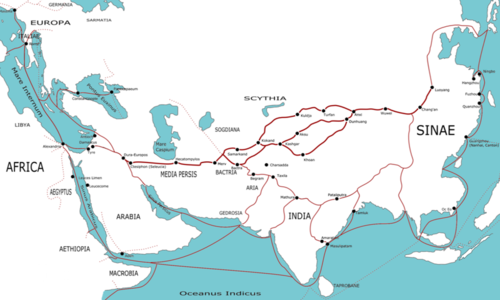
The Silk Road in the 1st century
: The Silk Road in the 1st century

The Historical Evolution of Global Connectivity
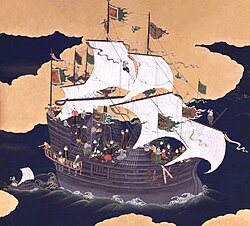
Portuguese carrack in Nagasaki, 17th-century Japanese Nanban art

Globalization has progressed through several distinct stages, moving from ancient trade routes to the high-speed digital networks of today.

Archaic and Early Modern Eras

The roots of globalization can be traced back to ancient times, characterized by the exchange of goods and ideas across vast distances. The Silk Road serves as a primary historical example of these early connections. As societies developed, the early modern period saw increased maritime exploration and the establishment of global trade networks that linked different continents for the first time.
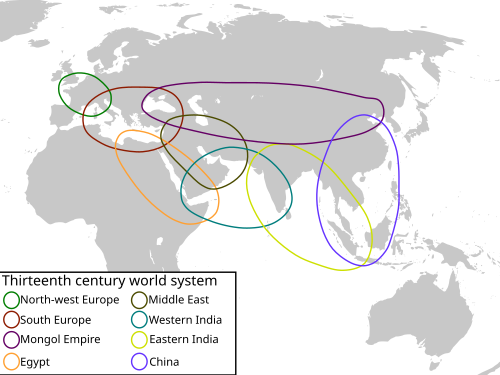
The 13th-century world-system, as described by Janet Abu-Lughod
: The 13th-century world-system, as described by Janet Abu-Lughod

The Modern and Contemporary Eras

Large-scale globalization began to accelerate in the 1820s. The Industrial Revolution provided the necessary technological foundation, introducing significant advancements in transportation and communication. This era saw a rapid expansion in economic and cultural connectivity.

Between 1990 and 2010, globalization entered a period of hyper-acceleration. This was driven by the information and communication technology revolution, which drastically lowered the cost of transmitting data, alongside the shift of manufacturing operations to emerging economies, most notably China.
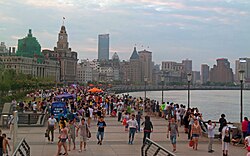
With a population of 1.4 billion, China is the world's second-largest economy.
: With a population of 1.4 billion, China is the world's second-largest economy.

The Three Pillars of Globalization

Native New World crops exchanged globally (clockwise): Maize, tomato, potato, vanilla, rubber, cacao, tobacco

Academic literature typically categorizes the phenomenon into three major dimensions:

1. Economic Globalization

This involves the integration of national economies through trade, foreign direct investment, and capital flows. It includes the rise of global supply chains and the practice of outsourcing, where companies move operations to regions with different labor costs.
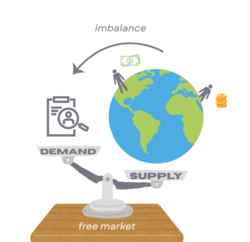
Outsourcing is a key part of global labor arbitrage, where workers in the developed world compete with foreign workers for low wages.
: Outsourcing is a key part of global labor arbitrage, where workers in the developed world compete with foreign workers for low wages.

2. Cultural Globalization

Cultural globalization refers to the transmission of ideas, meanings, and values around the world. This can lead to a "global village" effect, where cultures become more similar, but it can also result in the spread of specific brands and lifestyles across borders.
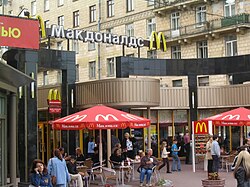
McDonald's is commonly seen as a symbol of globalization, often called McDonaldization of global society.
: McDonald's is commonly seen as a symbol of globalization, often called McDonaldization of global society.
Use of chili pepper has spread from the Americas to cuisines around the world, including Thailand, Korea, China, and Italy.[98]
: Use of chili pepper has spread from the Americas to cuisines around the world, including Thailand, Korea, China, and Italy.

3. Political Globalization

This dimension involves the growth of the worldwide political system, including the influence of international organizations like the United Nations and the development of global governance frameworks to manage transnational issues.
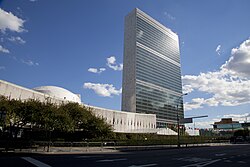
The United Nations headquarters in New York City
: The United Nations headquarters in New York City

Key Facts

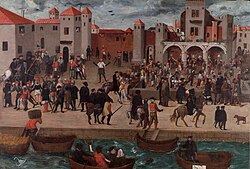
Lisbon in the 1570s had many Africans due to the Atlantic slave trade.
  • Drivers: Reduction of trade barriers, technological advancement, and liberalization of capital.
  • Core Dimensions: Economic, Cultural, and Political globalization.
  • Historical Turning Point: The Industrial Revolution and the 1990s tech revolution.
  • Key Economic Players: China is a central hub for global manufacturing and economic growth.
  • Measurement: Globalization is tracked via indices like the KOF Index and the A.T. Kearney Globalization Index.

Measuring Global Integration
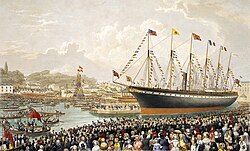
The 1843 launch of the Great Britain, the revolutionary ship of Isambard Kingdom Brunel

Because globalization is multifaceted, researchers use various indices to measure how connected different nations are. These indices often look at trade openness, social connections, and political involvement.

Comparison of Globalization Indices (Sample Rankings)
Index Type Top Ranked Country Key Focus Area
KOF Index of Globalization Ireland Economic, Social, and Political connectivity
A.T. Kearney Globalization Index Singapore Economic integration and global influence

Challenges and Criticisms

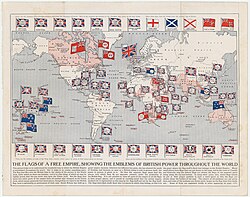
During the 19th and early 20th centuries, the United Kingdom was a global superpower.

Despite its benefits, globalization is a subject of intense debate. Critics often point to several significant challenges:

Inequality and Economic Disparity

While globalization can drive growth, it can also exacerbate income inequality. Some studies suggest that income equality may have a more beneficial impact on long-term economic growth than trade openness or foreign investment alone.

Differences in national income equality around the world as measured by the national Gini coefficient, as of 2018[221]
: Differences in national income equality around the world as measured by the national Gini coefficient, as of 2018

Environmental Impact

The increased movement of goods and the expansion of industrial production have significant environmental consequences, including deforestation and increased carbon footprints. The consumption patterns in developed nations often drive environmental changes in developing regions.

Deforestation of the Madagascar Highland Plateau has led to extensive siltation and unstable flows of western rivers.
: Deforestation of the Madagascar Highland Plateau has led to extensive siltation and unstable flows of western rivers.
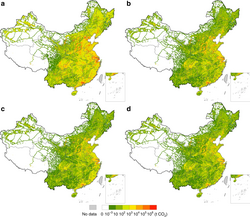
a shows carbon footprint (CF) hotspots of foreign final consumption in China. b–d show carbon footprint hotspots of the consumption of the United States, Hong Kong, and Japan, respectively. Among all foreign regions, the United States, Hong Kong, and Japan have the largest CFs in China, contributing ~23.0%, 10.8%, and 9.0%, respectively, to the total foreign CF in China in 2012.
: a shows carbon footprint (CF) hotspots of foreign final consumption in China. b–d show carbon footprint hotspots of the consumption of the United States, Hong Kong, and Japan, respectively. Among all foreign regions, the United States, Hong Kong, and Japan have the largest CFs in China, contributing ~23.0%, 10.8%, and 9.0%, respectively, to the total foreign CF in China in 2012.

The Anti-Globalization Movement

Various groups protest against globalization, citing concerns over anti-corporatism, the loss of local culture, and the perceived lack of democratic control over global institutions. These movements often advocate for global justice and environmental protection.
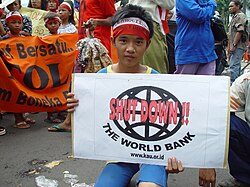
World Bank Protester, Jakarta, Indonesia
: World Bank Protester, Jakarta, Indonesia

Frequently Asked Questions

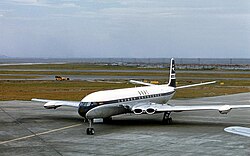
D.H. Comet, the world's first commercial jet airliner, entered service in 1949.
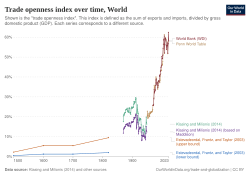
The trade openness index over 5 centuries. This index is defined as the sum of world exports and imports, divided by world GDP. Each series corresponds to a different source.
Dividends worth CZK 289 billion were paid to the foreign owners of Czech companies in 2016.[68]
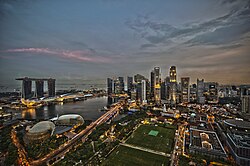
Singapore is the top country in the Enabling Trade Index as of 2016.
Shakira, a Colombian multilingual singer-songwriter, playing outside her home country
U.S. military presence around the world in 2007. As of 2015, the U.S. still had many bases and troops stationed globally.[111]
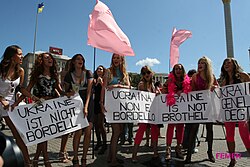
From the documentary Ukraine Is Not a Brothel. Radical group Femen protest against the increase in sex tourism into Ukraine.
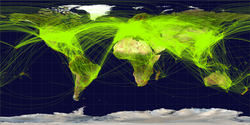
Scheduled airline traffic in 2024
2010 London Youth Games opening ceremony. About 69% of children born in London in 2015 had at least one parent who was born abroad.[138]
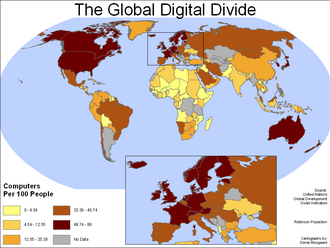
The global digital divide: Computers per 100 people per 2006
The European Union–Mercosur free trade agreement, which would form one of the world's largest free trade areas, has been denounced by environmental activists and indigenous rights campaigners.
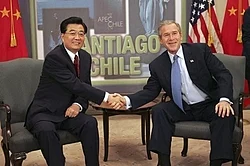
Hu Jintao of China and George W. Bush meet while attending an APEC summit in Santiago de Chile, 2004.
Of the factors influencing the duration of economic growth in both developed and developing countries, income equality has a more beneficial impact than trade openness, sound political institutions, and foreign investment.[186]
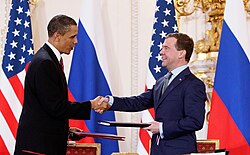
Barack Obama and Dmitry Medvedev after signing the New START treaty in Prague, 2010
Anti-TTIP demonstration in Hannover, Germany, 2016
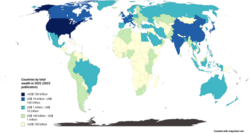
Countries by total wealth (trillions USD), Credit Suisse
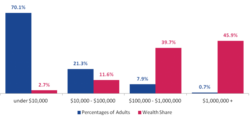
Global share of wealth by wealth group, Credit Suisse, 2017
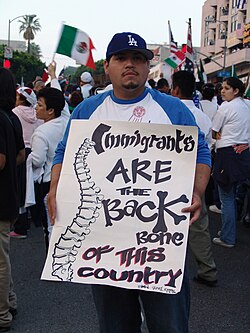
Immigrant rights march for amnesty, Los Angeles, on May Day, 2006

What are the main drivers of globalization?

The primary drivers include the reduction of international trade barriers, the liberalization of capital movements, advancements in transportation infrastructure, and the rapid development of information and communication technologies.

How does globalization affect culture?

Globalization facilitates the exchange of ideas, beliefs, and traditions. This can lead to increased cultural diversity through the sharing of food, music, and art, but it can also lead to the dominance of certain global brands and lifestyles.

Is globalization a new phenomenon?

While the term is modern, the processes behind it are not. Elements of globalization can be traced back to ancient trade routes like the Silk Road, though the scale and speed have increased dramatically since the Industrial Revolution.

What is the difference between economic and political globalization?

Economic globalization focuses on the integration of markets, trade, and financial systems. Political globalization refers to the increasing importance of international cooperation, global governance, and the influence of transnational political organizations.

What are some criticisms of globalization?

Common criticisms include the potential for increased wealth inequality, environmental degradation, the loss of local cultural identities, and the perceived erosion of national sovereignty.

References

  1. Scholte, Jan Aart (2008). "Defining Globalisation". The World Economy. 31 (11): 1471–1502. doi:10.1111/j.1467-9701.2007.01019.x.
  2. James, Paul; Steger, Manfred B. (2014). "A Genealogy of globalization: The career of a concept". Globalizations. 11 (4): 417–434. Bibcode:2014Glob...11..417J. doi:10.1080/14747731.2014.951186. ISSN 1474-7731. S2CID 18739651.
  3. O'Rourke, Kevin H.; Williamson, Jeffrey G. (2002). "When did globalisation begin?". European Review of Economic History. 6 (1): 23–50. doi:10.1017/S1361491602000023. ISSN 1361-4916. S2CID 15767303.
  4. Bank, European Investment (3 October 2024). Navigating supply chain disruptions: New insights into the resilience and transformation of EU firms. European Investment Bank. ISBN 978-92-861-5807-0.
  5. "Globalisation, automation and the history of work: Looking back to understand the future". UNCTAD.