Alps: The Majestic Heart of Europe
The Alps are a spectacular mountain range that forms a massive arc across Southern Europe. Spanning eight different countries, this range is not only a geographical marvel but also a vital resource for the continent, providing essential water and power to the lowlands. From the towering peaks of the Western Alps to the rugged terrain of the East, the range is a blend of extreme natural beauty and deep human history.
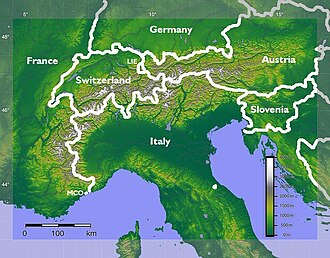
The range extends from France in the south and west to Slovenia in the east, and from Monaco in the south to Germany in the north.
Key Facts
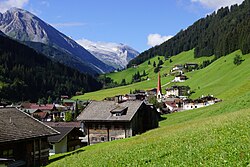
- Highest Peak: Mont Blanc, reaching 4,808.73 meters (15,776.7 ft).
- Total Area: Approximately 200,000 square kilometers.
- Countries: Austria, France, Germany, Italy, Liechtenstein, Monaco, Slovenia, and Switzerland.
- Water Resource: Provides up to 90% of the water for lowland Europe.
- Dimensions: 1,200 km in length and 250 km in width.
Geography and Distribution
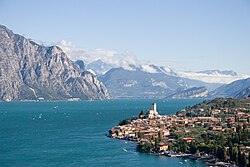
The Alps are distributed across several nations, with Austria holding the largest share of the range's area at 28.7%, followed closely by Italy at 27.2% and France at 21.4%. Switzerland accounts for 13.2%, while Germany (5.8%), Slovenia (3.6%), Liechtenstein (0.08%), and Monaco (0.001%) make up the remainder.
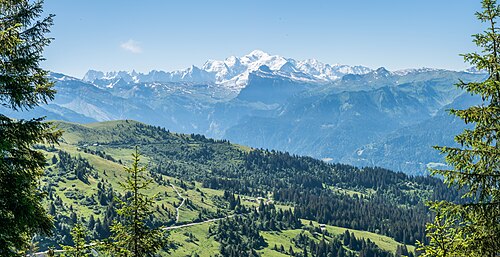
The range is divided into the Western and Eastern Alps. The Western Alps are dominated by Mont Blanc, the highest point in the entire range. In the Eastern Alps, the highest peak is Piz Bernina.
Prominent Peaks
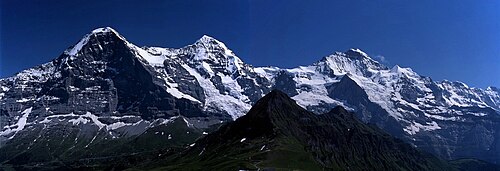
The Alps are home to numerous "4,000ers"—peaks that exceed 4,000 meters in elevation. Some of the most notable include the Dufourspitze of the Monte Rosa massif and the iconic Matterhorn.
Geology and Natural Wonders
![Shrinkage of snow cover duration, starting ~end of the 19th century[50]](/images/5c/3a/5c3ae51ad70f1a0671b337a8dac2d3294d536672fcebb35a3c41ca7ea5251314.png)
The formation of the Alps is the result of the Alpine orogeny, a mountain-building event involving the collision of tectonic plates. The range consists primarily of Tertiary rocks, including Bündner schist, flysch, and molasse.
A striking example of this geological activity can be seen in the Matterhorn, where compressed metamorphosed Tethyan sediments are sandwiched between the African plate (at the tip) and the Eurasian plate (at the base).
![Compressed metamorphosed Tethyan sediments and their oceanic basement are sandwiched between the tip of the Matterhorn (Italian-Swiss border), which consists of gneisses originally part of the African plate, and the base of the peak, which is part of the Eurasian plate.[57]](/images/e0/51/e051b531e2b9d6c55d37917376afcfb7a353c61a92dfc35daed11584efa85846.jpg)
Glaciers and Hydrology
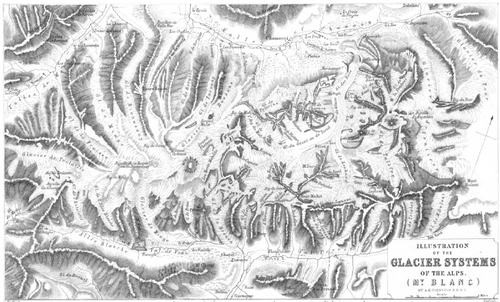
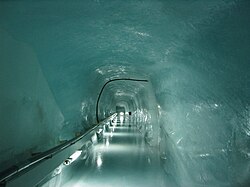
Glaciers are a defining feature of the Alpine landscape. However, they are highly sensitive to climate change. For instance, the Aletsch Glacier has seen its surface drop significantly over the last 150 years.
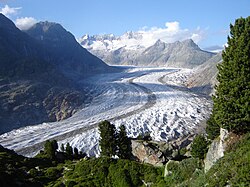
Beyond their beauty, the Alps serve as the "water tower" of Europe. Despite covering only 11% of Europe's surface area, they provide up to 90% of the water for the lowlands. Major cities, such as Milan, rely on Alpine runoff for 80% of their water. This water also powers over 550 hydroelectric plants producing at least 10MW of electricity.
Climate and Ecology
![The geologic folding seen at the Arpenaz waterfall, shown here in a mid-18th-century drawing, was noted by 18th-century geologists.[57]](/images/38/cb/38cb7cec74197930d5f8a8329e80967e3598863935e8d6a40e061b2fa59c9bbb.jpg)
The Alpine climate is characterized by high precipitation, ranging from 2,600 mm to 3,600 mm annually. At altitudes between 1,000 and 3,000 meters, snow typically accumulates from November through May. Above the 2,400 to 3,000-meter snow line, snow remains permanent year-round.
Flora
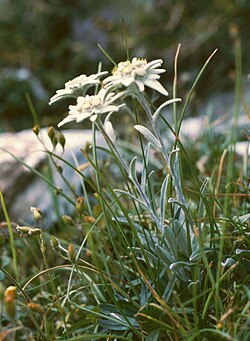
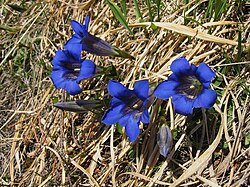
Plants in the Alps have adapted to harsh conditions by forming isolated cushions or growing in rock screes for wind protection. The Edelweiss is perhaps the most famous, growing between 1,200 and 3,400 meters, while the elusive King of the Alps (Eritrichium nanum) thrives on rocky ridges up to 3,750 meters.
Fauna
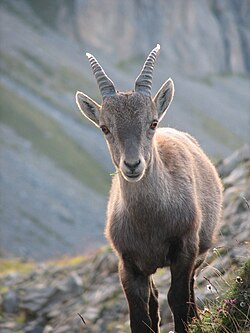
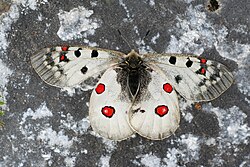
The alpine ibex, a large mammal found as high as 3,000 meters, is one of the range's most iconic inhabitants. Other common animals include the smaller chamois and, in parts of the Eastern Alps, the brown bear.
Human History and Society
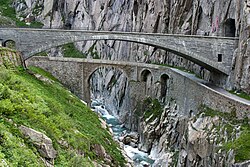
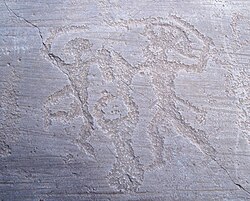
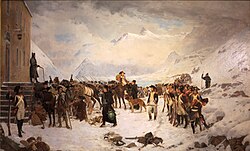
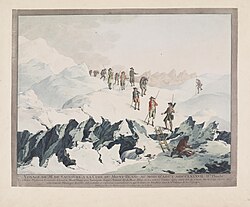
Humans have navigated the Alps for millennia. Ancient trade routes, such as the Brenner Pass, have been used since Roman times. In the 19th century, engineers modernized these passes with tunnels and bridges to facilitate faster freight and passenger transport.
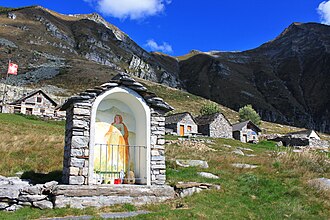
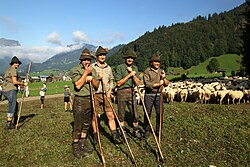
The culture of the Alps is deeply tied to the land. An "Alp" specifically refers to a high-elevation pasture used only in the summer, where livestock are brought for grazing.
Urban Centers
While much of the region is rural, several cities with over 100,000 inhabitants exist within the range, including Grenoble in France and Innsbruck in Austria.
| Rank | Municipality | Inhabitants | Country | Region |
|---|---|---|---|---|
| 1 | Grenoble | 162,780 | France | Auvergne-Rhône-Alpes |
| 2 | Innsbruck | 132,236 | Austria | Tyrol |
| 3 | Trento | 117,417 | Italy | Trentino-South Tyrol |
| 4 | Bolzano/Bozen | 106,951 | Italy | Trentino-South Tyrol |
Frequently Asked Questions
![Louis Agassiz's studies of the Unteraar Glacier in the 1840s showed that it moved at 100 m (328 ft) per year.[74]](/images/4a/00/4a003c3b3a2349f96e05be7af7b644dd0d60f0d888a85f21c4825e09cf2eaba3.jpg)
What is the highest mountain in the Alps?
The highest peak is Mont Blanc, with an elevation of 4,808.73 meters (15,776.7 ft).
Which countries are part of the Alpine region?
The Alps span eight countries: Austria, France, Germany, Italy, Liechtenstein, Monaco, Slovenia, and Switzerland.
How do the Alps contribute to Europe's water supply?
The Alps provide up to 90% of the water for lowland Europe, supporting drinking water, irrigation, and hydroelectric power for millions of people.
What is an "Alp" in the context of Alpine culture?
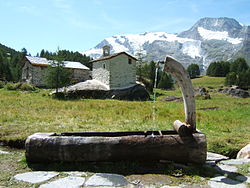
An "Alp" is a high-elevation pasture used specifically for summer grazing, often featuring small huts and places of worship.
Which is the highest drivable pass in the Alps?
The Col de l'Iseran in Savoy, France, is the highest drivable pass at 2,770 meters (9,088 ft).