Allopatric Speciation: How Geographic Barriers Drive Biological Diversity
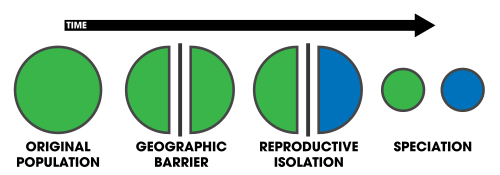
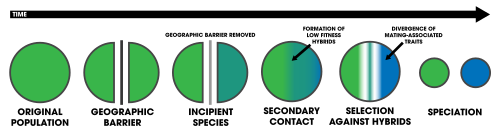
In the grand narrative of evolution, one of the most powerful drivers of biological diversity is the physical separation of life. Allopatric speciation—a term derived from the Ancient Greek words for "other" and "fatherland"—describes the process where biological populations become geographically isolated. This separation prevents or interferes with gene flow, the transfer of genetic material between populations, eventually leading to the emergence of entirely new species.
Often referred to as geographic or vicariant speciation, this process occurs when a single population is split into two or more isolated groups. Once separated, these subpopulations are no longer able to interbreed, setting the stage for independent evolutionary paths.
The Mechanisms of Geographic Isolation
The barriers that trigger allopatric speciation can be natural or man-made. Over geological timescales, massive shifts in the Earth's surface can divide habitats, while more recent changes can occur through human intervention.
Natural Barriers and Vicariance
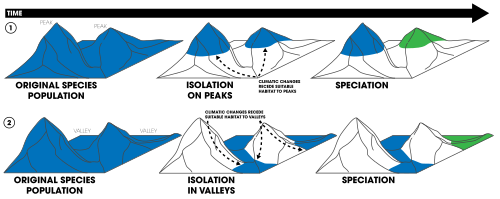
Vicariance refers to the process where a geographic barrier emerges to split a population. Common examples include:
- The movement of continents and tectonic plate shifts.
- The formation of mountain ranges or new islands.
- The creation of bodies of water, such as rivers or oceans.
- The expansion of glaciers.
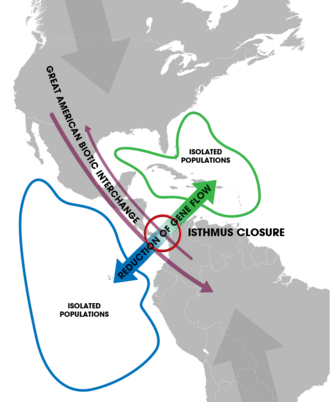
A classic example of vicariance is the closure of the Isthmus of Panama. This geological event connected North and South America, fundamentally altering the movement of species across the region.
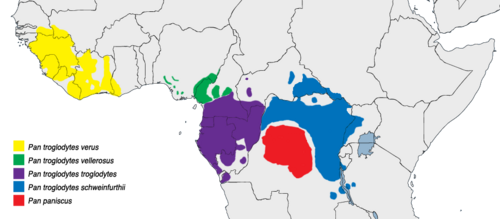
Another striking example is found in primates. The Congo River serves as a natural barrier that separates the range of the bonobo (Pan paniscus) from the common chimpanzee (Pan troglodytes), preventing them from sharing a habitat and driving their divergence.
Human-Induced Changes
While geological shifts take millions of years, human activities such as agriculture and urban development can also alter species distributions, creating isolated pockets of populations that may eventually undergo speciation.
From Isolation to Reproductive Isolation
Once a population is divided, several evolutionary forces begin to act on the separated groups independently. Because they are no longer exchanging genetic information, they accumulate differences through:
- Selective pressures: Different environments (such as varying climates or food sources) favor different traits.
- Genetic drift: Random changes in allele frequencies that occur over generations.
- Mutations: New genetic variations that arise uniquely within each group.
As these genetic changes accumulate, the populations reach a state of reproductive isolation. This means that even if the geographic barrier were removed, the two groups would no longer be able to successfully interbreed and produce fertile offspring.
Peripatric Speciation: The Role of Dispersal
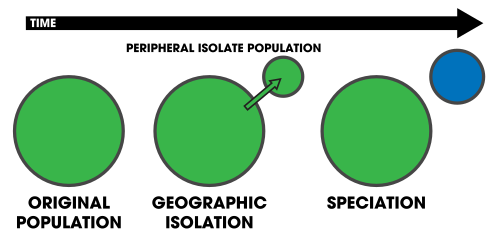
A specific subset of allopatric speciation is peripatric speciation. This occurs when a small group of individuals disperses to a new, isolated location—such as an oceanic island—on the periphery of the main population. Because the founding group is small, genetic changes can occur more rapidly, leading to isolation through reduced or eliminated gene flow.
Observational and Laboratory Evidence
Scientists have observed the effects of allopatric speciation in various environments, from the colorful cichlids of African lakes to the complex ecosystems of the Amazon. Laboratory experiments have also provided profound insights into how quickly these changes can occur.
In controlled studies using Drosophila (fruit flies), researchers have demonstrated that adapting to different environments—such as varying carbohydrate sources or temperatures—can lead to behavioral isolation. This type of pre-zygotic isolation (barriers that prevent mating from occurring) is a critical prerequisite for the speciation process.
![A simplification of an experiment where two vicariant lines of fruit flies were raised on harsh maltose and starch mediums respectively. The experiment was replicated with 8 populations; 4 with maltose and 4 with starch. Differences in adaptations were found for each population corresponding to the different mediums.[82] Later investigation found that the populations evolved behavioral isolation as a pleiotropic by-product from this adaptive divergence.[83] This form of pre-zygotic isolation is a prerequisite for speciation to occur.](/images/35/7d/357db02a1507ff241fec5dd3d2eb13a3918f96b1595592337c791242e1f74ade.webp)
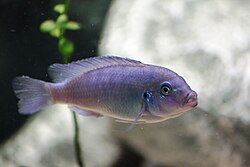
A female cobalt blue zebra cichlid serves as a visual reminder of the incredible diversity that can emerge from these evolutionary processes.
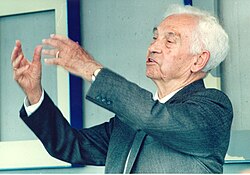
The study of these processes has been shaped by many influential scientists, including Ernst Mayr, whose work helped define our modern understanding of how species originate.
Key Facts
- Allopatric speciation is driven by geographic separation that prevents gene flow.
- Vicariance is the emergence of a physical barrier (like a mountain or river) that splits a population.
- Peripatric speciation is a special case where a small population disperses to an isolated area.
- Reproductive isolation is the final stage where populations can no longer interbreed.
- Pre-zygotic isolation refers to mechanisms that prevent mating or fertilization from occurring.
Summary of Speciation Evidence
| Species | Trait Studied | Selection Type | Isolation Type |
|---|---|---|---|
| Drosophila melanogaster | Escape response | Indirect; divergent | Pre-zygotic |
| Drosophila pseudoobscura | Carbohydrate source | Indirect | Pre-zygotic |
| Drosophila paulistorum | Various | Direct | Pre-zygotic |
| Musca domestica | Geotaxis | Indirect | Pre-zygotic |
Frequently Asked Questions
What is the difference between allopatric and allochronic speciation?
Allopatric speciation is caused by geographic separation, whereas allochronic speciation occurs when populations become isolated due to differences in the timing of their reproductive cycles.
How does reinforcement work in speciation?
Reinforcement occurs when two recently separated populations come back into contact. If their hybrids have low fitness, natural selection acts to strengthen reproductive barriers, completing the speciation process.
Can human activity cause speciation?
Yes. Human developments such as agriculture and infrastructure can change the distribution of species, creating isolated subpopulations that may eventually undergo allopatric speciation.
What is gene flow?
Gene flow is the transfer of genetic material between different populations. Allopatric speciation requires that this flow be interrupted by a physical barrier.
What is the difference between vicariance and peripatric speciation?
Vicariance involves a large-scale geographic change that splits an existing population, while peripatric speciation involves a small group of individuals dispersing to a new, isolated location.