Alexander I of Georgia: The Legacy of a Restorer King
Alexander I, known to his people as "the Great," ascended to the throne of Georgia in 1412. His reign was a complex balancing act between internal feudal strife and the relentless pressure of external invasions. Born as the eldest son of King Constantine I and Princess Natia Amirejibi, Alexander's early life was shaped by his grandmother, Rusa. An educated and religious noblewoman, Rusa instilled in the future king a lifelong devotion to faith and a passion for religious architecture.
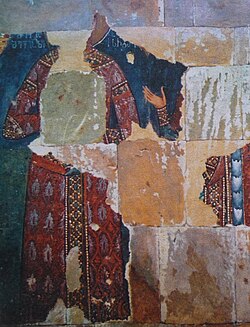
Key Facts
- Reign: Ascended the throne in 1412; abdicated in 1442.
- Major Adversaries: The Kara Koyunlu Turkoman tribes of Persia.
- Key Achievements: Restoration of major fortresses and churches; re-conquest of Lori.
- Family Strategy: Appointed his sons (Vakhtang, Demetre, and George) as co-rulers to curb aristocratic power.
- Final Years: Retired to a monastery under the name Athanasius.
Consolidating Power and Internal Restoration
Upon taking power, Alexander I immediately focused on stabilizing the fragmented Georgian territories. He moved to western Georgia to mediate peace between the rival princes of Abkhazia and Mingrelia, two powerful vassal states. By 1414, he successfully subdued the rebellious prince Atabeg Ivane Jaqeli of Samtskhe on the battlefield, effectively neutralizing the most dangerous feudal lords of the era.
With internal stability temporarily secured, Alexander partnered with Catholicos Patriarch Shio II to launch an ambitious program of national restoration. He focused on rebuilding major Georgian churches and fortresses that had fallen into decay. To fund these projects, the king imposed a temporary building tax from 1425 to 1440. Despite these efforts, the devastation of previous eras was so severe that many towns and villages remained in ruins, eventually reclaimed by forests.
Conflict with the Kara Koyunlu
The most significant external threat to Alexander's kingdom came from the Kara Koyunlu, Turkoman tribesmen from Persia. While Alexander successfully expelled many Turkoman raiders, the region remained volatile. In 1416, the leader Qara Yusuf invaded Akhaltsikhe, leaving with significant loot.
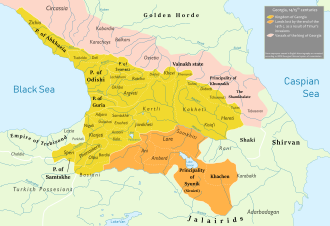
Alexander fought back with strategic precision. In 1431, he re-conquered Lori, a vital Georgian marchland (border region) that had served as a base for Kara Koyunlu raids. He further extended Georgian influence around 1434/1435 by encouraging the Armenian prince Beshken II Orbelian to attack the Kara Koyunlu in Syunik. In exchange for this victory, Alexander granted Beshken II the territory of Lori under terms of vassalage.
However, the tide turned in 1440 when Alexander refused to pay tribute to Jahan Shah of the Kara Koyunlu. In response, Jahan Shah launched a massive invasion with 20,000 troops. The resulting campaign saw the destruction of Samshvilde and the sacking of the capital, Tbilisi. According to the historian Thomas of Metsoph, thousands of Christians were massacred, and Jahan Shah imposed a heavy tax on the remaining Christians in Tbilisi to pressure them into converting to Islam.
The Question of "The Great"
To counter the influence of the rebellious aristocracy, Alexander appointed his sons—Vakhtang, Demetre, and George—as co-rulers in the regions of Kakheti, Imereti, and Kartli, respectively. While intended to centralize power, this move inadvertently threatened the kingdom's integrity, as the unity Alexander maintained began to crumble under his sons' leadership.
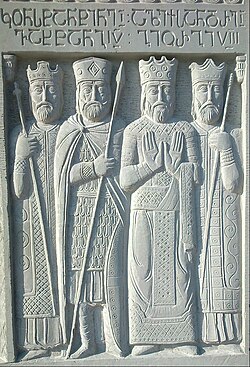
Because of this eventual fragmentation, some historians argue that Alexander disintegrated Georgia and does not deserve the title "the Great." However, modern historian Ivane Javakhishvili suggests the epithet was bestowed by his contemporaries due to his initial successes against the Turkmen nomads and his extensive restoration of the nation's religious and military infrastructure.
Overwhelmed by the mounting worldly pressures and the devastation of his kingdom, Alexander abdicated the throne in 1442. He spent his final days in a monastery, adopting the monastic name Athanasius.
| Category | Details |
|---|---|
| Family | Son of Constantine I and Natia Amirejibi |
| Key Territories | Lori, Syunik, Tbilisi, Samshvilde |
| Major Enemies | Qara Yusuf, Jahan Shah (Kara Koyunlu) |
| Internal Policy | Co-rulership for sons; building tax (1425–1440) |
| End of Reign | Abdicated 1442; became monk Athanasius |
Frequently Asked Questions
Who influenced Alexander I's religious devotion?
Alexander was greatly influenced by his grandmother, Rusa, an educated and religious noblewoman who fostered his enthusiasm for religious building and spiritual preoccupations.
How did Alexander I handle the rebellious nobility?
He used a combination of military force, such as defeating Atabeg Ivane Jaqeli, and political maneuvering, specifically appointing his three sons as co-rulers in Kakheti, Imereti, and Kartli to offset the power of the aristocracy.
What was the significance of the Kara Koyunlu invasions?
The Kara Koyunlu were Persian Turkoman tribes who frequently raided Georgia. While Alexander initially regained territories like Lori, the conflict culminated in a devastating 1440 invasion by Jahan Shah, who sacked Tbilisi and massacred thousands of Christians.
Why is Alexander I's title "the Great" debated?
Some critics argue he disintegrated the kingdom through the appointment of his sons as co-rulers. Others, including Ivane Javakhishvili, believe the title refers to his large-scale restoration projects and early military victories over nomads.
What happened to Alexander I after he left the throne?
In 1442, Alexander abdicated the throne to retire to a monastery, where he lived out his remaining days under the monastic name Athanasius.