Aleppo Railway Station: A History of Connectivity and Conflict
The Aleppo Railway Station stands as a testament to the strategic importance of northern Syria in global trade and geopolitics. From its origins as a piece of imperial engineering to its role in the modern Syrian state, the station has served as a vital hub connecting the Mediterranean coast to the heart of Mesopotamia.
The Ottoman Era and the Berlin-Baghdad Project
The station was established in 1912, designed by German engineers as a critical component of the Berlin-Baghdad railway project. This ambitious endeavor aimed to link the German Empire with the Persian Gulf. By the onset of World War I, the tracks had reached Aleppo, with a branch extending to Tripoli, Lebanon, and further eastward to Nusaybin by October 1918.
During the conflict, the Ottoman Empire and its allies in the Central Powers sought to recover infrastructure south of Aleppo leading into Lebanon in 1917. The unfinished nature of the Baghdad Railway created a complex tactical environment, as the line ran just south of the Syrian-Turkish border as it was defined at the time.
Following the war, shifting borders complicated ownership. The railway fell north of the redrawn border, and from 1922, it was operated by two successive French companies. These firms were liquidated in 1933 after another border adjustment returned the Baghdad Railway section to Syrian control.
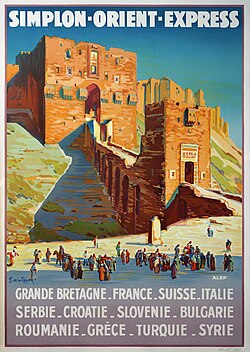
French Mandate and the Path to Nationalization
To ensure continued operation, an agreement was reached between French-controlled Syria and the Ottoman Sham-Hama Railway Company, the operator of the Damascus Railway. Under a 15-year management contract, the Aleppo line was finally connected to Damascus, integrating the two most important cities in the region.
Following Syria's independence from the French mandate in the 1940s, the management agreement expired. The Syrian government assumed direct administration of the railway through the creation of the Syrian Railway Company toward the end of the decade.
The process of centralization culminated in 1956 when the government purchased the shares of the Sham-Hama Railway Company. This move nationalized all railways within the country. On January 1, 1965, the system was reorganized as Syrian Railways (CFS), with its headquarters established in Aleppo.
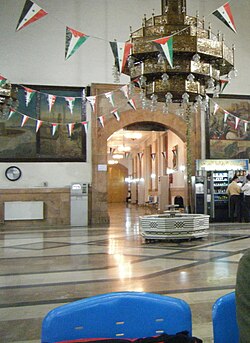
Impact of the Syrian Civil War and Recovery
Until 2011, the Aleppo station was a bustling transit point, offering daily trips to Damascus, Latakia, Hama, Homs, Qamishly, and Deir ez-Zor. However, the outbreak of the Syrian civil war brought rail traffic to a complete halt in 2012.
After four years of silence, train services resumed in Aleppo on January 25, 2017. Efforts to fully restore the network continued into 2020 with the start of reconstruction on the Damascus-Aleppo line to secure reliable rail transport.
The station's strategic value remained evident during the 2024 Syrian opposition offensives. During the Second Battle for Aleppo, which contributed to the fall of the Assad regime, the station was captured by the Free Syrian Army.
In the post-war era, connectivity began to return, with train services to Hama and Damascus resuming in August 2025.
Key Facts
- Established: 1912 by German engineers.
- Original Project: Part of the Berlin-Baghdad railway.
- Nationalization: All Syrian railways were nationalized in 1956.
- Administrative Hub: Syrian Railways (CFS) was headquartered in Aleppo starting in 1965.
- Service Interruption: Rail traffic stopped in 2012 due to civil war and resumed in 2017.
| Period | Management/Control | Key Development |
|---|---|---|
| 1912-1918 | Ottoman Empire / German Engineers | Construction and extension to Nusaybin |
| 1922-1933 | French Companies | Post-WWI border shifts and liquidation |
| 1933-1940s | Sham-Hama Railway Company | Connection established between Aleppo and Damascus |
| 1940s-1965 | Syrian Government / Syrian Railway Co. | Independence and full nationalization (1956) |
| 1965-2011 | Syrian Railways (CFS) | Headquarters in Aleppo; daily national service |
| 2012-Present | Various / Post-War Administration | War-time closure, 2017 resumption, and 2025 restoration |
Frequently Asked Questions
Who originally built the Aleppo railway station?
The station was built in 1912 by German engineers as part of the larger Berlin-Baghdad railway project.
When were the railways in Syria nationalized?
The Syrian government purchased the shares of the Sham-Hama Railway Company in 1956, bringing all railways under a single national administration.
What is CFS?
CFS refers to Syrian Railways, the reorganized national railway administration that was headquartered in Aleppo starting January 1, 1965.
How did the Syrian civil war affect the station?
Rail traffic stopped completely in 2012. Services did not resume until January 25, 2017, and the Damascus-Aleppo line required reconstruction starting in 2020.
When did train services to Damascus resume after the recent conflict?
Train services to Damascus and Hama were resumed in August 2025.