Albatross: The Masters of Long-Distance Ocean Flight
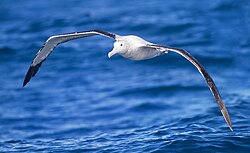
The albatross is one of nature's most impressive aviators, renowned for its ability to traverse vast oceanic distances with minimal effort. These great seabirds, belonging to the family Diomedeidae, are among the largest flying birds on Earth, with some species boasting wingspans between 2.5 and 3.5 meters (8.2 to 11.5 feet). Their lives are defined by the open sea, where they spend the majority of their time circling the globe in search of food.
From their ancient evolutionary roots to their complex social rituals, albatrosses represent a specialized peak of avian adaptation. However, these majestic birds now face significant threats from human activity, making the study of their biology and conservation more critical than ever.
Key Facts
- Wingspan: Can reach up to 3.5 meters (11.5 feet).
- Longevity: Some individuals live over 50 years; the oldest confirmed wild bird, Wisdom, is at least 70 years old.
- Incubation: They have the longest incubation period of any bird, lasting 70 to 80 days.
- Conservation Status: 15 of 22 recognized species are threatened with extinction.
- Dietary Habit: They are opportunistic feeders that regularly dive for prey, with some reaching depths below 12 meters (39 feet).
Taxonomy and Evolutionary History
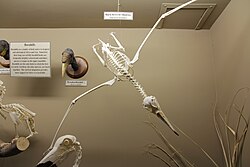
Albatrosses belong to the order Procellariiformes (tube-nosed seabirds). Molecular evidence suggests that this group radiated during the Oligocene period, approximately 30 to 35 million years ago, although some fossils like Tytthostonyx suggest an origin as far back as the late Cretaceous (70 million years ago).
The evolutionary split between the different types of albatrosses happened in stages. The divergence between the great albatrosses and the North Pacific albatrosses occurred by 15 million years ago, while the split between the sooties and mollymawks happened around 10 million years ago.

Morphology and Flight
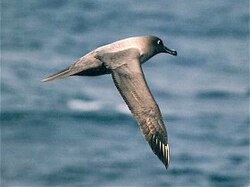
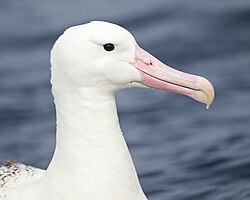
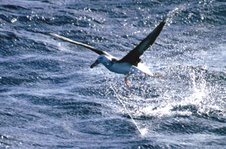
The physical build of the albatross is perfectly engineered for the wind. Their large, hooked beaks and distinctive nasal tubes are key identifiers of the species. While they are masters of gliding, taking off is the most energetically demanding part of their journey, requiring powerful flapping flight to generate both lift and thrust.
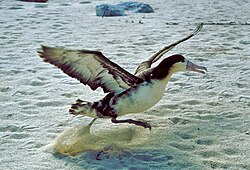
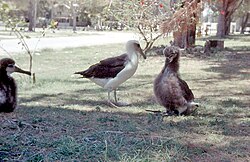
Unlike many other members of the Procellariiformes order, albatrosses are capable of walking relatively well on land, a trait necessary for their breeding cycles on remote islands.
![Unlike most Procellariiformes, albatrosses, like this black-footed albatross, can walk well on land.[citation needed]](/images/b8/93/b89355d826d13dcea8d9aca9c7b489309bd36aa08838175834eaf4b541934463.jpg)
Life Cycle and Breeding Rituals
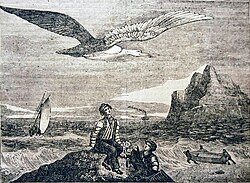
Albatrosses are characterized by a "slow" life history: they live long lives, delay breeding, and invest heavily in a very small number of offspring. Because raising a chick is such a massive energy investment, they engage in elaborate courtship rituals involving sky-pointing, clucking, and wing-spreading to ensure they have chosen the right partner.
Nesting and Incubation
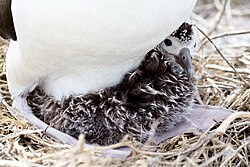
Most southern species build substantial nests from grass, soil, and peat. In contrast, North Pacific species build more rudimentary nests, and the waved albatross does not build a nest at all. Both parents share the duty of incubating the single, reddish-brown spotted egg in shifts that can last from one day to three weeks.
The Journey to Fledging
The path to independence is long. Great albatross chicks can take up to 280 days to fledge, while smaller species take between 140 and 170 days. Interestingly, chicks often grow heavier than their parents before fledging, using these fat reserves to develop flight feathers. Once they leave the nest, they are entirely on their own, guided by an innate, genetically coded navigation route.
Species Classification
While the exact number of species is debated among scientists, the IUCN and BirdLife International recognize 22 extant species divided into four primary genera.
| Genus | Common Group Name | Example Species |
|---|---|---|
| Diomedea | Great Albatrosses | Wandering Albatross, Southern Royal Albatross |
| Phoebastria | North Pacific Albatrosses | Laysan Albatross, Black-footed Albatross |
| Thalassarche | Mollymawks | Black-browed Albatross, Grey-headed Albatross |
| Phoebetria | Sooty Albatrosses | Sooty Albatross, Light-mantled Albatross |
Threats and Conservation
The survival of the albatross is currently under threat. The most significant danger is commercial longline fishing. Albatrosses are attracted to the offal and bait on these lines; they often become hooked and drown. It is estimated that 100,000 albatrosses perish annually this way, a problem worsened by unregulated pirate fisheries.
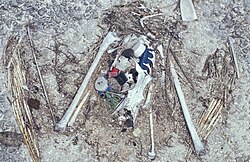
Additionally, pollution poses a severe risk. Plastic ingestion is a common cause of death for chicks, who mistake floating debris for food. Recovered remains of chicks have shown the presence of bottle caps and lighters in their digestive tracts.
Frequently Asked Questions
How long do albatrosses live?
Albatrosses are exceptionally long-lived birds, with most species surviving over 50 years. The oldest confirmed wild bird is a Laysan albatross named Wisdom, who was at least 70 years old as of 2021.
Why do albatrosses have such long incubation periods?
Their incubation period of 70 to 80 days is the longest of any bird. This is part of their overall reproductive strategy of investing high levels of energy into a single egg to maximize the chick's chance of survival.
What is the main cause of albatross mortality?
The primary human-driven threat is commercial longline fishing, where birds are accidentally caught on hooks. Plastic pollution is also a major threat, particularly to chicks.
Can albatrosses dive underwater?
Yes, although they are primarily surface feeders. Some species, such as the light-mantled albatross, regularly dive to feed and can reach depths of below 12 meters (39 feet).
How many eggs does an albatross lay?
An albatross lays only one subelliptical egg per breeding season. If the egg is broken or lost to a predator, the pair will not attempt to lay another egg until the following season.