Albania and the United Nations: A History of Diplomatic Engagement
Since joining the United Nations in 1955, Albania has evolved from a focused advocate for specific geopolitical shifts to a versatile participant in global governance. Its journey reflects the country's internal political transitions, moving from the rigid structures of the People's Republic to a democratic state actively contributing to international peace, security, and human rights.
Key Facts
- Joined UN: 1955
- UNESCO Membership: Permanent member since October 16, 1958
- Major Diplomatic Win: Played a key role in UN General Assembly Resolution 2758 (1971) recognizing the People's Republic of China (PRC).
- Security Council Term: Elected member for 2022–2023.
- Human Rights Focus: Ratified the Convention on the Rights of the Child in 1992.
Early Diplomatic Efforts (1955–1999)
Following its admission to the UN, Albania quickly expanded its international footprint, becoming a permanent member of UNESCO (the United Nations Educational, Scientific and Cultural Organization) in 1958. By the 1960s, under the leadership of Enver Hoxha, the People's Republic of Albania became a persistent voice in the General Assembly, advocating for the expulsion of the representatives of Chiang Kai-shek.
This effort culminated on October 25, 1971, with the adoption of Resolution 2758, which recognized the People's Republic of China (PRC) as the only legitimate representative of China to the United Nations. Albania continued to diversify its memberships, joining the Food and Agriculture Organization in November 1973.
Transition to Democracy and Human Rights
The 1990s marked a pivotal shift in Albania's UN relations. Following a visit from Secretary-General Javier Pérez de Cuéllar in May 1990, the newly democratic nation began prioritizing human rights. A landmark moment occurred in 1992 with the ratification of the Convention on the Rights of the Child.
Albania also took a leadership role regarding regional stability, sponsoring a resolution on the "Situation of Human Rights in Kosovo" in 1994, which passed with a clear majority. By 1995, Albania's influence grew as its Permanent Representative was elected vice president of the 50th session of the UN General Assembly.
Crisis Management and Security Council Intervention
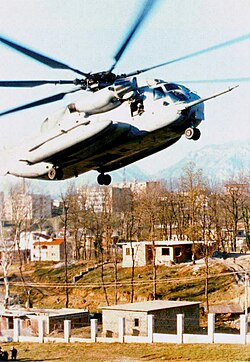
The 1997 rebellion in Albania prompted direct UN intervention. On March 28, 1997, the Security Council adopted Resolution 1101, establishing a multinational protection force to facilitate humanitarian assistance. This mandate was later extended for 45 days via Resolution 1114 on June 19, 1997.
Modern Era and Global Leadership (2000–Present)
In the 21st century, Albania has transitioned into a regular contributor to various UN councils. It served two terms on the Economic and Social Council (ECOSOC)—first from 2005 to 2007 and again in 2012—and held the position of ECOSOC vice president in 2013. Additionally, the country served on the governing board of the International Atomic Energy Agency from 2007 to 2009.
Albania's commitment to human rights was further solidified by its membership in the UN Human Rights Council from 2015 to 2017, during which it served as vice-president of the Bureau in 2015.
The Role of Ambassador Besiana Kadare
Since 2016, Ambassador Besiana Kadare has served as the Ambassador Extraordinary and Plenipotentiary Permanent Representative of Albania to the UN. Her tenure has been marked by significant cultural and diplomatic initiatives, including co-hosting the 2019 conference "A Story of Humanity: The Rescue of Jews in Albania" for International Holocaust Remembrance Day. In June 2020, she was elected vice president of the 75th session of the UN General Assembly.
Security Council Membership (2022–2023)
On June 11, 2021, Albania was elected to a two-year term on the 15-country UN Security Council. During this tenure, the nation focused on several critical global priorities:
- Women, peace, and security.
- Promotion of international law and human rights.
- Conflict prevention and civilian protection.
- Countering violent extremism.
- Addressing the security implications of climate change.
- Strengthening multilateralism and the rules-based international order.
Below is a summary of Albania's key UN milestones.
| Year/Period | Organization/Role | Significance |
|---|---|---|
| 1955 | United Nations | Joined as a member state |
| 1958 | UNESCO | Became a permanent member |
| 1971 | General Assembly | Key role in Resolution 2758 (PRC recognition) |
| 1992 | Human Rights | Ratified Convention on the Rights of the Child |
| 1997 | Security Council | Resolutions 1101 and 1114 (Multinational force) |
| 2005–2007; 2012 | ECOSOC | Member of the Economic and Social Council |
| 2015–2017 | Human Rights Council | Member and Bureau Vice-President |
| 2022–2023 | Security Council | Elected member for a two-year term |
Frequently Asked Questions
What role did Albania play in the recognition of the People's Republic of China?
Starting in the 1960s, Albania moved annual resolutions to expel the representatives of Chiang Kai-shek. This effort was instrumental in the adoption of Resolution 2758 on October 25, 1971, which recognized the PRC as the only legitimate representative of China to the UN.
Why did the UN Security Council intervene in Albania in 1997?
Following a rebellion in 1997, the Security Council passed Resolution 1101 to establish a multinational protection force. This force was designed to create the necessary conditions to facilitate humanitarian assistance within the country.
Which UN councils has Albania served on recently?
Albania has served on the Economic and Social Council (ECOSOC) in 2005–2007 and 2012, the Human Rights Council from 2015–2017, and the UN Security Council from 2022–2023.
What were Albania's priorities during its 2022–2023 Security Council term?
Albania focused on women, peace, and security; the protection of civilians; international law; countering violent extremism; climate change security; and the strengthening of the rules-based international order.
Who is the Permanent Representative of Albania to the UN?
Ambassador Besiana Kadare has served as the Ambassador Extraordinary and Plenipotentiary Permanent Representative of Albania to the United Nations in New York since 2016.