Ajam of Kuwait: History, Culture, and Identity
The Ajam are a distinct community in Kuwait consisting of people of Iranian descent. Comprising various ethnic groups—including Persians, Iranian Azerbaijanis, Iranian Kurds, and Iranian Arabs—the Ajam have played a pivotal role in the economic and social development of Kuwait, particularly during the pre-oil era. Their journey is one of integration, entrepreneurship, and a complex negotiation of cultural identity.
Key Facts
- Origins: Descended from various Iranian ethnic groups, including Persians and Kurds.
- Religion: Predominantly Shia Islam, with a significant Sunni minority (particularly among the Huwala).
- Economic Impact: Introduced the first hotel, telephone, radio agency, and refrigerator to Kuwait.
- Language: A significant shift from Persian (Farsi) to Arabic has occurred across generations.
- Geography: Significant populations in Kuwait City and Failaka Island.
Historical Contributions and the Pre-Oil Era
Before the discovery of oil, Ajam merchant families were instrumental in modernizing Kuwaiti society. They acted as conduits for new technologies and services from the wider region. For example, Yusuf Behbehani built the first hotel in Kuwait City, while M. Ma’arafie is credited with bringing the first telephone to the country, establishing the first radio agency in 1935, and importing the first refrigerator in 1934.
The introduction of television was another milestone, led by Murad Behbehani. He founded Kuwait Television (KTV) as a private initiative in 1957 before it was nationalized by the government in 1961.
Regional Variations: Kuwait City and Failaka Island
The Ajam experience varies by location. In Kuwait City, the community has historically been a center of merchant activity. In contrast, the majority of Kuwaitis from Failaka Island are of Iranian ancestry, specifically migrating from the Iranian coast, including Bandar Lengeh and Kharg Island.
These island residents are known as the Huwala. Unlike many Ajam in the city, the Huwala are predominantly Sunni Muslims and have been fluent in Arabic for generations, though they also spoke Persian before the oil era. A notable migration occurred between 1841 and 1842, when 40 families moved from Kharg Island to Failaka. Later settlements in the 1930s were driven by the unveiling laws imposed by Reza Shah in Iran.
Modern Era and the Struggle for Identity
The 1950s marked a turning point as approximately 40,000 to 50,000 members of the older Ajam generation adopted Kuwaiti citizenship to secure their economic positions. This allowed prominent families, such as the Behbahani and Marafi, to maintain their influence. However, the 1960s brought challenges, as the community faced xenophobic campaigns driven by Arab nationalists.
This tension extended into the arts and media. The 2008 novel Mustique by Waleed Al-Rujaib and the television series Karimo both attempted to explore the Ajam identity and the use of the Persian language, though these works sometimes sparked racist discourse and backlash.
The Linguistic Shift from Persian to Arabic
One of the most striking aspects of the Ajam experience is the rapid decline of the Persian language. In 2009, estimates showed that while 89% of Ajam aged 40–70 were fluent in Persian, only 28% of those aged 12–22 shared that proficiency. Those born between 1983 and 1993 reported minimal proficiency.
This shift is largely attributed to social and economic pressures. Arabic is perceived as the more prestigious language, and proficiency is often tied to higher social status and better employment opportunities. Many parents stopped passing Persian to their children to avoid stigmatization and to facilitate smoother integration into the dominant culture.
Cultural Heritage and Traditions
Despite the linguistic shift, the Ajam have preserved unique cultural markers. In music, they are known for the habbān, a traditional bagpipe used in southern Iran and the Persian Gulf coast. The record label Al-Nazaer has historically released music in the Kuwaiti Persian language, a tradition sometimes embraced by non-Ajam Kuwaiti musicians like the Miami Band.

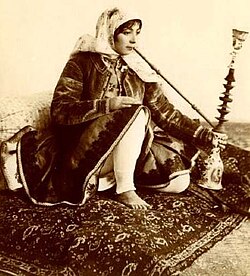
Summary of Ajam Community Profiles
| Feature | City Ajam | Failaka (Huwala) |
|---|---|---|
| Primary Religion | Predominantly Shia | Predominantly Sunni |
| Language History | Strong Persian roots; shifting to Arabic | Fluent Arabic; historic Persian fluency |
| Origins | Various Iranian ethnic groups | Kharg Island, Bandar Lengeh |
| Key Influence | Commerce and Technology | Maritime and Coastal Settlement |
Notable Families and Figures
Several prominent families have shaped Kuwait's landscape, including the Maʿrafi, Behbehani, Bin Ghalib, Bushehri, Bastaki, Al-Balushi, Mulla Hussain, Kandari, and Al-Awadhi.
The community has produced distinguished individuals across various fields:
- Politics & Law: Ahmed Lari, Abdul-Hamid Dashti, Rola Dashti, and Dawood Marafie.
- Arts & Entertainment: Abdulhussain Abdulredha, Ahmad Johar, and Bashar al-Shatti.
- Sports: Ahmed Mousa Mirza, Mohammad Ashkanani, and Lara Dashti.
- Science & Academia: Kazem Behbehani (immunologist) and Ibtihal Al-Khatib.
Frequently Asked Questions
Who are the Ajam of Kuwait?
The Ajam are Kuwaiti citizens of Iranian descent, originating from various ethnic groups including Persians, Kurds, and Azerbaijanis. They have historically been influential in Kuwait's merchant class.
What is the difference between the Ajam and the Huwala?
While both have Iranian ancestry, the Huwala (primarily located on Failaka Island) are predominantly Sunni Muslims and have historically been more integrated linguistically with Arabic speakers than some of the Shia Ajam in Kuwait City.
Why is the Persian language disappearing among Kuwaiti Ajam?
The shift toward Arabic is driven by a desire for higher social status, better employment prospects, and the need to avoid social stigmatization or prejudice associated with Iranian identity.
What were the Ajam's main contributions to early Kuwait?
They introduced several modern conveniences to Kuwait City, including the first hotel, the first telephone, the first radio agency, and the first television station.
Which religions are practiced within the Ajam community?
The community is predominantly Shia Muslim, though there is a significant minority of Sunni Muslims, particularly among the Huwala population.