Kuwait City: A Journey from Fishing Village to Global Financial Hub
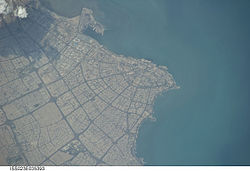
Kuwait City, the vibrant capital of Kuwait, stands as a testament to rapid transformation. From its humble beginnings as a small fishing village in the mid-18th century, it has evolved into a sophisticated metropolis known for its architectural marvels and immense economic influence. Often referred to by the nickname Ad-Dirah, the city serves as the political and financial heart of the nation.
The city's growth was fueled by its strategic location on the Persian Gulf, allowing it to bridge the gap between major trading hubs like India, Baghdad, and Persia. Today, it is a city of contrasts, where traditional souqs meet towering skyscrapers.
Key Facts
- Established: 1752
- Population: Approximately 3.4 million (City), 5 million (Metro) as of 2025
- Currency: Kuwaiti Dinar (the highest-valued currency unit globally as of June 2024)
- Economy: Heavily petroleum-based, with oil accounting for 43% of GDP
- Notable Firsts: First Persian Gulf country to establish a constitution and parliament (1963)
- Financial Innovation: Home to the Kuwait Investment Authority, the world's first sovereign wealth fund
Historical Evolution
Early Trade and Maritime Growth
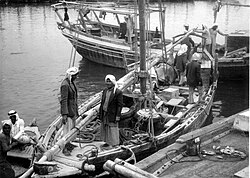
In the mid-1700s, the Bani Utubs settled in what was then a small fishing community. By the 18th century, Kuwait City had become a vital commercial center for goods transiting between India, Muscat, Baghdad, Persia, and Arabia. The city's maritime sector boomed significantly between 1775 and 1779 when Iraqi merchants took refuge in Kuwait during the Persian siege of Basra, diverting trade routes from Baghdad and Aleppo to Kuwait.
The Golden Era (1946–1982)
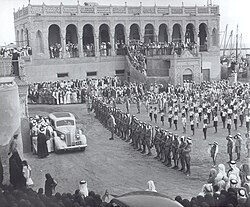
The discovery and export of oil triggered a period of unprecedented prosperity known as the Golden Era. By 1952, Kuwait became the largest oil exporter in the Persian Gulf. This wealth funded a massive public-works program and a new master plan for the city, attracting foreign workers from India, Egypt, and Jordan.
During the 1960s and 1970s, Kuwait was a regional pioneer in arts, press freedom, and education. The city became a haven for Arab writers and journalists, and Kuwait University was established in 1966. This era was characterized by a liberal social atmosphere, where Western attitudes were widely embraced.
Political Shifts and Challenges
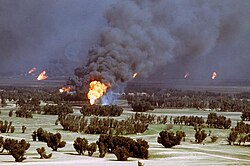
The late 20th century brought significant volatility. While the city flourished in the 70s, the 1980s saw a rise in terror attacks and a shift toward Islamism in government policy. The most devastating blow came in 1990 during the Iraqi invasion, which resulted in a scorched earth policy that left the landscape scarred.
Geography and Climate
Environmental Landscape
Kuwait is defined by its vast energy reserves, specifically the Burgan field, which holds approximately 70 billion barrels of proven oil. However, the environment suffered greatly during the 1991 oil fires, which created over 500 oil lakes and left parts of the south-eastern region uninhabitable due to soot and oil contamination.
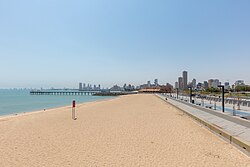
Climate Profile
Kuwait City experiences an extreme climate characterized by scorching summers and mild winters. It is one of the hottest cities in the world, with record highs reaching 52.1°C (125.8°F). Rainfall is sparse, with the highest averages typically occurring in November.
| Metric | Winter (Jan) | Summer (Jul) | Annual Average |
|---|---|---|---|
| Mean Daily Max Temp | 19.6°C (67.3°F) | 46.6°C (115.9°F) | 33.6°C (92.5°F) |
| Mean Daily Min Temp | 7.6°C (45.7°F) | 30.4°C (86.7°F) | 19.5°C (67.1°F) |
| Average Rainfall | 30.2 mm | 1.4 mm | Variable |
| Daily Sunshine Hours | 7.1 hrs | 10.6 hrs | 8.8 hrs |
Modern Infrastructure and Culture
Architectural Landmarks
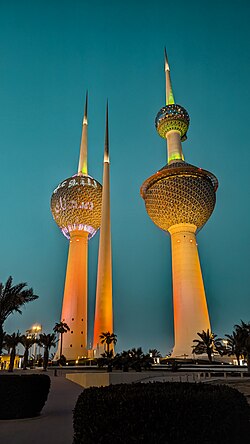
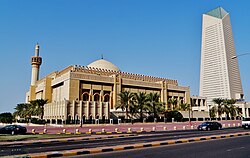
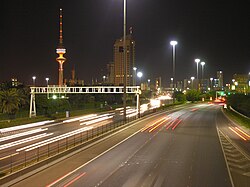
The city's skyline is dominated by the Kuwait Towers, opened in 1979, which serve as a symbol of modern Kuwait. Other key landmarks include the Al Hamra Tower, the Liberation Tower, and the Grand Mosque of Kuwait.
Cultural and Social Hubs
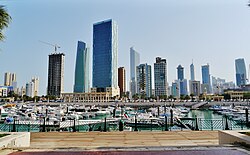
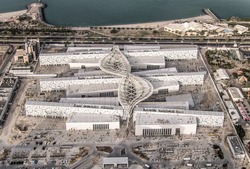
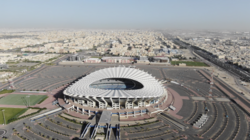
Kuwait City remains a center for culture and sports. The Sheikh Abdullah Al-Salem Cultural Centre and the Jaber Al-Ahmad International Stadium are prime examples of the city's commitment to modern infrastructure. For shopping and leisure, the Souq Sharq Marina and Plaza Sief offer a blend of traditional and contemporary experiences.
Transport and Connectivity
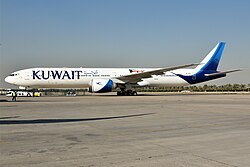
The city is well-connected via a modern highway system and the Kuwait International Airport, which serves as a gateway for the national carrier, Kuwait Airways.
Frequently Asked Questions
What is the "Golden Era" of Kuwait?
The Golden Era refers to the period between 1946 and 1982, characterized by immense prosperity driven by oil wealth, a liberal social atmosphere, and significant advancements in public works and the arts.
Why is the Kuwaiti Dinar significant?
As of June 15, 2024, the Kuwaiti Dinar is recognized as the highest-valued currency unit in the world.
How did the 1991 oil fires affect the environment?
The fires created over 500 oil lakes, contaminating the soil with soot and oil, which rendered parts of eastern and south-eastern Kuwait uninhabitable and damaged marine resources.
What was Kuwait's role in regional finance?
Kuwait was a pioneer in diversifying income away from oil and established the Kuwait Investment Authority, which was the world's first sovereign wealth fund.
When did Kuwait gain its independence?
Kuwait became independent in June 1961, marking the end of the British protectorate.