Agnosticism: The Philosophy of Suspended Judgment
At its core, agnosticism is a position that questions the existence of God or the divine. While often viewed simply as a middle ground, it is a nuanced stance that operates on both psychological and philosophical levels. Psychologically, it manifests as a personal attitude of suspending judgment, where an individual withholds both belief and disbelief. Philosophically, it is a claim that the existence of God is either unknown or entirely unknowable.
Beyond theology, agnosticism can be applied more broadly to express skeptical attitudes toward any non-religious claims that lack sufficient evidence. It is frequently characterized as an "informed indecision," distinguishing the agnostic—who has reflected deeply on the issue—from those who have simply never considered the question of divinity.
Key Facts
- Definition: A position of suspending judgment regarding the existence of the divine.
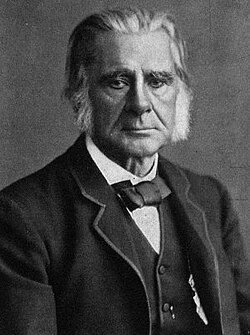
- Origin: The term was coined by Thomas Henry Huxley.
- Distinction: Unlike theism (affirmation) or atheism (denial), agnosticism focuses on the limits of knowledge.
- Core Philosophy: Closely linked to skepticism and fallibilism, which argue that absolute certainty is unattainable.
- Variety: Includes agnostic theists, who believe in God but deny that true knowledge of the divine is possible.
Agnosticism vs. Theism and Atheism
Agnosticism is often positioned as a neutral territory between theism (the belief that God exists) and atheism (the belief that God does not exist). However, some philosophers view agnosticism not as a middle point, but as a rejection of the shared assumption held by both theists and atheists: that knowledge of the divine is attainable.
This perspective aligns agnosticism with skepticism and fallibilism. Skepticism questions the possibility of certainty, while fallibilism suggests that any belief could potentially be wrong, denying that absolute knowledge is ever fully achieved.
Arguments and Perspectives
Arguments for Agnosticism
Proponents of agnosticism typically argue that the available evidence regarding the existence of God is inconclusive. From this viewpoint, intellectual humility demands that one suspend judgment rather than commit to a claim that cannot be proven or disproven.
Arguments against Agnosticism
Critics of agnosticism generally fall into two camps. Some argue that there is already decisive evidence—either for or against God—that makes suspension of judgment unnecessary. Others suggest that in the absence of decisive evidence, disbelief should be the default attitude rather than a neutral suspension.
Lifestyles and Practical Implications
In practice, agnosticism often aligns with a secular lifestyle that resembles atheism. However, the two are not identical. Agnosticism does not necessarily preclude religious practice or belief. For instance, an agnostic theist may maintain a faith in God while simultaneously acknowledging that the nature of the divine is beyond human comprehension.
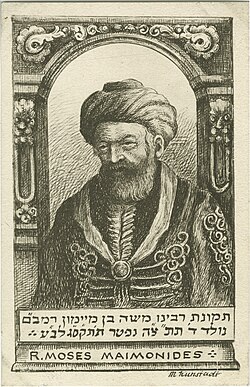
Some thinkers have approached the unknown through different lenses. Blaise Pascal suggested that belief in God is a practical choice due to potential benefits, even if absolute knowledge is impossible. Similarly, Maimonides proposed that God's nature is unknowable, suggesting that we can only describe the divine through negative terms—by stating what God is not.

Historical Context
While the formal term was introduced in the modern era, the roots of agnostic thought stretch back to ancient and medieval periods. Modern agnosticism grew as a response to the tension between scientific inquiry and traditional religious dogma, emphasizing the boundaries of human reason.
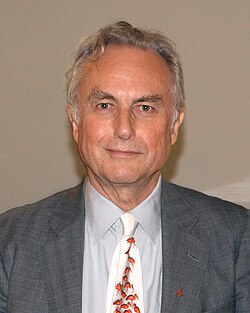
In contemporary discourse, the debate continues. Some, like Richard Dawkins, argue that the burden of proof lies with the theist, suggesting that a lack of evidence should lead to atheism rather than a state of agnosticism.
Summary of Philosophical Positions
| Position | Stance on Existence | Stance on Knowledge |
|---|---|---|
| Theism | Affirms God exists | Believes knowledge is possible |
| Atheism | Denies God exists | Believes knowledge/evidence is sufficient for denial |
| Agnosticism | Suspends judgment | Claims existence is unknown or unknowable |
| Agnostic Theism | Believes in God | Denies that true knowledge of God is possible |
Frequently Asked Questions
Is agnosticism the same as being unsure?
While it involves uncertainty, philosophical agnosticism is often an "informed indecision." It is a deliberate choice to suspend judgment based on the conclusion that evidence is inconclusive or that the divine is inherently unknowable.
Can someone be both a theist and an agnostic?
Yes. This is known as agnostic theism. An agnostic theist believes in the existence of a deity but acknowledges that human beings cannot possess certain, provable knowledge about that deity.
Who coined the term agnosticism?
The term was coined by Thomas Henry Huxley, who used it to describe a position that refuses to claim knowledge of things for which there is no scientific or logical evidence.
How does agnosticism differ from atheism?
Atheism is the denial of God's existence. Agnosticism is the claim that the existence of God is unknown or unknowable. While an atheist says "I do not believe," an agnostic says "I do not know" or "We cannot know."
What is the relationship between agnosticism and skepticism?
Agnosticism is a specific application of skepticism. While skepticism is a general philosophical doubt about the possibility of knowledge, agnosticism applies this doubt specifically to the existence of the divine.