Knowledge: Philosophical Foundations, Varieties, and Value
What does it mean to truly "know" something? While the term is used casually in everyday conversation, the study of knowledge—known as epistemology—is one of the most complex and enduring branches of philosophy. From the way we acquire information through our senses to the structured ways we organize beliefs, the nature of knowledge touches every aspect of human existence.

Key Facts
- Justified True Belief (JTB): A traditional definition of knowledge requiring truth, belief, and justification.
- The Gettier Problem: A philosophical challenge suggesting that justified true beliefs are not always sufficient for knowledge.
- Varieties of Knowledge: Includes propositional (knowing that), procedural (knowing how), and acquaintance (knowing by experience).
- Epistemic Structures: Theories like foundationalism and coherentism explain how beliefs support one another.
- Knowledge Economy: A modern approach to generating economic value through the use of knowledge.
The Definition and Analysis of Knowledge
For much of academic history, knowledge has been analyzed through the lens of justified true belief. Under this framework, for a person to possess knowledge, three conditions must be met: the statement must be true, the person must believe it, and there must be sufficient justification for that belief.

The Gettier Problem
In the 20th century, the traditional definition was challenged by what is now known as the Gettier problem. This concept demonstrates that it is possible to have a belief that is both true and justified, yet still fails to count as knowledge because the truth of the belief relies on luck or coincidence rather than the justification itself.

Kinds of Knowledge
Knowledge is not a monolithic concept; it manifests in several distinct forms depending on how it is applied and understood.
Propositional and Declarative Knowledge
Propositional knowledge, often referred to as "knowledge-that," involves knowing facts or truths about the world. This is frequently expressed as declarative knowledge, which can be recorded and stored in various formats, such as books.
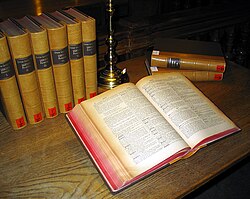
Procedural and Non-Propositional Knowledge
In contrast to knowing facts, knowing how refers to procedural or non-propositional knowledge. This involves skills and abilities, such as the physical coordination required to ride a bicycle.

Knowledge by Acquaintance and Testimony
We also distinguish between knowledge by acquaintance—direct, experiential familiarity with a person, place, or thing—and knowledge by testimony, which relies on information provided by others, such as witnesses in a legal trial.


The Structure and Acquisition of Knowledge
Philosophers also investigate how our beliefs are organized. Foundationalism suggests that knowledge is built upon basic, self-evident truths, while coherentism argues that beliefs are justified by how well they fit into a logical, interconnected system. Infinitism offers a third perspective, suggesting an infinite chain of justification.

Methods of Acquisition
Knowledge can be acquired through various channels, including perception (using the senses), reason (logical deduction), memory, and introspection (examining one's own mental states).
Skepticism and the Limits of Knowledge
Not all philosophers assume that knowledge is easily attainable. Skepticism is the philosophical position that questions the possibility of certain knowledge. From ancient skeptics like Pyrrho to modern debates regarding the reliability of our senses, the question of whether we can truly know anything remains a central theme in epistemology.

The Value and Transmission of Knowledge
Knowledge holds immense value, both intellectually and economically. In the modern era, the knowledge economy focuses on generating value through information and expertise. Furthermore, the transmission of knowledge across generations is a fundamental aspect of human culture and education.


Historically, the spread of knowledge was revolutionized by technological advancements, such as the invention of the printing press, which allowed written materials to reach a much wider audience.


Summary of Epistemic Concepts
| Concept | Description |
|---|---|
| Epistemology | The philosophical study of the nature, origin, and limits of knowledge. |
| Justification | The grounds or reasons that support a belief. |
| Omniscience | The property of possessing maximal or complete knowledge. |
| Knowledge Falsification | The deliberate misrepresentation of known facts. |
| A Priori | Knowledge that is independent of experience (e.g., through reason). |
| A Posteriori | Knowledge derived from sensory experience. |
Frequently Asked Questions
What is the difference between knowing "that" and knowing "how"?
Knowing "that" (propositional knowledge) refers to understanding facts or truths, such as knowing that water freezes at 0°C. Knowing "how" (procedural knowledge) refers to possessing a skill or ability, such as knowing how to play a musical instrument.
What is the Gettier problem?
The Gettier problem refers to scenarios where an individual has a justified true belief, but the truth of that belief is due to luck rather than the justification provided, suggesting that JTB alone is not enough to constitute knowledge.
How does foundationalism differ from coherentism?
Foundationalism posits that knowledge rests on a base of fundamental truths that require no further justification. Coherentism, however, suggests that a belief is justified if it is consistent with and supported by a wider system of other beliefs.
What is the knowledge economy?
The knowledge economy is an economic system in which the production, distribution, and use of knowledge are the primary drivers of value and economic growth.
Can we know things without using our senses?
Yes, through a priori reasoning. This involves gaining knowledge through logic and intellect independently of sensory experience, such as mathematical truths.