African Wild Dog: The Specialized Pack Hunter of the Savanna
The African wild dog (Lycaon pictus), also known as the painted dog, is one of the world's most efficient and socially complex predators. Distinguished by its mottled coat and unique hunting strategies, this canid has navigated the African landscape since the Middle Pleistocene. However, today it faces a precarious future, listed as Endangered on the IUCN Red List due to a combination of human conflict and environmental pressures.
With an estimated population of only 6,600 adults distributed across 39 subpopulations, the species struggles against habitat fragmentation and disease. The fragility of their existence is highlighted by the fact that their largest subpopulation likely consists of fewer than 250 individuals.
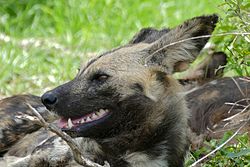
Key Facts
- Scientific Name: Lycaon pictus
- Conservation Status: Endangered (IUCN 3.1)
- Top Speed: Up to 66 km/h (41 mph)
- Hunting Success: Average rate of 31.2%, though some chases reach 60-90% success.
- Diet: Primarily medium-sized antelopes, though they can hunt rodents and birds.
- Temporal Range: Middle Pleistocene to present (200,000–0 years BP).
Evolutionary History and Taxonomy
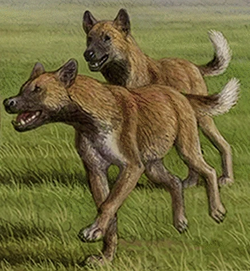
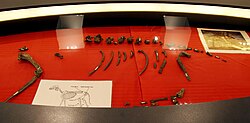
The African wild dog belongs to the family Canidae and the genus Lycaon. Its evolutionary lineage shows a gradual progression, with Lycaon sekowei identified as a possible ancestor from the Plio-pleistocene era. Other ancestral links include the genus Xenocyon.
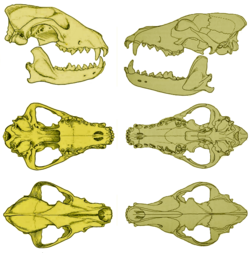
Physically, the African wild dog differs significantly from other canids. When compared to a wolf, the wild dog possesses a shorter muzzle and fewer molars, adaptations that reflect its specific dietary needs and hunting style.
Recognized Subspecies
As of 2005, five distinct subspecies are recognized:
- Cape wild dog (L. p. pictus)
- East African wild dog (L. p. lupinus)
- Somali wild dog (L. p. somalicus)
- Chadian wild dog (L. p. sharicus)
- West African wild dog (L. p. manguensis)
Social Behavior and Communication
African wild dogs are highly social animals that live in tight-knit packs. Their social structure is designed to maximize the survival of the group and their offspring. One of the most fascinating aspects of their social intelligence is their use of sneeze communication, which acts as a form of "voting" to help the pack make collective decisions.
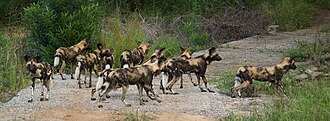
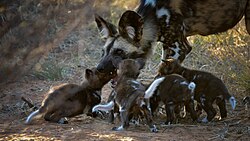
The pack also exhibits strong altruistic behaviors. For example, adults will regurgitate food to feed puppies at the den site, ensuring the next generation is well-nourished even if they cannot yet hunt.
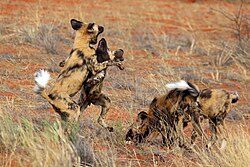
To maintain genetic health, the species employs strategies for inbreeding avoidance, which is critical for the viability of both wild and reintroduced populations.
Hunting and Diet
The African wild dog is a specialized diurnal predator (hunting during the day) that targets medium-sized antelopes. Their strategy relies on endurance and coordination rather than ambush. A typical hunt involves a silent approach followed by a high-speed pursuit that can last between 10 and 60 minutes, covering an average distance of 2 km.
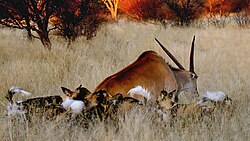
While some reports suggest success rates as high as 80%, comprehensive data indicates an average hunting success rate of 31.2%. Despite this, the benefit-cost ratio remains efficient because kills are shared among the pack. Large prey are brought down through repeated bites to the legs, belly, and rump, while smaller prey like rodents or birds are hunted individually.
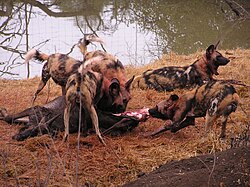
They are remarkably fast eaters; a pack can consume a Thomson's gazelle in just 15 minutes. Daily consumption ranges from 1.2 to 5.9 kg per dog.
Threats and Conservation
The survival of the African wild dog is threatened by several intersecting factors. Habitat fragmentation—the breaking up of continuous habitats into smaller, isolated patches—is a primary driver of decline. This often leads to increased human-wildlife conflict and the transmission of infectious diseases from domestic animals.
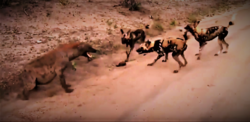
Competition with larger carnivores, such as spotted hyenas, also poses a risk, as these competitors often engage in kleptoparasitism (stealing food from another predator).
The impact of human encroachment is stark; in the Chinko area of the Central African Republic, populations dropped from 160 individuals in 2012 to just 26 in 2017, coinciding with the arrival of transhumant pastoralists.
| Feature | Detail |
|---|---|
| Conservation Status | Endangered |
| Primary Diet | Medium-sized antelopes |
| Hunting Style | Endurance pursuit (up to 66 km/h) |
| Social Unit | Cooperative packs |
| Main Threats | Habitat fragmentation, disease, human conflict |
Cultural Significance
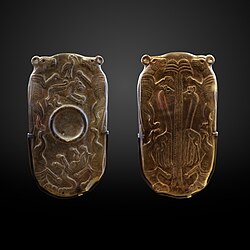
The African wild dog has appeared in human culture for millennia. In ancient Egypt, they were depicted on cosmetic palettes from the Naqada III period. They also feature in the folklore and traditions of the San and Ndebele people, as well as in Ethiopian culture.
Frequently Asked Questions
How do African wild dogs make group decisions?
They use a unique form of communication involving sneezes. These sneezes serve as a voting mechanism to reach a quorum for collective actions, such as when to begin a hunt.
What is the average success rate of their hunts?
While some individual chases are highly successful (up to 90%), the overall average hunting success rate across various prey and conditions is approximately 31.2%.
Why are they listed as Endangered?
They face severe threats from habitat fragmentation, human persecution, and outbreaks of infectious diseases, leading to a small, fragmented global population.
How do they differ from wolves?
Physically, African wild dogs have shorter muzzles and fewer molars than wolves. Behaviorally, they are highly specialized pack hunters of the African savanna with distinct social communication methods.
What do they eat besides antelopes?
While medium-sized antelopes are their primary prey, they also hunt smaller animals such as rodents, hares, and birds, and have occasionally been observed consuming fruit (frugivory).