The African Leopard: A Master of Adaptation and Survival
The African leopard (*Panthera pardus*) is one of the most versatile and resilient predators on the continent. From the dense rainforests of the Congo Basin to the high-altitude slopes of the Virunga volcanoes, this big cat has mastered a vast array of environments. Known for its strength, stealth, and incredible ability to adapt to changing prey availability, the leopard remains a symbol of wild African landscapes.
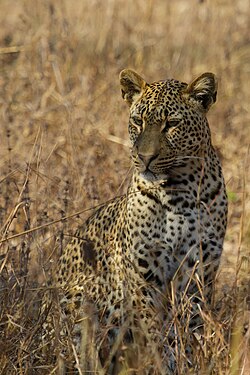
Key Facts
- Scientific Name: Panthera pardus pardus
- Conservation Status: Vulnerable (IUCN 3.1)
- Diet: Extremely broad, ranging from dung beetles to 900 kg elands
- Physical Trait: Sexually dimorphic (males are larger than females)
- Habitat: Grasslands, savannahs, mountains, and forests
Physical Characteristics and Variation
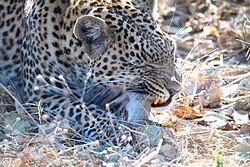
One of the most striking features of the African leopard is its coat. Depending on the specific habitat and location, coat colors can range from pale yellow to deep gold or tawny. In some instances, leopards can even appear black. The coat is defined by distinctive black rosettes (rose-like markings), while the head, belly, and lower limbs are covered in solid black spots.
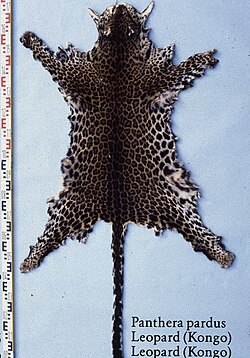
Leopards exhibit sexual dimorphism, meaning males and females possess different physical characteristics. On average, males are significantly larger, weighing approximately 58 kg (128 lb), with some reaching a maximum of 90 kg (200 lb). Females are smaller, averaging about 37.5 kg (83 lb). However, size can vary greatly; the heaviest known leopard was recorded at approximately 96 kg (212 lb) in South West Africa.
Historical Taxonomy
The scientific classification of the leopard has evolved since Carl Linnaeus first described it as Felis pardus in 1758. Over the centuries, various naturalists identified different subspecies based on skins and skulls collected across Africa. These include specimens from the Cape of Good Hope, the Tanganyika territory, and the Ethiopian Highlands, among many others.
Distribution and Habitat
African leopards are highly adaptable, inhabiting almost every environment in sub-Saharan Africa that receives more than 50 mm (2.0 in) of annual rainfall. They can thrive in mountainous forests, grasslands, and savannahs. They are even known to inhabit high-altitude regions, reaching up to 5,700 m (18,700 ft) on the slopes of the Ruwenzori and Virunga volcanoes.
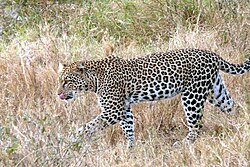
While they can penetrate arid areas along river courses, they generally avoid extremely sandy deserts. In North Africa, leopards are extremely rare; a relict population once existed in the Atlas Mountains of Morocco, but the last individual in that area was recorded in 1996.
Behavior and Ecology
The leopard is a highly opportunistic hunter. Its diet is incredibly diverse, with at least 92 prey species documented in sub-Saharan Africa through scat analysis. This includes everything from small arthropods and rodents to large ungulates (hoofed mammals) like antelopes and even young giraffes.
Strength and Hunting Tactics
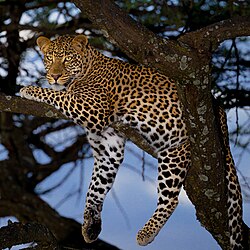
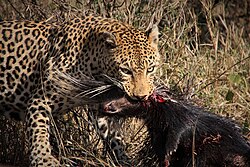
A defining behavioral trait of the leopard is its immense strength. To protect their meals from scavengers, leopards often hoist carcasses high into trees. They have been observed lifting prey weighing up to 125 kg (276 lb)—roughly two to three times their own body weight—to heights of 5.7 m (19 ft).
Threats and Conservation
Despite their adaptability, leopards face significant modern threats. They are currently listed as Vulnerable by the IUCN. Key challenges include:
- Human-Wildlife Conflict: In semi-desert areas, scarce resources often lead to conflict between leopards and nomadic farmers protecting livestock.
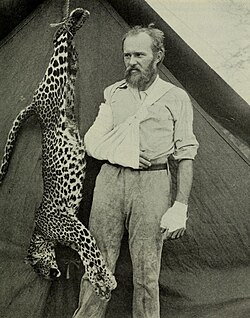
- Trophy Hunting: While regulations vary, the removal of males can impact population demographics and increase the risk of infanticide by new males entering a territory.
- Bushmeat Hunting: In areas like the Congo Basin, leopards face intense competition with human hunters. In regions with high human hunting pressure, leopard populations can drop significantly or disappear entirely.
- Poaching and Poisoning: In some regions, predators are intentionally poisoned by livestock herders.
Protected Areas
Conservation efforts are supported by several key protected areas where leopard populations are maintained, including:
- Taï National Park
- Etosha National Park
- Virunga National Park
- Kruger National Park
Summary of Leopard Data
| Feature | Details |
|---|---|
| Scientific Name | Panthera pardus pardus |
| Average Male Weight | 58 kg (128 lb) |
| Average Female Weight | 37.5 kg (83 lb) |
| Primary Diet | Medium-sized ungulates (20–80 kg) |
| IUCN Status | Vulnerable |
Frequently Asked Questions
What do leopards eat?
Leopards have an extremely broad diet. They primarily target medium-sized ungulates weighing between 20 and 80 kg, but they are opportunistic and will eat anything from dung beetles and rodents to large animals like elands or young giraffes.
How do leopards protect their food?
Leopards are famous for their strength and ability to climb. They often carry their kills into trees, sometimes hoisting carcasses that are multiple times their own weight, to keep them away from other predators and scavengers.
Are all leopards the same color?
No. Leopard coat color varies based on habitat. They can range from pale yellow to deep gold or tawny, and some individuals can even be black.
Where can you find leopards in Africa?
They are found across much of sub-Saharan Africa in various habitats including savannahs, forests, and mountains. They are also found in protected areas like Kruger National Park and Etosha National Park.
Why are leopards considered vulnerable?
Leopards face multiple threats, including habitat loss, conflict with farmers over livestock, competition with bushmeat hunters, and the impacts of trophy hunting and poaching.