Admiral Sir Jonathon Band: A Legacy of Royal Navy Leadership
Admiral Sir Jonathon Band GCB DL is a distinguished retired officer of the Royal Navy whose career spanned over four decades of service. From his early days as a junior officer to his tenure as the First Sea Lord—the professional head of the Royal Navy—Band played a pivotal role in shaping the modern capabilities of the United Kingdom's maritime forces.
Throughout his ascent through the ranks, Band became known as a steadfast advocate for naval modernization. He believed that maintaining a world-leading naval force required a commitment to new ship construction to counter evolving global threats.
Key Facts
- Highest Rank: Admiral
- Key Role: First Sea Lord and Chief of the Naval Staff (2006–2009)
- Major Commands: HMS Illustrious, HMS Norfolk, HMS Phoebe, and HMS Soberton
- Conflicts Involved: Falklands War, Bosnian War, and Iraq War
- Major Achievement: Secured government approval for the £3.9bn CVF aircraft carrier programme
- Honours: Knight Grand Cross of the Order of the Bath
Early Life and Education
Born on 2 February 1950 to Victor and Muriel Band, Jonathon Band's education began at Brambletye School, a preparatory school in West Sussex. At age thirteen, he moved to Haileybury and Imperial Service College. He entered the Royal Navy in 1967, beginning his career with sea training in the Far East.
Band balanced his military training with academic pursuit, returning to the UK to attend the University of Exeter, where he earned a Bachelor of Arts (BA) in 1972.
The Ascent Through the Ranks
Following his graduation, Band served as a junior officer on HMS Lewiston and HMS Rothesay, achieving the rank of sub-lieutenant in September 1971. In the mid-1970s, he expanded his operational perspective through an exchange programme with the United States Navy, serving aboard the guided missile cruiser USS Belknap.
By the late 1970s, Band was serving as the principal warfare officer and operations officer on the frigate HMS Eskimo, with deployments to the South Atlantic and West Indies. Between 1979 and 1981, he commanded the minesweeper HMS Soberton within the Fishery Protection Squadron.
His career continued to accelerate in the 1980s. While serving as flag lieutenant to the Commander-in-Chief Fleet, he was involved in the Falklands War. He later commanded the frigate HMS Phoebe, where he gained experience with surface ship towed passive sonar—a critical underwater detection technology. After a period in the Ministry of Defence (MoD) Directorate of Defence Policy, he commanded HMS Norfolk and assisted in re-equipping the 9th Frigate Squadron, the first to utilize Type 23 frigates.
Strategic Commands and the Bosnian War
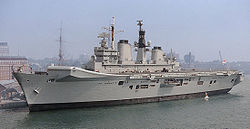
In the 1990s, Band transitioned into high-level planning, serving as Assistant Director of Navy Plans and Programmes during the "Options for Change" review. His final sea command was the aircraft carrier HMS Illustrious from 1995 to 1997. During this time, he led two operational deployments to the Adriatic to support UN, NATO, and U.S. interventions in Bosnia.
Commander-in-Chief Fleet and Strategic Influence
Promoted to Admiral, Band served as Commander-in-Chief Fleet from August 2002 to November 2005. Based at Northwood, he was responsible for the operational readiness of the Royal Navy's ships, submarines, and aircraft. In this capacity, he was central to the planning of the Iraq War and held a NATO command as Commander Allied Maritime Component Command.
During this period, Band was a vocal supporter of his crews, notably praising the crew of HMS Turbulent for achieving a record-breaking deployment of over ten months.
Tenure as First Sea Lord
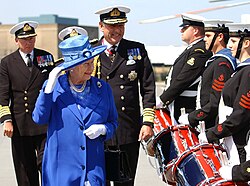
In February 2006, Band became the First Sea Lord and Chief of Naval Staff. His leadership was defined by a drive for Sustained Surface Combatant Capability. He pushed for the development of the Type 45 destroyer and the CVF programme to replace aging aircraft carriers.
Band was not afraid to challenge the government to ensure the Navy's viability. In 2007, he warned that an additional £1 billion was needed for operating budgets and threatened to resign if the government failed to commit to the new aircraft carriers. His persistence paid off in May 2007, when the government approved £3.9 billion for the carrier programme.
Summary of Career Milestones
| Period | Role/Command | Key Focus/Conflict |
|---|---|---|
| 1979–1981 | Commanding Officer, HMS Soberton | Fishery Protection |
| 1981–1983 | Flag Lieutenant to C-in-C Fleet | Falklands War |
| 1995–1997 | Commanding Officer, HMS Illustrious | Bosnian War (Adriatic) |
| 2002–2005 | Commander-in-Chief Fleet | Iraq War Planning |
| 2006–2009 | First Sea Lord | Naval Modernization (CVF/Type 45) |
Post-Naval Career and Personal Life
After retiring from active service in 2009, Band transitioned into the corporate and advisory sectors. He served as a non-executive director for Carnival Corporation & plc and the UK arm of Lockheed Martin, the manufacturer of the F35-B aircraft. He also provided expertise as a defence adviser to Babcock International and a director for the Survitec Group.
Beyond his professional life, Band is a Younger Brother of Trinity House, a liveryman of the Shipwrights' Company, and President of the 1805 Club. He resides in Southsea, Portsmouth, with his wife, Sarah Asbury, and their two daughters.
Frequently Asked Questions
What was Admiral Band's most significant contribution as First Sea Lord?
His most significant contribution was securing the £3.9 billion government investment for the Royal Navy CVF programme, ensuring the UK would have modern aircraft carriers to project air power globally.
Which major conflicts did Admiral Band participate in?
Admiral Band was involved in the Falklands War, the Bosnian War (while commanding HMS Illustrious), and the planning stages of the Iraq War.
What is the "First Sea Lord" role?
The First Sea Lord is the professional head of the Royal Navy and the Chief of the Naval Staff, responsible for the strategic direction and operational capability of the service.
What corporate roles did he hold after retirement?
He served as a non-executive director for Carnival Corporation & plc and Lockheed Martin, and acted as a defence adviser for Babcock International.
What is the significance of the Type 45 destroyer mentioned in his tenure?
The Type 45 destroyer was part of Band's push for sustained surface combatant capability, designed to provide advanced air-defence capabilities for the fleet.