Admiral Mark Kerr: A Pioneer of Naval and Aerial Warfare
Admiral Mark Edward Frederic Kerr was a distinguished officer whose career spanned the transition from traditional naval dominance to the dawn of aerial combat. Serving in both the Royal Navy and the Royal Air Force (RAF), Kerr played pivotal roles in international diplomacy, naval command, and the strategic formation of Britain's air defenses during the First World War.
Born into a family with deep military roots, Kerr's trajectory took him from the decks of destroyers in the Mediterranean to the halls of the Air Ministry, where he advocated for the necessity of heavy bomber forces to protect the United Kingdom.
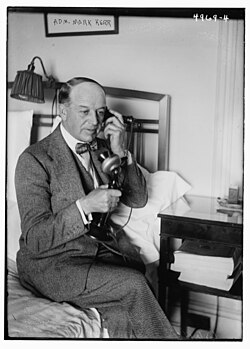
Key Facts
- Full Name: Mark Edward Frederic Kerr, CB, CVO.
- Service: Royal Navy (1877–1918) and Royal Air Force (1918).
- Notable Command: Commander-in-Chief of the Royal Hellenic Navy (1913–1915).
- Aviation Milestone: The first British flag officer to become a qualified pilot.
- Strategic Impact: Influenced the creation of the RAF through his "bombshell memorandum" regarding German heavy bombers.
Early Life and Naval Foundations
Mark Kerr was born on 26 September 1864 to Admiral Lord Frederic Kerr and Emily Sophia Maitland. His lineage was steeped in service; his father was the son of the 6th Marquess of Lothian, and his mother was the daughter of General Sir Peregrine Maitland. After attending Stubbington House School, Kerr entered the Royal Navy in 1877.
His early career was marked by active service in several conflicts, including the Anglo-Egyptian War of 1882 and the Mahdist War in Sudan in 1891. By 1899, he began commanding vessels within the Medway Instructional Flotilla, leading ships such as the HMS Bittern and HMS Mermaid.
International Command and Aviation Pioneering
Promoted to captain in 1903, Kerr served as a Naval Attaché across Italy, Austria, Turkey, and Greece. His diplomatic and tactical skills led to his appointment in 1913 as the head of the British Naval Mission to Greece and the Commander-in-Chief of the Royal Hellenic Navy. In this capacity, he was instrumental in keeping Greece neutral during the early stages of the First World War.
While on leave in 1914, Kerr pursued a passion for aviation. On 16 July 1914, he earned Aviator's Certificate no. 842, making him the first British flag officer to qualify as a pilot. This unique combination of naval command and flight experience would later prove critical to his career.
Naval Commands Summary
| Ship/Squadron | Period | Role/Context |
|---|---|---|
| HMS Drake | 1905–1907 | Commanding Officer |
| HMS Invincible | 1908–1911 | Commanding Officer |
| Royal Hellenic Navy | 1913–1915 | Commander-in-Chief |
| Adriatic Squadron | 1916–1917 | Commander-in-Chief |
The Transition to the Royal Air Force
In 1917, the Admiralty seconded Kerr to the Air Board to assist in the establishment of the Air Ministry and the RAF. During this period, Kerr authored a "bombshell memorandum" based on Italian intelligence. He warned the British government that Germany was developing a fleet of 4,000 heavy bombers capable of devastating South-East England.
Although he overstated the payload of these aircraft, his urgency led him to advocate for a counter-force of at least 2,000 bombers under a centralized air ministry. These contributions helped shape the recommendations of the Smuts Report, which paved the way for the RAF's official creation on 1 April 1918.
Kerr was granted the rank of major general and served as Deputy Chief of the Air Staff. However, strategic disagreements with Sir Hugh Trenchard led Kerr to move into regional command. He served as the General Officer Commanding South Western Area until his retirement from the RAF in October 1918.
Later Life and Literary Contributions
Following his military retirement, Kerr turned to writing and aviation exploration. In 1919, he traveled to Harbour Grace, Newfoundland, intending to lead a transatlantic crossing in a four-motor Handley Page bomber. The mission was eventually scaled back to a "friendship flight" to New York, though other competitors completed the crossing before his attempt could be realized.
Kerr became a prolific author, publishing both nonfiction works on naval and air history—such as Land, Sea and Air (1927) and The Navy in My Time (1933)—and several volumes of poetry. He died on 10 January 1944, the same year as his wife, Rose Margaret Gough, a pioneer of the Girl Guides.
Frequently Asked Questions
What was Mark Kerr's most significant contribution to the RAF?
Kerr's most significant contribution was his "bombshell memorandum," which alerted the British government to the threat of German heavy bombers and urged the creation of a dedicated bomber force and an independent air ministry.
Was Mark Kerr the first British admiral to fly?
Yes, by earning his Aviator's Certificate in July 1914, he became the first British flag officer to become a qualified pilot.
What role did he play in Greece during World War I?
As the Commander-in-Chief of the Royal Hellenic Navy from 1913 to 1915, Kerr used his position to help keep Greece out of the conflict during the war's early stages.
Did Mark Kerr successfully cross the Atlantic by plane?
No. While he led an expedition to Newfoundland in 1919 with a Handley Page bomber, the plans were changed to a friendship flight, and other aviators completed the transatlantic flight before he could attempt it.
What were some of his published works?
Kerr wrote several books, including The Sailor's Nelson, Prince Louis of Battenberg: Admiral of the Fleet, and the poetry collection The Rubaiyat of Kram Rerk.